Insight

“Forensic Defendants” Dismissed from Wrongful Conviction Suit

Published on: July 1, 2024
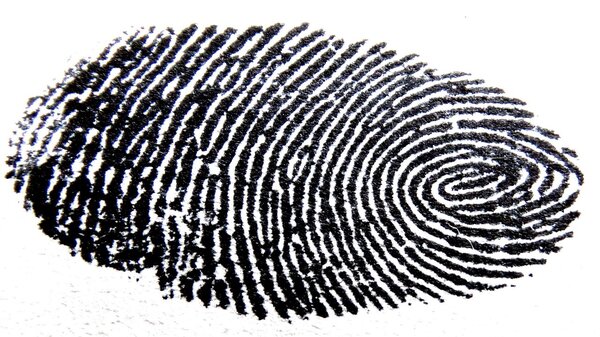
On December 9, 1982, a victim was raped and stabbed multiple times in her Baton Rouge residence. In those harrowing moments, the victim was face-to-face with her assailant and vowed that she would remember the characteristics of her assailant in the unlikely event she survived. A friend arrived at the residence and entered the second-floor room containing the assailant and the wounded victim. Fortunately, at that moment, noise from a postal employee caused the assailant to flee the scene. The investigation began that same day.

Sometime later, Archie Williams became a suspect and was then criminally charged after the victim identified Mr. Williams as her attacker. The victim identified a prominent scar on the assailant which, in an unfortunate twist of fate, tended to match a scar on Mr. Williams. Several of the governmental officers involved in the investigation and the April 1983 criminal trial of Mr. Williams were sued many years later in the case styled Archie Williams v. City of Baton Rouge, ET AL. Keogh Cox attorneys Drew Blanchfield, Collin LeBlanc, Cathy Giering, and Chelsea Payne represented a forensic scientist, a lab technician, and a print examiner in the suit (the “Forensic Defendants.”) In his June 10, 2024 ruling, Judge Brian A. Jackson granted a Motion for Summary Judgment in favor of these defendants, dismissing the claims against them with prejudice.

At the 1983 criminal trial, Forensic Defendants testified that they could not identify Mr. Williams as the attacker. Similarly, both the prosecutor and defense counsel advised the jury that the physical evidence did not implicate Mr. Williams. Nevertheless, Mr. Williams was convicted based upon the passionate but mistaken testimony of the victim. Mr. Williams had not committed these crimes but remained incarcerated until his release decades later.

Mr. Williams consistently denied guilt. In 2008, he hoped DNA testing would help to prove his innocence. However, the DNA evidence was of no assistance. In 1999, The FBI launched its National Fingerprint Database (“IAFIS.”) Yet, a 2009 search generated no matches to fingerprints from the crime scene that had not already been identified. In 2014, Next Generation Identification (NGI) replaced IAFIS. By 2016, NGI held approximately 72,000,000 criminal fingerprints and 50,000,000 civil fingerprints. A 2019 search of this ever-expanding database matched fingerprint evidence taken from the 1983 crime scene to the prints of a convicted rapist who had died in prison years before. Mr. Williams was innocent and was soon released through a joint filing by the State of Louisiana and Mr. Williams. His lawsuit against multiple defendants followed.

In response, the Forensic Defendants filed a Motion that advanced the “qualified immunity” granted to governmental officials. In opposition to the Motion, the plaintiff possessed the burden: 1) to raise a fact dispute on whether his constitutional rights were violated by the defendants’ individual conduct; and 2) to show those rights were “clearly established” at the time of the alleged violation. The Court found that the plaintiff did not meet this burden. Although Plaintiff alleged that certain fingerprint evidence had been “suppressed” in violation of the “Brady Rule,” the Court cited the robust factual record showing that the jury was fully aware that no fingerprint evidence identified Mr. Williams and that unidentified prints were present at the crime scene. The Court also rejected the claim that there was any fabricated exculpatory blood or serology evidence.

The facts in Williams highlight the great technological improvements since the early 1980s which now aid the court system, prosecutors, and defense attorneys to protect against the conviction of an innocent suspect. These facts also tell a sad human story of an individual who spent more than 30 years in jail for a crime he did not commit. While it does not replace the lost years, Louisiana has created a fund which provides some financial resources to wrongfully convicted individuals to help them re-enter society. Williams was able to take advantage of this fund.

References:

Archie Williams v. City of Baton Rouge, ET AL, United States District Court, Middle District of Louisiana, No. 3:20-cv-00162.

Posted by:

Disclaimer

Keogh Cox & Wilson, Ltd. provides this blog as a public service for general information only. The materials contained herein may not reflect the most current legal developments or even express the opinion of all or even most of Keogh Cox attorneys. Such material does not constitute legal advice or form any attorney-client relationship. Keogh Cox and all contributing author(s) expressly disclaim all liability to any person with respect to the contents of this Web site and Blog and expect that no reliance will be made upon the information provided.

Continue Reading

Explore legal perspectives on the issues shaping Louisiana's key industries and courtrooms.

Insight

Supreme Court Abrogates Louisiana’s “Professional Rescuer’s Doctrine”

Historically, Louisiana law provided that a professional rescuer injured in the performance of his or her duties “assumes the risk” of an injury and is not entitled to damages. See Worley v. Winston, 550 So.2d 694, 696 (La. App. 2 Cir.), writ denied, 551 So.2d 1342 (La. 1989). This is known as the Professional Rescuer’s Doctrine and applied as a defense to claims raised by firefighters, policeman, and others. The doctrine prevented recovery because the professional rescuer “assumed the risk” of injury. Recently, the Louisiana Supreme Court in Doe v. McKesson, 2021-00929 (La. 3/25/22) rejected the doctrine as a bar to suit by the professional rescuer.

In Doe, the Supreme Court of Louisiana accepted a certified question from the Fifth Circuit of the United States Court of Appeals as to the viability of the doctrine. In response, the Supreme Court held that the Professional Rescuer’s Doctrine has been abrogated in Louisiana both legislatively under La. C.C. art. 2323 and jurisprudentially in Murray v. Ramada Inns, Inc., 521 So.2d 1123, 1132 (La. 1988).

The Court cited La. C.C. art. 2323(A), which provides that the fault of “all persons […] shall be determined” in a civil action. Subsection (B) of the article provides this rule applies “to any claim for recovery of damages for injury, death, or loss asserted under any law or legal doctrine or theory of liability, regardless of the basis of liability.”

In Murray, the Supreme Court previously held that the doctrine of assumption of risk no longer had a place in Louisiana tort law following the adoption of comparative fault. Nevertheless, the Murray Court identified two exceptions:

  • Cases “where the plaintiff, by oral or written agreement, expressly waives or releases a future right to recover damages from the defendant,” if “no public policy concerns would invalidate such a waiver, the plaintiff's right to recover damages may be barred on a release theory;” and
  • “[I]n the sports spectator or amusement park cases (common law’s “implied primary” assumption of risk cases).”

Murray, 521 So.2d at 1134. (internal citations omitted).

The Doe court observed that Murray provided no exception relative to professional rescuers. The Court further observed that, while the legislature had enacted statutes that bar plaintiff recovery in other settings, no such statute had been passed to codify the Professional Rescuer’s Doctrine.

Although professional rescuers injured in the performance of their duties may still be found at fault, the is no longer an automatic bar to suit.

Insight

Federal Jury Finds For Employer in ADA Case

In a case handled by our firm, a Lafayette-based global catering and life support client was sued by an employee based in Dubai for alleged violations of the Americans with Disabilities Act. The jury unanimously found that the employer (1) did not discriminate against the plaintiff because of a disability or (2) retaliate against him because he raised a complaint regarding the alleged discrimination.

The plaintiff had a written contract of employment with a one-year term that automatically renewed if he was not terminated. Upon the contract expiration date, the employer advised plaintiff that the contract would not be renewed for a successive term.

Plaintiff, an Army veteran, suffered from PTSD following his military service and deployment in Iraq. He claimed defendant discriminated against him on the basis of his PTSD, which he claimed as a mental health disability. Plaintiff further claimed that defendant retaliated against him after he complained to his direct supervisor and the head of human resources about the alleged discrimination. To support his case, plaintiff claimed he was not disciplined before his termination and did not receive negative performance reviews during employment. Significant pre-trial motion practice occurred and framed the issues for trial in two ways.

First, the defense learned of actions taken by plaintiff following the termination of his employment that would have provided a legitimate basis for termination had the actions been discovered before he was terminated. The defense argued that evidence of such “after-acquired” misconduct was relevant to credibility and independently relevant to calculate backpay that plaintiff sought, citing McKennon v. Nashville Banner Pub. Co. and McClung v. Hajek. Over defendant’s objection, the Trial Court excluded the evidence as highly prejudicial, instead finding that back pay was an equitable remedy to be decided by the Court in a subsequent evidentiary hearing related to the issue of back pay.

Second, the defense argued that non-certified medical record evidence submitted by plaintiff was hearsay and thus inadmissible to prove a disability. The Court agreed with the defendant and issued a limiting instruction that the jury was not to consider uncertified medical records for the truth of the matter asserted.

At trial, our client presented ample evidence of plaintiff’s performance deficiencies with respect to the vetting of vendors, which jeopardized the employer’s government contracts and the jobs of other employees. The majority of plaintiff’s performance issues arose in Dubai, plaintiff’s key area of oversight. Therefore, it was unbelievable that he would not know of, or take responsibility for, those performance deficiencies. In addition, the language of the written employment contract allowed for non-renewal of the contract. In a unanimous verdict as required by Fed. R. Civ. P. 48, the jury ultimately found that although the plaintiff proved he suffered a disability, he failed to prove discrimination or retaliation under the Act.

References:

Staples v. Taylor International Services, Inc., et al., 6:20-cv-00192-RRS-CBW.

McKennon v. Nashville Banner Pub. Co., 513 U.S. 352, 361–62, 115 S. Ct. 879, 886, 130 L. Ed. 2d 852 (1995).

McClung v. Hajek, 79 F.3d 1145 (5th Cir. 1996).

Insight

THE “ATTORNEY CLIENT” PRIVILEGE”: How, When (and Why) Communications between You and Your Attorney are Protected - Part 2

Part 1 of this two-part series explored the basic elements of the attorney-client privilege. Part 2 will discuss some of the restrictions to the privilege.

The privilege applies only to legal matters.

While legal advice is protected, advice that is considered “business advice” may not. Unfortunately, the line between legal and business advice is not always clear. Legal advice requires that the attorney interpret law and apply it to specific facts to do one (or both) of two things: tell the client what to do in the future or tell the client what was done right (or wrong) in the past. Business advice involves discussions about the operations of a client which are independent from legal considerations.

If the communication involves both legal advice and business advice, the general rule is that the legal advice must predominate over the business advice. See, Exxon Mobil Corp. v. Hill, 2013 WL 3293496 (E.D. La. June 28, 2013), vacated and remanded on other grounds by Exxon Mobil Corp. v. Hill (5th Cir. May 6, 2014).

The crime-fraud exception.

The privilege is also subject to the “crime fraud” exception. Communications between an attorney and client regarding either: 1) a plan or intent to commit a crime or fraud; or 2) while the crime or fraud is being committed, are not protected by the attorney-client privilege. Remember, you obtain the services of an attorney to obtain legal advice, not illegal advice. As explained by the court in State v. Menard, 02-1182 (La. App. 3 Cir. 5/7/03), 844 So. 2d 1117, the reasons for the privilege cease to operate when the legal advice refers to future wrongdoing.

Other exceptions.

The privilege also has other limitations, including the fact that it may be waived, intentionally or unintentionally, by the client. As discussed in Part 1 of this blog, the decision to include third-parties in conversations and communications (including emails) between the client and the attorney may waive the privilege. If a client sues an attorney after the relationship has terminated, the privilege is likewise waived, and the attorney can discuss privileged communications to defend himself against that suit. Similarly, if an attorney acted as a notary or witness to a document, the attorney may discuss whether a document is authentic or whether the signors were legally competent to sign. Interestingly, the privilege also does not apply to communications with a deceased client if the communications are relevant to an inheritance dispute.

The attorney client privilege offers broad protection; however, it is important to remember that this protection is not without its limits.

Collin J. LeBlanc

Partner
Attorney
Evidence
Louisiana