Insight

The New Home Warranty Act: Protections and Pitfalls

Published on: November 18, 2020
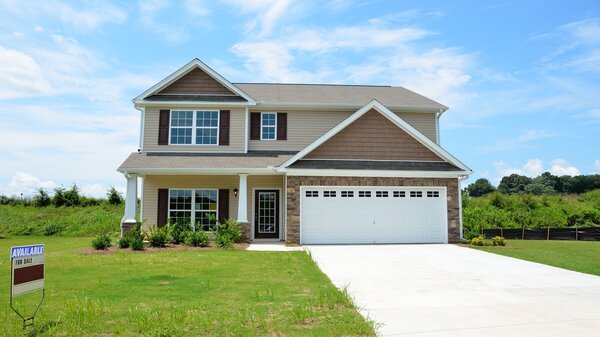
Louisiana’s New Home Warranty Act (“NHWA”) provides remedies to homeowners forcertain construction defects once the new home construction is complete. La. R.S. 9:3141 et seq. These protections can prove crucial to a homeowner’s ability to remedy defects that appear in their home, but the statutes providing these remedies establish strict guidelines that must be followed for the protections to apply. This generally post sets forth some of the key protections and obstacles/defenses that often arise. However, each specific claim should be considered under its own facts.

PROTECTIONS

The NHWA provides specific protections to homeowners. Each protection expires if not advanced within a set time-period.

Noncompliance/Defects- The NHWA protects against “any defect due to noncompliance with the building standards or other defects in materials or workmanship not regulated by building standards.” La. R.S. 9:3144(A)(1). This category includes defective construction or materials used in the construction. Even seemingly minor issues such as cracked plaster, yellowing paint, and “rubbing off” of new paint can give rise to a valid claim for recovery under this portion of the NHWA. See Bynog v. MRL, LLC, 05-122 (La. App. 3 Cir. 6/1/05), 903 So.2d 1197. Deviations from the “plans and specifications” for a home may also be recoverable. See Thorn v. Caskey, 32-310 (La. App. 2 Cir. 9/22/99), 745 So.2d 653.

Because this first protection is so broad, it also provides the shortest time-period to assert a claim: one year from the “warranty commencement date,” which is either the date legal title to the home is conveyed to its initial purchaser or the date the home is first occupied, whichever occurs first. La. R.S. 9:3142(7).

Plumbing/Electrical/HVAC- The NHWA also protects the homeowner from defects in the plumbing, electrical, heating, cooling, and ventilating systems. These protections exclude equipment or appliances. A homeowner must bring a claim under this second category within two years of the warranty commencement date. La. R.S. 9:3144(A)(2).

Major Structural Problems- the NHWA allows recovery for major structural defects up to five years following the warranty commencement date. La. R.S. 9:3144(A)(3). For instance, recovery was allowed for a failing foundation under this provision in Campo v. Sternberger, 15-53 (La. App. 5 Cir. 11/19/15),179 So.3d 908.

PITFALLS

The most obvious – and probably most prevalent – pitfall is the timeliness of the claim. Courts do not hesitate to dismiss a claim if it is not timely filed.

The NHWA also requires that the homeowner give the builder written notice (via certified mail) of the defect before the homeowner attempts a repair, or before filing suit under the NHWA. La. R.S. 9:3145(A). This notice must be sent to the builder within one year after the homeowner has knowledge of the defect. Therefore, the one-year “clock” may begin to run when the homeowner gains knowledge of the problem even if the NHWA provides a longer time-period to advance the claim.

A failure by the homeowner to give timely notice can also diminish the claim even if it is brought within the deadlines. Under La. R.S. 9:3144(B)(4)(c), any damages caused by the homeowner’s failure to give the builder notice of the defect are not recoverable. In that circumstance, builders often contend that the severity of the problem could have been lessened had they been made aware.

RECOVERABLE DAMAGES

With some exceptions, damages under the NHWA are limited to the actual damages incurred by the homeowner, including attorney fees and court costs arising out of the builder’s violation. La. R.S. 9:3149. The actual damages cannot exceed the reasonable cost of repair or replacement necessary to cure the defect. If there are multiple defects across the home, damages are limited to the original purchase price of the home.

Consequential damages such as pain and suffering, mental anguish, or loss of use are generally not recoverable. See La. R.S. 9:3144(B); Iteld v. Four Corners Const., L.P., 12-1504 (La. App. 4 Cir. 6/5/13), 157 So.3d 702. However, there may be exceptions to this general rule under certain factual circumstances beyond the scope of this post.

CONCLUSION

The NHWA provides important remedies to homeowners. But, the New Home Warranty Act is complex and balances the competing interests of the homeowners and the builders. For this reason, a failure to follow the notice and timeliness requirements will often defeat the claim.

John Grinton, is a partner at Keogh Cox whose practice areas include commercial and construction litigation. When he is not practicing law, John spends most of his time with his wife and son, and their two dogs.

Posted by:

Disclaimer

Keogh Cox & Wilson, Ltd. provides this blog as a public service for general information only. The materials contained herein may not reflect the most current legal developments or even express the opinion of all or even most of Keogh Cox attorneys. Such material does not constitute legal advice or form any attorney-client relationship. Keogh Cox and all contributing author(s) expressly disclaim all liability to any person with respect to the contents of this Web site and Blog and expect that no reliance will be made upon the information provided.
Continue Reading

Explore legal perspectives on the issues shaping Louisiana's key industries and courtrooms.

Insight

Louisiana Appeal Court Finds Nonparty “Nonresident” Industrial Site Owner Is Subject to Louisiana’s Subpoena Power

Can a nonresident corporation, who is not a party to a pending action, be compelled to respond to discovery in Louisiana? The Louisiana Fifth Circuit says YES. See Molaison v Cust-O-Fab Specialty Services, LLC, a case where Keogh Cox successfully handled the appeal.

The Molaison case involved an industrial accident claim where catastrophic injuries were alleged. In this context, the appellate court found that a non-resident company has sufficient presence in Louisiana to subject it to the court’s subpoena power. However, the trial court must first assess the scope of discovery to ensure it is calculated to lead to discoverable evidence and is not too onerous.

In Molaison, the owner of an industrial plant who employed the plaintiff claimed that its nonresident status prevented the parties from requiring it to respond to discovery by deposition or otherwise. The plant owner cited a Louisiana Supreme Court case that held personal jurisdiction, without more, did not subject a nonparty, out-of-state defendant to submit to discovery in this state.

But, in this case, the nonparty maintained a facility in Louisiana and employed the plaintiff. As a consequence, the Molaison court found that the Louisiana “discovery rules control” and “the trial court did not err in finding that (the company) was subject to the subpoena power of a Louisiana court.”

The contractor established it issued the subpoena to obtain evidence from the chemical plant owner that was relevant to the allocation of fault under Louisiana’s pure comparative fault tort system. Therefore, the appeal court reasoned that the nonresident plant owner was subject to the subpoena, “even if (the company) is not obligated to pay in tort by operation of workers compensation immunity.”

Of note, the court also held that the review of a discovery order that finds a nonresident company subject to the subpoena power is a final appealable judgment, as opposed to an interlocutory order subject the discretionary review on supervisory writ.

Case Reference: Molaison v Cust-O-Fab Specialty Services, LLC, 21-585 (La. App 5 Cir. 6/1/22); 343 So. 3d 866.

Insight

Hurricane Ida: Louisiana Department of Insurance Implements Mediation Program

In the wake of Hurricane Ida, the Louisiana Department of Insurance (LDI) implemented a mediation program to assist policy holders with disputed insurance claims. Effective October 18, 2021, the program was implemented to assist in the prompt and reasonable settlement of disputed insurance claims.

The program is open to all authorized property and casualty insurers, as well as all surplus line insurers for personal lines residential insurance claims up to $50,000.00. Both the insurer or policyholder can submit a written request for mediation; the opposing party is free to accept or deny the invitation. If initially denied, the parties are free to later opt to participate.

If both parties agree to mediation, a mediator will be assigned and within 30 days a mediation will be scheduled at a local Mediation & Arbitration Professional Systems (MAPS) or Perry Dampf Dispute Solutions location in the Baton Rouge or New Orleans area. The initial mediation session allows for 90-minutes; however, parties are allowed to continue the mediation beyond the initial session at the agreement of the mediator.

The mediation program is free to all policyholders and a $600 fee is assessed to the insurer for the first 90-minute mediation session. If the parties and mediator agree to continue the mediation beyond the initial 90-minute session, additional fees will be assessed for the mediator’s services. The parties are to determine among themselves who will be responsible for the additional costs.

The parties are required to provide all relevant documentation to the assigned mediator and a detailed explanation of the claim and any obstacles to resolution. The policyholder can represent themselves or through counsel. They are even encouraged to bring knowledgeable individuals such as adjusters, appraisers, or contractors.

If a resolution is reached, even just partial, both parties will reduce the agreement to writing and sign the agreement. The insurer will be required to furnish any required payment to the policyholder within ten (10) days of signing the agreement. If the parties only reach a partial agreement, they will be permitted to continue to use the mediation services and schedule future mediation dates.

At this time, the program is scheduled to continue through June 30, 2022.

Insight

Appellate Court Rules a Waiver of UM Coverage Can Only Be Changed at the Insured’s Written Request

Under Louisiana law, all automobile liability policies include uninsured/underinsured motorist coverage (“UM coverage”) unless the insured affirmatively rejects such coverage, selects lower limits, or selects economic only coverage in writing. The question of what qualifies as a valid rejection of UM coverage has been debated in numerous lawsuits across the state. In Barbera v. Andrade, examination of this issue continued, and the court ruled that an initial rejection of UM coverage remains effective until changed by the insured’s written request.

In Barbera, the court examined whether UM coverage was triggered under a policy when the insured, who previously waived coverage, failed to respond to the insurer’s request to complete a new UM waiver form. It was undisputed that the insured executed a valid waiver of UM coverage in 2001. In 2014, the insurer sent the insured a letter that asked the insured to complete an updated coverage selection form and return it to the insurer’s office. The insured did not execute the updated form. A driver insured under the policy was involved in a motor vehicle accident in 2017 and filed a claim for UM benefits.

The insured argued the letter sent with the waiver form in 2014 was ambiguous and could be read to mean that failure to respond would mean that UM coverage would be read into the policy by default. Evidence also showed that some of the insurer’s employees also thought the failure to respond with the updated form would result in UM coverage.

However, La. R.S. 22:1295(1)(a)(ii) provides, “An insured may change the original uninsured motorist selection or rejection on a policy at any time during the life of the policy by submitting a new uninsured motorist selection form to the insurer on the form prescribed by the commissioner of insurance.” Thus, the Court ruled that the insured’s initial rejection of UM coverage could only be changed via written request by submitting a waiver form to the insurer. The intent of the parties was inconsequential.

Because the insured executed a valid UM waiver in 2001, it remained part of the existing policy. No event, such as a change in the policy’s liability limits, occurred that required the execution of a new UM selection waiver form, and the insured did not submit a new form to the insurer to obtain UM coverage. Therefore, UM coverage was not afforded under the policy, and summary judgment was affirmed in favor of the insurer.

Case Reference: Barbera v. Andrade, 22-147 (La. App. 5 Cir. 11/30/22), 2022 WL 1733087, --- So.3d ---.

No items found.
Louisiana
Property