Insight

Renewed or Was it New? Dispute over UM Coverage in Auto Policy

Published on: February 28, 2022

Louisiana law requires UM coverage in automobile liability insurance policies in the same amount as the policy’s bodily injury liability coverage. UM coverage will be included in the policy unless the insured rejects UM coverage, selects lower limits, or selects economic-only coverage. This rejection, selection of lower limits, or selection of economic-only coverage must be made on a form prescribed by the commissioner of insurance and must be signed by the insured or its legal representative. See La. R.S. 22:1295. If a rejection form is not completed, UM coverage will be read into the policy. However, a valid UM waiver form executed for a policy of insurance remains in effect when that policy is renewed with a few exceptions. Generally, execution of a new waiver form is not required unless a new policy is issued or the liability limits increased. These basic principles were considered in the recent First Circuit decision in Johnson, et al. v. Bass, Geico General Ins. Co., and GoAuto Management Services, LLC, 2021 CA 0139 (La. App. 1 Cir. 12/22/21).

In Johnson, the plaintiff obtained a policy of insurance from GoAuto on July 17, 2015 and validly rejected UM coverage on the commissioner’s UM rejection form. The plaintiff renewed the policy multiple times and also completed an “Application for Personal Automobile Insurance” on February 23, 2018 to add her husband and an additional vehicle to the policy.

The Johnson plaintiff was in a motor vehicle accident on November 26, 2019 and claimed UM benefits under the policy. She argued that the insurance application she completed in February 2018 to add a new driver and a new vehicle to the policy created a new policy of insurance that required completion of a new UM waiver form. Because a new UM waiver form was not executed in February 2018, the plaintiff argued that UM coverage should be read into the policy. Thus, the question posed to the court was whether the 2018 policy became new or was simply a renewal. The trial court found that the policy was a renewal and dismissed the UM claim.

The First Circuit affirmed and rejected the plaintiff’s argument holding, “the language of La. R.S. 22:1295 is clear and unambiguous; only changes in the ‘limits of liability’ to an existing policy will create a new policy that requires the completion of a new UM selection form.” Despite multiple renewals, the liability limits of the policy did not change from the date it was issued through the date of the accident. Importantly, the limits also did not change when the new driver and vehicle were added to the policy in February 2018. Thus, no new policy was created. The original rejection of UM coverage remained in effect, and the plaintiff’s claims against her alleged UM insurer were dismissed.

Posted by:

Disclaimer

Keogh Cox & Wilson, Ltd. provides this blog as a public service for general information only. The materials contained herein may not reflect the most current legal developments or even express the opinion of all or even most of Keogh Cox attorneys. Such material does not constitute legal advice or form any attorney-client relationship. Keogh Cox and all contributing author(s) expressly disclaim all liability to any person with respect to the contents of this Web site and Blog and expect that no reliance will be made upon the information provided.

Continue Reading

Explore legal perspectives on the issues shaping Louisiana's key industries and courtrooms.

Insight

Outdoor Living:  Federal Court Rules That Uneven Terrain in Parking Lot Does Not Present an Unreasonable Risk of Harm

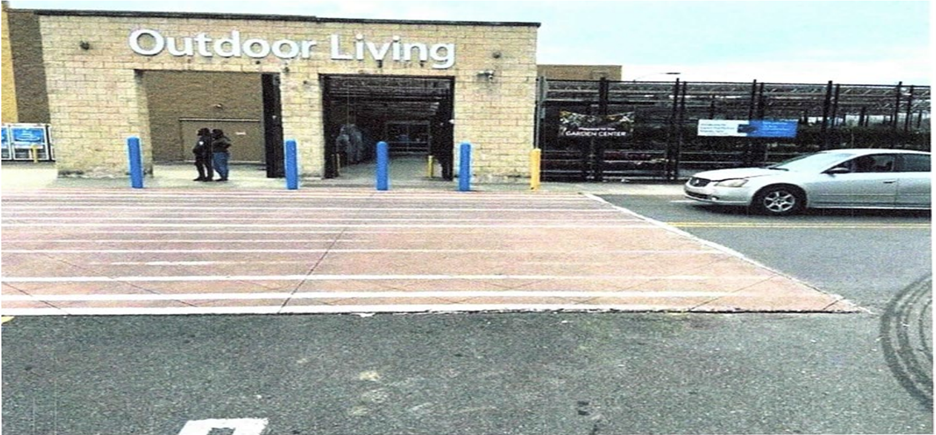
A federal court for the Middle District of Louisiana recently ruled that a 1½ inch elevation change in a Walmart parking lot did not present an unreasonable risk of harm to the plaintiff patron in Lacaze v. Walmart Stores, Inc. The case involved a slip and fall/trip and fall accident in the parking lot of Walmart’s Burbank Drive store in Baton Rouge. The defendant moved to dismiss the suit where the plaintiff claimed she tripped and fell as she crossed the area where the black asphalt parking lot adjoined the concrete crosswalk as pictured below.

In the area where the asphalt meets the crosswalk, the surface presented a ¼ inch to 1½ inch change in elevation. Plaintiff admitted the black pavement was distinct in appearance and color from the concrete crosswalk. Surveillance showed that plaintiff looked down at her cell phone at the time she tripped and fell. Though in a high pedestrian traffic area, Wal-Mart maintained this was the first reported incident.

The Court found the condition was open and obvious and did not present an unreasonable risk of harm. To reach this decision, the Court made the following observations:

  1. Parking lots have clear and apparent utility. Crosswalks do as well. Crosswalks give patrons a designated area to traverse the lot safely.
  2. The likelihood and magnitude of the risk posed by the condition was low. The Court noted it is common for surfaces of parking lots and sidewalks to be irregular, and no other patrons reported problems or accidents.
  3. The cost of preventing the harm was high. The Court would not consider only the cost of fixing the specific injury-causing defect. Rather, it considered the cost of eliminating all defects in the Walmart parking lot.
  4. Plaintiff conducted an ordinary commercial activity that was not dangerous in nature.

The Court concluded that all but factor four pointed to a single conclusion: the 1½ inch elevation difference did not pose an unreasonable risk of harm. The Court reached this conclusion even though the plaintiff retained an expert who gave opinions regarding possible violations of the Americans with Disabilities Act (ADA) and OSHA regulations. The expert’s opinions were insufficient to defeat summary judgment when the condition was open and obvious. In reaching its ultimate conclusion, the Court joined with several other courts, including the following:

  • Chambers v. Vill. of Moreauville, where a one-and-one half inch deviation did not present an unreasonable risk of harm;
  • Reed v. Wal-Mart Stores, where a height variance of one-fourth to one-half inch between concrete blocks in parking lot did not present an unreasonable risk of harm; and
  • Boyle v. Board of Sup'rs, Louisiana State University, where a depression of up to one inch in a sidewalk did not pose unreasonable risk of harm.

Case References: Lacaze v. Walmart Stores, Inc., No. CV 20-696-JWD-EWD, 2022 WL 4227240 (M.D. La. Sept. 13, 2022); Chambers v. Vill. of Moreauville, 2011-0898 (La. 01/24/12), 85 So.3d 593; Reed v. Wal-Mart Stores, 97-1174 (La. 03/04/98), 708 So.2d 362; and Boyle v. Board of Sup'rs, Louisiana State University, 96-1158 (La. 01/14/97), 685 So.2d 1080.

Insight

Compelling Arbitration of Commercial Property Insurance Claims under the New York Convention

In the wake of recent hurricanes, Louisiana courts were flooded with cases property owners filed against their insurers alleging improper denial or underpayment of hurricane claims. Many of those cases were stayed and the parties were compelled to arbitration, despite Louisiana law prohibiting arbitration provisions in insurance contracts, La. R.S. 22:868(A)(2).

In a typical case involving commercial property, a property owner filed suit against its insurers, often including both domestic and foreign companies. One or more insurance policies contained an arbitration agreement requiring all disputes to be resolved by arbitration in a specified U.S. city. Undeterred, the insured filed suit in Louisiana state court. The insurers removed the case to federal court and filed a motion to compel arbitration.

The foreign insurers sought to enforce the arbitration agreement under the Convention on the Recognition and Enforcement of Foreign Arbitral Awards (aka the New York Convention). The New York Convention is an international treaty that requires signatory countries to enforce an arbitration agreement where four requirements are met: (1) a written arbitration agreement exists, (2) that provides for arbitration in a signatory country, (3) which arises from a commercial legal relationship, and (4) at least one party is not a U.S. citizen. These conditions are met where a foreign insurer issues a commercial policy that contains an arbitration provision to a U.S. property owner. Under such circumstances, the courts were bound to compel the parties to arbitration.

The cases presented some interesting questions. For example, could domestic insurers also compel arbitration? Yes. Under the doctrine of equitable estoppel, where the claims against the insurers are interdependent, the domestic insurers, even if they were not signatories to the arbitration agreement, could compel arbitration.

Does the McCarran-Ferguson Act, a federal law that maintains the states’ power to regulate the insurance industry, cause Louisiana’s law prohibiting arbitration in insurance contracts to reverse-preempt the Convention? No, the Act does not apply to treaties.

What about the arguments that the contract was not freely negotiated, or that under conflict of laws principles Louisiana law should apply, or that the federal courts should abstain because the state has a vital interest in regulating insurance? The courts rejected these arguments as well.^

Recently, the U.S. Fifth Circuit Court of Appeals, in Bufkin Enterprises, LLC v. Indian Harbor Ins. Co., affirmed that equitable estoppel applied to allow domestic insurers to compel arbitration under the New York Convention even where the insured dismissed the foreign insurers with prejudice.* However, the U.S. Second Circuit has held the opposite in two recent cases involving insurance contracts between foreign insurers and Louisiana property owners – that Louisiana law applied to prohibit the enforcement of the arbitration provision in the insurance policy.^^

With the exception of the Second Circuit split, the numerous cases arising from recent hurricanes confirm a strong policy favoring arbitration under the New York Convention, which overrides potential state law obstacles to enforcing arbitration provisions in insurance policies.

Mary Anne Wolf is an arbitrator on the commercial, construction and large, complex cases panels of the American Arbitration Association and is a neutral at Perry Dampf Dispute Solutions.

References:

^ See for example, General Mill Supplies, Inc. v. Underwriters at Lloyd’s, London, et al, 23-6464, 2024 WL 216924 (E.D. La. 1/19/2024), - F.Supp.3d – (2024); Dryades YMCA v. Certain Underwriters at Lloyds, London, et al, 23-3411, 2024 WL 398429 (E.D. La. Jan. 31, 2024); Parish of Lafourche v. Indian Harbor Ins. Co., et al, 23-3472, 2024 WL 397785 (E.D. La. Feb. 2, 2024).

* Bufkin Enterprises, LLC v. Indian Harbor Ins. Co., et al, 96 F.4th 726 (5th Cir. Mar. 26, 2024).

^^ See Certain Underwriters at Lloyds, London v. 3131 Veterans Blvd. LLC, 22-9849, 2023 WL 5237514 (S.D.N.Y. Aug. 15, 2023); and Certain Underwriters at Lloyd’s, London v. Mpire Properties, LLC, 22-9607, 2023 WL 6318034 (S.D.N.Y. Sept. 28, 2023) (appeal filed).

Insight

Louisiana Supreme Court Rules on Bond an Insurer Must Post for Suspensive Appeal

A Louisiana litigant has a right to appeal a judgment rendered against it at trial and has two options to appeal the judgment. The litigant can take a suspensive appeal, which suspends the execution of the judgment pending the outcome of the appeal, or it can take a devolutive appeal, which does not. La. C.C.P. art. 2124 provides that when the judgment if for a sum of money, a party seeking a suspensive appeal must post security, or a bond, “equal to the amount of the judgment,” including interest.

What happens when a monetary judgment is cast against an insurer (and its insureds) and the amount of the judgment exceeds the limits of the insurer’s policy? Can the insurer be required to post bond in excess of its policy limits to suspensively appeal the judgment? The Louisiana Supreme Court recently addressed this issue and ruled an insurer is required to post a security bond covering only its policy limits.

In Martinez v. Am. Transp. Grp. Risk Retention Grp., Inc., a jury cast judgment against a transportation group, its driver, and its insurer for damages the plaintiff sustained in a motor vehicle accident. The trial court rendered a judgment in the amount of $2,802,054.66, which was in excess of the $1,000,000 limits of the insurer’s policy. The insurer moved for a suspensive appeal and requested a reduced bond because its insured was no longer in existence and could not post a bond. Nevertheless, the trial court set the appeal bond at $2,802,054.66, plus interest. The insurer posted a bond in the amount of its policy limits plus interest and costs and sought appellate review of the trial court’s appeal bond order.

The Supreme Court observed that the contracts clauses of the federal and state constitutions prohibit the enactment of any law “impairing the obligation of contracts.” Therefore, the Court found that to require an insurer to post a bond for suspensive appeal in excess of its policy limits would render meaningless, and therefore impair, the terms of the insurance contract setting the policy’s limits. Thus, the Martinez court should have set security to allow the insurer to suspensively appeal the portion of the judgment up to its policy limit.

However, the Court refused to reduce the suspensive appeal bond for all the defendants cast in judgment. Instead, the Court ruled the insurer could suspensively appeal the judgment up to the amount of its policy limits, stay execution of that portion of the judgment, and devolutively appeal the remainder of the case for its insureds.

References:

Martinez v. Am. Transp. Grp. Risk Retention Grp., Inc., 2023-01716 (La. 10/25/24) 2024 WL 4579047.

C. Reynolds LeBlanc

Partner
Car Accident
Insurance
Louisiana
UM Coverage