Insight

Mediation: A Little History

Published on: May 12, 2016
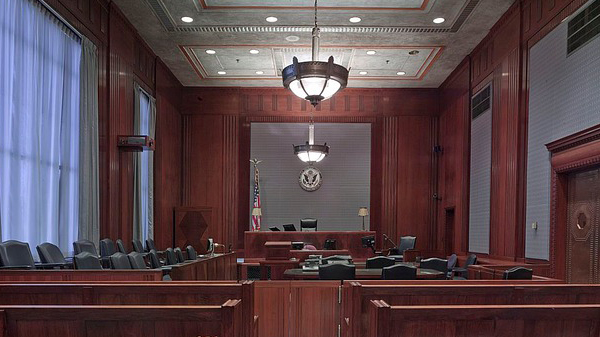
You didn't expect to be here, but yet here you are -- stuck in a lawsuit over which you seem to possess little control. Now, your lawyer says he wants to "mediate" your case and wants a response from you soon. Unfamiliar with the process, you wonder if you should say "yes." Maybe a little history will help you to make your choice. Mediation arrived on the scene in Louisiana in the early 1990s. It offered an alternative to protracted litigation and the ordeal of trial. The theory was that mediation offered an efficient, cost-effective means of resolving a case and allowed the outcome to be determined by the litigants as opposed to the judge or jury.

In a state court trial, the outcome of your case rests in the hands of twelve unknown jurors or the judge. For all intents and purposes, once the case is submitted to the judge or jury, a litigant loses control of his or her destiny. Although judges and juries often get it “right," sometimes they do not. All you have to do is consider how many of the convicted are subsequently exonerated through a DNA analysis; how many cases get reversed on appeal; or, for a specific example, the O. J. Simpson acquittal which is often cited as an improper verdict. Mediation can put the decision-making back in your hands.

Mediation is generally an informal proceeding. The first step is for the parties to agree to mediate. The next, and very important step, is to select the mediator. You want a mediator familiar with your type of case. Then, you pick a date. Meditations usually last between a half-day to a full day. The mediation is attended by the mediator, the litigants and their attorneys in a confidential setting. It is important to understand that the mediator is simply the facilitator who “manages” the mediation. The “shots” are called by the parties through their attorneys. The decision as to whether to settle is solely in the hands of the parties. At the end of the day, cases are often resolved, perhaps most of the time. Even if the case does not settle at mediation, follow-up by the mediator often results in a settlement in the days and weeks that follow.

The process of mediation can be extremely valuable for these reasons: it can greatly reduce costs, fees and expenses; it gives the parties greater control over the outcome; it eliminates risk; and it allows closure and ends the distraction and emotional baggage clients often experience when in litigation. So now, when you are asked to mediate, you might let history be your guide.

By: Gracella Simmons, partner with Keogh Cox. As a mediator, she has successfully resolved a wide variety of cases over the past 15 years.

Posted by:

Disclaimer

Keogh Cox & Wilson, Ltd. provides this blog as a public service for general information only. The materials contained herein may not reflect the most current legal developments or even express the opinion of all or even most of Keogh Cox attorneys. Such material does not constitute legal advice or form any attorney-client relationship. Keogh Cox and all contributing author(s) expressly disclaim all liability to any person with respect to the contents of this Web site and Blog and expect that no reliance will be made upon the information provided.


Continue Reading

Explore legal perspectives on the issues shaping Louisiana's key industries and courtrooms.

Insight

When a Settlement Is Not a Settlement

Louisiana law favors the settlement of disputes. With a settlement, both sides agree to avoid costly litigation and obtain a certain, negotiated result. While neither side is completely happy with the result in a typical settlement, the case is at least closed and the financial and emotional drain of litigation is ended. But the recent decision in The Marietta Trust and The Warren Trust v. J.R. Logging, Inc., Fair Hills Farm, LLC, Jerry Avants, Jr., Thomas Keaty, Jr. and XYZ Insurance Company, 2016 CA 1136 (La. App. 1 Cir. 5/11/17) shows what can happen when one of the parties change their mind. This case is important because it calls into question whether an exchange of emails is sufficient to reach a final settlement.

The Marietta Trust case involved a dispute regarding the wrongful cutting of timber and the parties seemingly came to a resolution. Via email, the case was negotiated and the terms were agreed upon. Formal settlement documents were drawn up and money was exchanged. However, when the time came to execute the final documents, one set of defendants refused to sign the paperwork. This refusal to sign came after the attorney for these defendants directly stated in an email that his "clients have agreed to the settlement." Id. at *4. In response to the refusal to sign, the other parties filed a Joint Motion to Enforce Settlement Agreement which was denied by the Trial Court.

Settlement agreements are governed by the Louisiana Civil Code art. 3071 which provides that litigation can be resolved via settlement or compromise. A settlement agreement can take two forms: 1) recitation in open court; or 2) a writing. “The purpose of the writing requirement is to serve as proof of the agreement and the acquiescence therein.” Marietta Trust, 2016 CA 11336, Id. at *3. The writing must be signed by the parties or their agents. “Until the parties sign a written document or documents evincing their consent to the terms of the proposed agreement, a party is free to change his or her mind.” Id. at *3. Prior courts have found that emails meet the "writing" requirements. See, Geer v. BP America Production Co., 2014-450 (La. App. 3 Cir. 11/5/14), 150 So. 3d 621; Dozier v. Rhodus, 2008-1813 (La. App. 1 Cir. 5/5/09), 17 So. 3d 402.

The appellate court in Marietta Trust refused to enforce the "settlement." The court found that the exchange of emails was insufficient to meet the "writing" requirement of Civil Code article 3071 because neither the emails nor any other evidence showed that the attorney possessed "the express consent necessary to accept the terms of the settlement." Id. at *3.

When is a settlement not a settlement? Maybe when it came to you through your inbox. So, if an email from the attorney is not sufficient to perfect a settlement, what can we do? The answer offered by the 1st Circuit is to either: 1. Recite in open court; or 2. Obtain a writing that includes the client’s express consent given to the attorney to settle the case (presumably for the amount in the writing).

Insight

Hurricane Ida: Louisiana Department of Insurance Implements Mediation Program

In the wake of Hurricane Ida, the Louisiana Department of Insurance (LDI) implemented a mediation program to assist policy holders with disputed insurance claims. Effective October 18, 2021, the program was implemented to assist in the prompt and reasonable settlement of disputed insurance claims.

The program is open to all authorized property and casualty insurers, as well as all surplus line insurers for personal lines residential insurance claims up to $50,000.00. Both the insurer or policyholder can submit a written request for mediation; the opposing party is free to accept or deny the invitation. If initially denied, the parties are free to later opt to participate.

If both parties agree to mediation, a mediator will be assigned and within 30 days a mediation will be scheduled at a local Mediation & Arbitration Professional Systems (MAPS) or Perry Dampf Dispute Solutions location in the Baton Rouge or New Orleans area. The initial mediation session allows for 90-minutes; however, parties are allowed to continue the mediation beyond the initial session at the agreement of the mediator.

The mediation program is free to all policyholders and a $600 fee is assessed to the insurer for the first 90-minute mediation session. If the parties and mediator agree to continue the mediation beyond the initial 90-minute session, additional fees will be assessed for the mediator’s services. The parties are to determine among themselves who will be responsible for the additional costs.

The parties are required to provide all relevant documentation to the assigned mediator and a detailed explanation of the claim and any obstacles to resolution. The policyholder can represent themselves or through counsel. They are even encouraged to bring knowledgeable individuals such as adjusters, appraisers, or contractors.

If a resolution is reached, even just partial, both parties will reduce the agreement to writing and sign the agreement. The insurer will be required to furnish any required payment to the policyholder within ten (10) days of signing the agreement. If the parties only reach a partial agreement, they will be permitted to continue to use the mediation services and schedule future mediation dates.

At this time, the program is scheduled to continue through June 30, 2022.

Insight

Mediation: A Little History

You didn't expect to be here, but yet here you are -- stuck in a lawsuit over which you seem to possess little control. Now, your lawyer says he wants to "mediate" your case and wants a response from you soon. Unfamiliar with the process, you wonder if you should say "yes." Maybe a little history will help you to make your choice. Mediation arrived on the scene in Louisiana in the early 1990s. It offered an alternative to protracted litigation and the ordeal of trial. The theory was that mediation offered an efficient, cost-effective means of resolving a case and allowed the outcome to be determined by the litigants as opposed to the judge or jury.

In a state court trial, the outcome of your case rests in the hands of twelve unknown jurors or the judge. For all intents and purposes, once the case is submitted to the judge or jury, a litigant loses control of his or her destiny. Although judges and juries often get it “right," sometimes they do not. All you have to do is consider how many of the convicted are subsequently exonerated through a DNA analysis; how many cases get reversed on appeal; or, for a specific example, the O. J. Simpson acquittal which is often cited as an improper verdict. Mediation can put the decision-making back in your hands.

Mediation is generally an informal proceeding. The first step is for the parties to agree to mediate. The next, and very important step, is to select the mediator. You want a mediator familiar with your type of case. Then, you pick a date. Meditations usually last between a half-day to a full day. The mediation is attended by the mediator, the litigants and their attorneys in a confidential setting. It is important to understand that the mediator is simply the facilitator who “manages” the mediation. The “shots” are called by the parties through their attorneys. The decision as to whether to settle is solely in the hands of the parties. At the end of the day, cases are often resolved, perhaps most of the time. Even if the case does not settle at mediation, follow-up by the mediator often results in a settlement in the days and weeks that follow.

The process of mediation can be extremely valuable for these reasons: it can greatly reduce costs, fees and expenses; it gives the parties greater control over the outcome; it eliminates risk; and it allows closure and ends the distraction and emotional baggage clients often experience when in litigation. So now, when you are asked to mediate, you might let history be your guide.

By: Gracella Simmons, partner with Keogh Cox. As a mediator, she has successfully resolved a wide variety of cases over the past 15 years.

No items found.
Compromise
Mediation
Resolution