Insight

Keogh Cox Secures Dismissal Of Alleged Chemical / Environmental Exposure Case: Worker’s Compensation Immunity

Published on: December 18, 2020

In Million v. Exxon Mobil, et al., plaintiff was diagnosed with cancer and pulmonary embolisms in 2016. Plaintiff had worked in the chemical industry for 40 years. In his suit, filed in the United States Middle District Court, plaintiff alleged that long-term exposure to toxic chemicals during his employment caused his cancer. While the suit alleged that Million’s former employers created an unsafe work environment, he admitted in deposition that he was provided both safety equipment and safety training during his employment.

Andrew Blanchfield, managing partner at Keogh Cox, represented one of the former employers and filed a motion for summary judgment seeking to enforce the protections of Louisiana worker’s compensation law. Under the law, worker’s compensation benefits are generally an employee’s exclusive remedy against an employer for work-related injuries or illnesses. An employer is therefore entitled to immunity from tort claims unless the employee can prove that employer committed an “intentional act.”

To prevail under an intentional act theory, a plaintiff is required to show that the employer’s act was “intentional” and “substantially certain” to result in injury to the plaintiff. In support of the motion to enforce immunity, the former employers cited to plaintiff’s admissions in deposition as to the efforts made for his safety and to the absence of evidence sufficient to show intentional conduct substantially certain to cause injury. The district court granted the motion and dismissed plaintiff’s claims. This month, the dismissal was upheld by the United States Fifth Circuit Court of Appeal in Million v. Exxon Mobil Corp., Exxon Chem. Co./ Exxon Ref., No. 20-30002, 2020 WL 7054051 (5th Cir. Dec. 1, 2020).

This case illustrates the interplay between general Louisiana tort law and the Louisiana worker’s compensation law and shows that courts will require substantive evidence of an intentional act to maintain a tort suit against an otherwise immune employer.

Chelsea Payne is an associate at Keogh Cox and has been practicing for three years. Her practice mainly relates to construction law and complex litigation. Chelsea enjoys playing tennis and spending time with her family.

Posted by:

Disclaimer

Keogh Cox & Wilson, Ltd. provides this blog as a public service for general information only. The materials contained herein may not reflect the most current legal developments or even express the opinion of all or even most of Keogh Cox attorneys. Such material does not constitute legal advice or form any attorney-client relationship. Keogh Cox and all contributing author(s) expressly disclaim all liability to any person with respect to the contents of this Web site and Blog and expect that no reliance will be made upon the information provided.

Continue Reading

Explore legal perspectives on the issues shaping Louisiana's key industries and courtrooms.

Insight

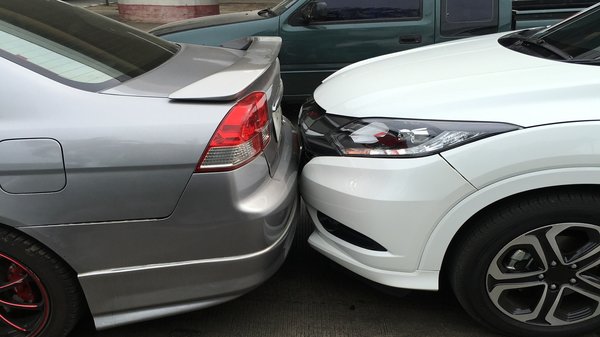
Minimal Force of an Impact Matters in Car Accident Litigation

For years, Louisiana plaintiffs attorneys have argued that the force ofimpact in an auto accident is not determinative of their clients’ injuries andshould be afforded little, if any, weight. A recent decision out of theLouisiana First Circuit Court of Appeal does damage to that argument. In Jonesv. Bravata, Jr. and The City of Baton Rouge, 2018 CA 0837 (La. App. 1 Cir.5/9/19), the First Circuit upheld the trial court's jury instruction on “forceof impact” where photographs showed only minor damage and the defendantdescribed the accident as a “bump.”

The accident occurred when a City employee rear-ended the plaintiffs'vehicle. Liability was stipulated and the only question at trial was damages.Mrs. Jones alleged severe neck and back injuries. She began treatment with anorthopedist within a week of the accident and thereafter received five“relatively non-invasive surgical procedures” in lieu of a lumbar fusionsurgery. The jury returned a verdict of $200,000, which included $150,000 inpast medical expenses and $35,000 in future medical expenses, but awardedlittle for general damages. Mrs. Jones appealed the verdict, asserting that thetrial court erred in instructing the jury on force of impact.

The "force of impact" jury instruction in dispute provided:

Whilethe force of a collision may be considered in determining whether a person wasinjured by an accident and the extent of the injuries sustained, it should notbe the only factor to consider in making such a determination. Even though theforce of impact may be slight, it does not preclude an award of damages.However, in determining causation, you may consider the minimal nature of theaccident.

In considering the plaintiff's assignment of error, the First Circuit noted that Mrs. Jones was correct that no witness specifically testified that the accident was too minor to have caused her injuries. However, there was evidence in the record upon which the jury could have reached the conclusion that this was a minimal impact.

Common sense would appear to support a connection between the force of an impact and the injury one could be expected to suffer. The recent Jones decision allows defendants to promote this common sense argument. Where the claimed injuries are disproportionate to the forces involved, this argument can make the difference at trial.

John Grinton is a partner of the firm admitted in state, federal and appellate courts throughout Louisiana. His practice focuses on commercial and construction litigation, representing insurance companies, architects, engineers, contractors and other businesses in all aspects of litigation. His workers’ compensation practice includes representing clients in medical billing disputes, healthcare provider disputes, statutory/borrowing/special employer disputes, and court approved settlements. John has been involved in complex cases involving construction defect claims, breach of contract and negligence actions, insurance coverage issues, lender liability, securities litigation and personal injury matters. He has firsthand experience in jury trials and arbitration's, as well as mediation, appellate briefing and oral argument.

Insight

The “Collateral Source Rule” & How it Can Cost (or Make) You Thousands – Part I

Imagine you are a defendant sued because you negligently injured someone in Louisiana. In the accident, the plaintiff received extensive medical treatment. The health insurer paid $50,000 for medical costs even though the doctors billed $150,000 for the plaintiff’s care. The plaintiff was only out-of-pocket $500 for his health insurance deductible. What amount should you have to pay: $150,000, $50,000, or only $500?

The answer to this question is not so simple. You will certainly have to pay more than the plaintiff’s deductible, that much is clear. But whether you are required to pay the medical providers’ full rate of $150,000, the insurer’s discounted rate of $50,000, or some other amount for the medical services provided is a more complicated issue.

This blog is broken down in a two-part series. This installment will address the background of the collateral source rule and the public policy behind the rule.

What is the Collateral Source Rule?

The collateral source rule provides that a tortfeasor is generally not entitled to a credit for payments made to a plaintiff through “collateral sources,” i.e., sources not provided by the defendant. Under this rule, a tortfeasor’s exposure for damages should be the same regardless of whether or not the plaintiff purchased health insurance.

The collateral source rule permits the plaintiff to recover medical expenses in excess of the amounts actually paid by the plaintiff or their insurer. Critics therefore assert that the rule provides a “windfall” to the plaintiff that violates the goal of Louisiana tort law, namely to make the victim “whole.” As applied, the rule can make the victim more than whole.

Origins of the Collateral Source Rule

To understand the collateral source rule, it helps to look at its origins. The rule in the United States at least dates back to the 1854 case The Propeller Monticello v. Mollison, 58 U.S. (17 How.) 152, 15 L.Ed. 68 (1854). In Propeller Monticello, two ships wrecked and one sank. The insurer of the ship that sank paid for the loss. The owner of the at fault ship asserted that the plaintiff had been fully compensated by the insurer’s payment and that it was therefore not obligated to pay for the damage. In rejecting this argument, the Propeller Monticello Court held the defendant was not a party to the insurance contract and could not reduce exposure by citing to the insurance available to the plaintiff.

Policies Behind the Collateral Source Rule

In Dep't of Transp. & Dev. v. Kansas City S. Ry. Co., 846 So. 2d 734 (La. 5/20/03), the Louisiana Supreme Court detailed the public policy concerns that support the collateral source rule. According to the court, the policies in favor of the rule include:

i. Fairness- a defendant should not gain an advantage from benefits provided to the plaintiff independent of any act of the defendant;

ii. Deterrence- the rule provides a deterrence to negligent conduct; and,

iii. Promotion of Insurance- victims could be dissuaded from purchasing insurance if that act could affect tort recovery.

So, how much do you owe: $50,000, $150,000, or some other amount? We’ll tell you in Part II of this blog.

Insight

Click It: The Seat Belt Defense In Louisiana

Louisiana has exhibited a certain double standard when it comes to seat belts. For years, Louisiana participated in the “Click It or Ticket” public service campaign that lectured on the grave dangers caused by a failure to wear seat belts and the criminal consequences for a failure to comply. Nevertheless, and for decades, the failure to wear a seat belt was off limits as evidence to reduce a plaintiff’s recovery in a personal injury context. But, the rule was changed: effective January 1, 2021, the “gag rule” against evidence that a plaintiff failed to wear a seat belt in an accident has been lifted. La. R.S. 32:295.1. Louisiana has no recent history with the “seat belt defense,” such that many questions arise. To frame these questions, this blog takes a quick look to cases from other states and certain guideposts that may already exist in Louisiana jurisprudence.

Like several other states, Florida has a history with the defense. In Smith v. Butterick, 769 So.2d 1056, 1058-9 (Fla.2d DCA 2000), the court outlined three elements of proof a defendant must show to prevail on the defense. Similar elements have been identified in other states. See, e.g., Law v. Superior Court In and For Maricopa County, 157 Ariz. 147, 755 P.2d 1135 (1988). Louisiana may adopt similar elements or chart a different course. The elements outlined in Smith were as follows:

1-Failure to use an available, operational seat belt

This element can be proven through testimony from the plaintiff, passengers, responding law enforcement, or other such testimony or evidence to show that a seat belt was not in use at the time of the accident. Similarly, testimony or photographs may be used to show that the seat belt was operational.

2- Failure to use seat belt was unreasonable under the circumstances

Insofar as Louisiana and most states generally mandate the use of seatbelts, this element should be easy to demonstrate. Therefore, unusual facts may be necessary to excuse a plaintiff’s failure to use a seat belt such as an emergency trip to the hospital.

3-Plaintiff’s failure to use a seat belt substantially caused or contributed to the damages

Of the three possible elements, this is likely to be the battleground. In some cases, the issue may be simple. For instance, if a plaintiff’s failure to use a seatbelt allows their body to strike (or travel through) a windshield, it may be simple to show that the plaintiff’s (or decedent’s) failure to use a seatbelt magnified the injuries. Expert testimony may not even be needed. In Smith, testimony from a mechanical engineer that the passenger would not have hit interior surfaces had they used a seat belt was allowed. However, will expert testimony be required in most cases and what type of expert will be needed? Engineer? Physician? Biomechanical?

Will the defendant bear the burden to prove the aggravation like they have in many national cases? Will Louisiana courts fashion an inference or “shifting burden” approach where a prima facie showing that a plaintiff’s whose failure to wear a seat belt increased the possibility of injury would possess the burden to show their injuries would have occurred even had they used a seat belt. In Anderson v. Watson, 953 P. 2d 1284 (Colo. 1998), the court required the defendant to only show a prima facie case of seat belt nonuse to allow the fact of nonuse to go to the jury.

Seat belts are required because they can prevent or lessen injury. Does a defendant have to show the precise details as to how seat belt nonuse caused or magnified the injury? In Louisiana, these answers remain unclear; but these are some of the questions.

Further complications are present in cases involving alleged traumatic brain injury (TBI) and the new frontier of vestibular injuries. Louisiana courts have often rejected testimony from accident reconstruction or bio-mechanical experts for a variety of reasons, but with this statutory defense, such testimony may be critical to determine who is responsible for an alleged catastrophic loss. States that recognize this rule have examined many factors that relate to the injuries that arise from the failure to use a seatbelt. As such, it seems inevitable that expert testimony on this issue must be considered in many nonuse cases.

No doubt, many of these questions will be the subject of litigation arising from accidents which occur after January 1, 2021. Louisiana’s double standard has ended. What is certain is that a failure to wear a seat belt now has the potential to harm not only a plaintiff’s health, but also their chances of recovery in civil litigation.

Collin is a Keogh Cox partner who litigates injury, commercial, and legal malpractice disputes. He lives in nearby Zachary, Louisiana with his wife Melissa and three all too active children. He is an outdoorsman, a tennis player, a cook, and a hobbyist writer.

This blog was written in partnership with John P Wolff, III.

.

Chelsea A. Payne

Partner
Injury
Workers' Compensation