Insight

Insurance Coverage for “Temporary Substitute Autos” in Louisiana

Published on: May 25, 2022
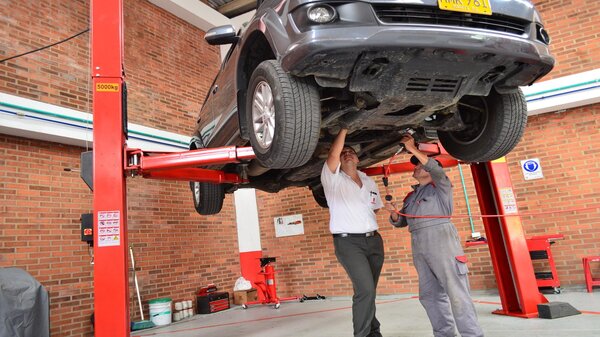
Louisiana insurance law recognizes a practical problem faced by many: the need to obtain alternative transportation when the car won’t start. Under La. R.S. 22:1296, any insurance on your personal vehicle must also extend to vehicles that are used as “temporary substitute autos.”

The statute provides that a car’s status as a “temporary substitute auto” depends on how the term is defined in the particular auto policy at issue. However, some rules typically apply to determine whether the auto is a “temporary substitute.” First, the use must be temporary, i.e. limited in duration. Second, the car must be a substitute for the auto insured under the policy and used for the same purpose. Third, policies typically limit coverage to substitute vehicles that the driver does not own.

Some policies also limit coverage by requiring that the substitution be needed for a purpose identified in the policy, such as the breakdown, repair, or destruction of the covered auto.

While the statute generally defers to the definition of “temporary substitute auto” provided in the policy, sometimes courts will overrule the insurer’s definition. For instance, in State Farm Mutual Automobile Insurance Company v. Safeway Insurance Company, 50-098 (La. App. 2 Cir. 9/30/15), 180 So.3d 450, the relevant policy defined a “temporary substitute auto” as a substitute for the owned auto when the owned auto was “being serviced or repaired by a person engaged in the business of selling, repairing, or servicing motor vehicles.” The case involved a motor vehicle accident that occurred while the policy holder operated a borrowed vehicle but before she brought her usual vehicle to a mechanic.

Citing the terms of the policy, the insurer denied coverage on grounds that the policy required the “temporary substitute auto” not only take the place of the driver’s usual vehicle, but also that the driver take the car to a mechanic before coverage would extend to the substitute vehicle. However, the court found this requirement to be against the public policies behind La. R.S. 22:1296 and found coverage under the policy extended to the borrowed vehicle.

Posted by:

Disclaimer

Keogh Cox & Wilson, Ltd. provides this blog as a public service for general information only. The materials contained herein may not reflect the most current legal developments or even express the opinion of all or even most of Keogh Cox attorneys. Such material does not constitute legal advice or form any attorney-client relationship. Keogh Cox and all contributing author(s) expressly disclaim all liability to any person with respect to the contents of this Web site and Blog and expect that no reliance will be made upon the information provided.
Continue Reading

Explore legal perspectives on the issues shaping Louisiana's key industries and courtrooms.

Insight

Another Year, Another Natural Disaster: What to do if Your Home is Damaged by a Storm or Flood

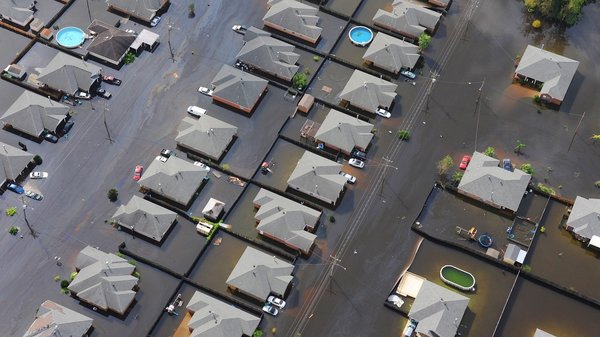
Unfortunately, Louisianans (and their property insurers) have endured many natural disasters in the past several years. From the historic flooding in the greater Baton Rouge area in August 2016 to the devastation caused by Hurricane Harvey in August 2017, Gulf Coast residents are all too familiar with significant storms and flooding events. While the rebuilding process will take months or years, this article is designed to provide some basic information on how to document your property claim and apply for and obtain disaster assistance.

  • DOCUMENT, DOCUMENT, DOCUMENT - Once able, make sure to document the damages to your home and contents. Whether for a homeowners or flood insurance policy or to obtain government assistance, take plenty of photos and even video of the damage. Make a list of the items in your home that were damaged or destroyed. One way to organize this list is to group items from each room together; approximate the item’s age, where it was purchased, and its value when purchased. If you have receipts, try to salvage them. As you rebuild, and materials and items are thrown out, it will become more difficult to document your claim. Proper documentation will lessen the burden upon your insurer’s claims handlers and adjusters and may speed the processing of your claim. A lack of documentation may require the insurer to investigate longer and result in delay.
  • OBTAIN MULTIPLE ESTIMATES - Although the volume of work and distractions which follow a natural disaster make this difficult, try to obtain estimates for the work needed on your home. Pay for the estimate, if necessary. If you have three estimates and the amounts are close, they are more credible. Also, try and get as much detail as possible in each estimate, including specific materials to be used, dimensions, and finishes. Your insurer is looking to determine the true amount of the loss and thorough estimates help to define your claim.
  • APPLY FOR ASSISTANCE - Especially if your property is not insured, make sure to immediately apply for government assistance. You can apply for federal assistance at disasterassistance.gov. Oftentimes, the state government will also administer federal and state disaster assistance funds.

Recovering after a disaster may not be a quick or easy process, but spending more time and effort initially may ultimately save you time and allow you to present a claim your insurer will agree to pay.

Insight

Louisiana Appeal Court Finds Nonparty “Nonresident” Industrial Site Owner Is Subject to Louisiana’s Subpoena Power

Can a nonresident corporation, who is not a party to a pending action, be compelled to respond to discovery in Louisiana? The Louisiana Fifth Circuit says YES. See Molaison v Cust-O-Fab Specialty Services, LLC, a case where Keogh Cox successfully handled the appeal.

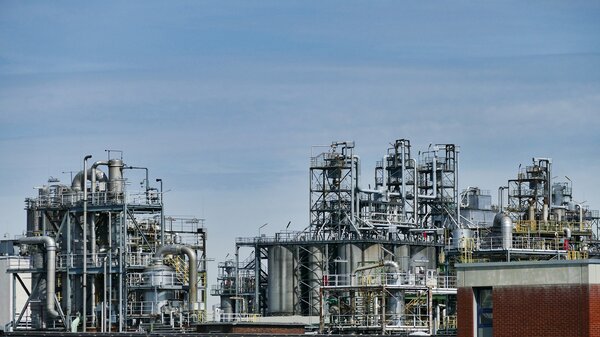
The Molaison case involved an industrial accident claim where catastrophic injuries were alleged. In this context, the appellate court found that a non-resident company has sufficient presence in Louisiana to subject it to the court’s subpoena power. However, the trial court must first assess the scope of discovery to ensure it is calculated to lead to discoverable evidence and is not too onerous.

In Molaison, the owner of an industrial plant who employed the plaintiff claimed that its nonresident status prevented the parties from requiring it to respond to discovery by deposition or otherwise. The plant owner cited a Louisiana Supreme Court case that held personal jurisdiction, without more, did not subject a nonparty, out-of-state defendant to submit to discovery in this state.

But, in this case, the nonparty maintained a facility in Louisiana and employed the plaintiff. As a consequence, the Molaison court found that the Louisiana “discovery rules control” and “the trial court did not err in finding that (the company) was subject to the subpoena power of a Louisiana court.”

The contractor established it issued the subpoena to obtain evidence from the chemical plant owner that was relevant to the allocation of fault under Louisiana’s pure comparative fault tort system. Therefore, the appeal court reasoned that the nonresident plant owner was subject to the subpoena, “even if (the company) is not obligated to pay in tort by operation of workers compensation immunity.”

Of note, the court also held that the review of a discovery order that finds a nonresident company subject to the subpoena power is a final appealable judgment, as opposed to an interlocutory order subject the discretionary review on supervisory writ.

Case Reference: Molaison v Cust-O-Fab Specialty Services, LLC, 21-585 (La. App 5 Cir. 6/1/22); 343 So. 3d 866.

Insight

Medical Malpractice: Can failure to communicate test results be medical malpractice?

The Louisiana Fourth Circuit Court of Appeal recently considered a medical malpractice case with an unusual set of facts. Rather than the standard medical malpractice case, where a patient argues that he was misdiagnosed and/or claims that the doctor made a mistake when administering medical treatment, in Dufreche v. Jeffery Wayne Coco, MD and Internal Medicine Specialists, Inc., 2020-CA-0030 (La. App. 4th Cir.), the patient alleged that his doctor committed malpractice by failing to communicate test results.

In Dufreche, the patient showed signs of an HIV infection. He was tested twice before being treated by the infectious disease specialist. Both tests were negative. During his examination, the infectious disease doctor thought it was unlikely that the patient had HIV, but tested him anyway at the patient’s insistence. According to the patient, he was notified by the doctor that he would be provided the results upon receipt.

Unfortunately, the test results showed that the patient was HIV positive; however, he was not contacted. Fifteen months passed, during which the patient was unaware that he was HIV positive. Because he was not contacted, he assumed he was negative. When testing by another physician showed he was positive, the patient/plaintiff filed suit to recover damages allegedly suffered through a delay in treatment and psychological shock, including a claim for “emotional distress.”

To recover, the patient was required to establish: 1) the standard of care; 2) breach of that standard of care; and 3) that the breach caused his emotional distress. At trial, the doctor testified that he required his patients to follow up in person to receive test results, and expected the patients to contact his office to schedule an appointment. The court found that expecting a patient to follow up in person to receive sensitive test results was not a breach of the standard of care. However, the evidence established that the patient was not instructed that he must schedule an in-person appointment to obtain his test results.

The Dufreche court agreed with the lower court in finding that a failure to notify the patient of the doctor’s policy was a breach of the standard of care. Further, the court found that the infectious disease specialist, who admitted to a duty to the public to protect them from HIV, had also breached his duty for failing to notify an HIV positive patient of his diagnosis for over fifteen months. The doctor’s failure to communicate the results caused the patient’s emotional distress – resulting in an award of $45,000 in damages.

Virginia “Jenny” McLin is a partner at Keogh Cox who practices in the fields of corporate litigation, insurance defense and workers compensation defense. When she is not practicing law, Jenny can be found volunteering with the Junior League of Baton Rouge; cheering for the LSU Tigers with her husband Ryan; or shuffling her two kids to and from dance practice.

Sydnee D. Menou

Partner
Car Accident
Insurance
Louisiana