Insight

Insurance: “ACV,” Depreciation, or Both

Published on: February 19, 2021
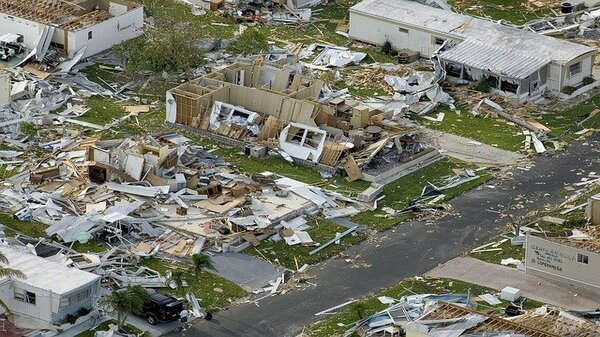
In Louisiana, we are all too familiar with natural disasters. Every “hurricane season,” we hope the storm causes only minor inconvenience; but history teaches us to prepare for more. When these storms come, home and business owners inevitably make post-disaster insurance claims to repair the damage. While the specific amount owed for property damage is determined by the terms of the policy, the amount received may be affected by when (and if) the damage is repaired.

An insurer will work with you to identify the “actual cash value” or “ACV” of the damaged property when handling your claim. “ACV” is defined as the cost to repair/replace the damage, less depreciation. Jouve v. State Farm Fire and Cas. Co., 2010-1522 (La.App. 4 Cir. 8/17/11), 74 So.3d 220. Many policies provide that an insurer is not obligated to provide you with more than the “ACV” of the damage, unless and until you actually make repairs. Later, you can recover the depreciation amount once you submit proof that the repairs are complete. Courts have enforced such provisions in many cases, regardless of the type of loss.

So, what happens if you never make the repairs? Simply, the insurance company may never owe the depreciation. In Hackman v. EMC Ins. Co., 07-552 (La.App. 5 Cir. 3/25/08), 984 So.2d 139, the plaintiff’s property was damaged by a fire. The insurer paid the ACV of the loss but withheld depreciation pending repairs. The plaintiff never made the repairs and ultimately sold the property. The Court ruled the plaintiff was not entitled to recover the difference.

Similarly, in Jouve v. State Farm Fire & Cas. Co., supra, the plaintiffs’ home was damaged by wind during Hurricane Katrina. Their insurer paid the ACV of the loss. Thereafter, the plaintiffs sold the home “as is” and sought recovery for the depreciation. The court reviewed the policy and found the plaintiffs’ sale of the home without repairs limited their recovery to ACV.

As with any insurance claim, you should always read your policy before losses occur to ensure you understand its terms and conditions. Maybe add this as an unusual step to your hurricane checklist. As these cases show, your ultimate recovery can be affected by what you do, or do not do, following the loss.

Posted by:

Disclaimer

Keogh Cox & Wilson, Ltd. provides this blog as a public service for general information only. The materials contained herein may not reflect the most current legal developments or even express the opinion of all or even most of Keogh Cox attorneys. Such material does not constitute legal advice or form any attorney-client relationship. Keogh Cox and all contributing author(s) expressly disclaim all liability to any person with respect to the contents of this Web site and Blog and expect that no reliance will be made upon the information provided.

Continue Reading

Explore legal perspectives on the issues shaping Louisiana's key industries and courtrooms.

Insight

The Rise of the Drones

Drones play an increasing role in modern life; all indications are that this role will increase, maybe to disturbing levels. The popularity and availability of drones have sky-rocketed in recent years. As with most new technologies, the development of the law to regulate this technology lags behind. To their credit, the DOT and FAA have been pro-active in developing regulations. This article will address some of these regulations and the expected development of future regulations.

Initially, the FAA prohibited the use of drones in the commercial industry. Gradually, the FAA granted exemptions to certain companies for the commercial use of drones. These exemptions permitted these companies to use drones for:

(i) the movie and video industry;

(ii) real estate photography;

(iii) agricultural monitoring;

(iv) aerial surveying;

(v) delivery of medical supplies in rural areas; and,

(vi) inspecting flare stacks

Applying for exemptions can be costly and the outcome is not guaranteed. However with growing commercial demand, the FAA has gradually loosened its restrictions and granted more exemptions.

The FAA and DOT finalized the first operational rules for routine commercial use of drones which took effect in August 2016. These regulations are available at: http://www.faa.gov/uas/media/Part_107_Summary.pdf. The issuance of these regulations is projected to generate $82 billion for the U.S. economy and create more than 100,000 jobs over the next ten years.

While these regulations are fairly comprehensive, they prohibit the use of drones beyond the line of sight of the operator over unprotected persons on the ground. Further, there are limitations on size and when drones can be flown. Based on these restrictions, plans to use drones for delivery services will likely have to wait. However, the FAA is permitting companies to apply for waivers, available if companies demonstrate that the proposed flight will be conducted safely. Even if a drone flight is permitted, air traffic control authorization is required if the flight is in controlled airspace. Requests for waivers and authorization must be applied for on the FAA’s online portal located at https://www.faa.gov/uas/.

The FAA is trying to balance the benefits of drone use with its mission to protect public safety. The FAA also provides all drone users with recommended privacy guidelines and is set to issue new guidance to local and state governments on drone privacy concerns.

The White House announced that the FAA is currently working on developing regulations to permit the safe and beneficial use of drones over crowds. As part of this development, the FAA launched an Unmanned Aircraft Safety Team and a Drone Advisory Committee.

We expect the FAA to allow a more expansive use of drones in the years to come. Like it or not, the drones are here and are not going away; they are rising.

Insight

La. Supreme Court Rules 10-year Contract Prescription Applies to 1st Party Claims Against Insurer

In a first-party action obtained by assignment for excess liability against an insurer, the Louisiana Supreme Court in Smith v. Citadel Insurance,19-00052 (La. 10/22/19) ruled that the claim against the carrier is subject to the 10-year contract prescription period under La. law, stating:

“For the above reasons, we hold an insurer’s duty of good faith owed to its insured under La. R.S. 22:1973 does not exist separate and apart from an insurer’s contractual obligations. The duty of good faith is codified in La. R.S. 22:1973, but this duty is an outgrowth of the contractual and fiduciary relationship between the insured and the insurer, and the duty of good faith and fair dealing emanates from the contract between the parties. Thus, first-party bad faith claims against an insurer are governed by the ten-year prescriptive period set forth in La. C.C. art. 3499. Consequently, Ms. Smith’s first-party bad faith claim against GoAuto, brought pursuant to an assignment of rights from the insured, was subject to a 10-year prescriptive period and is not prescribed.”

The concurring justice noted that it was not necessary to engage in the protracted discussion concerning the duties of insurers relative to first-party claims. Nevertheless, the court offered an in-depth discussion of these duties.

Insight

Insurance Coverage for “Temporary Substitute Autos” in Louisiana

Louisiana insurance law recognizes a practical problem faced by many: the need to obtain alternative transportation when the car won’t start. Under La. R.S. 22:1296, any insurance on your personal vehicle must also extend to vehicles that are used as “temporary substitute autos.”

The statute provides that a car’s status as a “temporary substitute auto” depends on how the term is defined in the particular auto policy at issue. However, some rules typically apply to determine whether the auto is a “temporary substitute.” First, the use must be temporary, i.e. limited in duration. Second, the car must be a substitute for the auto insured under the policy and used for the same purpose. Third, policies typically limit coverage to substitute vehicles that the driver does not own.

Some policies also limit coverage by requiring that the substitution be needed for a purpose identified in the policy, such as the breakdown, repair, or destruction of the covered auto.

While the statute generally defers to the definition of “temporary substitute auto” provided in the policy, sometimes courts will overrule the insurer’s definition. For instance, in State Farm Mutual Automobile Insurance Company v. Safeway Insurance Company, 50-098 (La. App. 2 Cir. 9/30/15), 180 So.3d 450, the relevant policy defined a “temporary substitute auto” as a substitute for the owned auto when the owned auto was “being serviced or repaired by a person engaged in the business of selling, repairing, or servicing motor vehicles.” The case involved a motor vehicle accident that occurred while the policy holder operated a borrowed vehicle but before she brought her usual vehicle to a mechanic.

Citing the terms of the policy, the insurer denied coverage on grounds that the policy required the “temporary substitute auto” not only take the place of the driver’s usual vehicle, but also that the driver take the car to a mechanic before coverage would extend to the substitute vehicle. However, the court found this requirement to be against the public policies behind La. R.S. 22:1296 and found coverage under the policy extended to the borrowed vehicle.

Sydnee D. Menou

Partner
Construction
Flood
Insurance
Property
Hurricane