Insight

An Insurer's Duty: To Defend or Not To Defend

Published on: January 8, 2020

Primary insurance policies include the duty to defend aninsured in connection with a covered loss. The insurer is sometimes presentedwith the question of whether a defense is owed when many of the allegations arenot apparently covered by a particular policy. In this circumstance, how doesan insurer determine its obligation? The law provides the answer: the “eightcorners” rule—do the four corners of the policy unambiguously exclude coveragein all respects when viewed within the context of the four corners of thepetition? If the answer is “no,” the duty to defend arises. Mossy Motors,Inc. v. Cameras America, 2004-0726 (La. App. 4 Cir. 3/2/05), 898 So.2d 602,606.

Courts generally hold that the duty to defend the caseextends to ALL claims, not just the covered claims. This duty can often provequite costly, especially when non-covered claims are high-value or involveextensive factual development or testimony to defend. In some instances, theanswer under the eight corners analysis is not so clear. The safe choice forthe insurer is to provide a defense and hire separate counsel to handle thecoverage side of the case.

In this scenario, where an insurer has serious coveragedefenses, but agrees to provide the defense, when does the duty to defend terminate?The Louisiana First Circuit Court of Appeal recently ruled on this issue againin Ponchartrain Natural Gas System, K/D/S Promix, L.L.C. and Acadian GasPipeline System v. Texas Brine Company, L.L.C., No. 2018 CA 0254 (La. App.12/12/19), stating:

“Our previous decisions in the related sinkhole appeals clearly set out the well-established rule of law that an insurer' s duty to defend terminates once the undisputed facts establish, or a judicial determination is made, that the claims asserted are not covered under the policy. See Florida Gas, 272 So. 3d at 551; Pontchartrain, 264 So.3d at 553- 54; Crosstex, 240 So.3d at 1032.”

So, the duty to defend ends when undisputed facts establishOR a judicial determination is made that the asserted claims are not covered.Of course, who is to say that the facts are “undisputed” without a judicialdetermination that confirms this conclusion. An insurer couldunilaterally determine that facts are undisputed and terminate the defensebefore a judicial determination, but if the court does not agree, the insurermay have issues. Accordingly, the safe course is to await a judicialdetermination before an insurer terminates the defense.

It is important to distinguish the duty of an excess carrierbecause such policies generally do not provide an obligation to defend.Instead, the excess carrier may exercise its “right to defend.”

Posted by:

Disclaimer

Keogh Cox & Wilson, Ltd. provides this blog as a public service for general information only. The materials contained herein may not reflect the most current legal developments or even express the opinion of all or even most of Keogh Cox attorneys. Such material does not constitute legal advice or form any attorney-client relationship. Keogh Cox and all contributing author(s) expressly disclaim all liability to any person with respect to the contents of this Web site and Blog and expect that no reliance will be made upon the information provided.

Continue Reading

Explore legal perspectives on the issues shaping Louisiana's key industries and courtrooms.

Insight

"IME" Killer Bill Put Down

The Louisiana plaintiffs’ bar recently sought to tilt the scales of justice through Senate Bill 185, a bill seeking to complicate a defendant’s efforts to obtain an Independent Medical Examination ("IME"). An IME is an examination of the plaintiff by a physician or medical examiner hired by the defense. IMEs are important in the defense of a case and often act as a catalyst for settlement or to reduce the value of a claim.Bill 185 was introduced by Senator Jay Luneau (D) and passed with a unanimous 35 – 0 vote in the Senate. The bill proposed amendments to Louisiana Code of Civil Procedure Article 1464 to impose the following conditions upon IMEs:

  • All parties would be barred from referring to an IME as “independent” in the presence of a jury.
  • A plaintiff could not be ordered to submit to multiple examinations by multiple physicians within the same field of specialty, regardless of the number of defendants.
  • The party to be examined would have the right to have a person of his or her choosing present during the exam, including the plaintiff’s attorney.
  • The party to be examined would have the right not only to have the entire examination videotaped, but the ability to force the party requesting the examination to pay for all associated costs.

Were these conditions enforced, many physicians might have chosen not to provide IMEs at all when the process would involve: a potentially adversarial plaintiff’s attorney; a patient room packed with video equipment; and, the spectacle of it all captured on tape. Further, the bill would have stifled the ability to defend injury claims.We may never know what effect these changes might have brought. On May 16, 2017, the House Civil Law and Procedure Committee, involuntarily deferred on a 4-4 vote. This action effectively killed the bill and saved the IME as currently understood. By: John Grinton, a Keogh Cox associate whose practice areas include commercial and construction litigation. When he is not practicing law, John spends most of his time with his wife, Kellye, and their two dogs.

Insight

Louisiana Legislature Sets New Prescription Period for Tort Claims

The Louisiana legislature recently enacted laws that set new prescription periods for most delictual/tort actions and claims for damage caused to immovable property. Civil Code articles 3492 and 3493 previously established a prescription period of one year for these types of claims. The legislature repealed these articles and enacted Louisiana Code Articles 3493.1 and 3493.2 in their place.

Louisiana Code Article 3493.1 now establishes a prescriptive period of two (2) years for delictual actions/tort claims that runs from the day injury occurred or damage is sustained. It contains language previously included in Louisiana Civil Code Article 3492, which states that prescriptive period does not run against minors or interdicts in actions involving permanent disability and brought pursuant to the Louisiana Products Liability Act or state law governing product liability actions in effect at the time of the injury or damage.

Louisiana Civil Code Article 3493.2 also establishes a prescriptive period of two (2) years when damage is caused to immovable property. This prescriptive period runs from the day the owner of the immovable acquired, or should have acquired, knowledge of the damage.

These changes went into effect of July 1, 2024. Louisiana Civil Code Articles 3493.1 and 3493.2 apply prospectively only and apply to delictual actions arising after July 1, 2024.

Insight

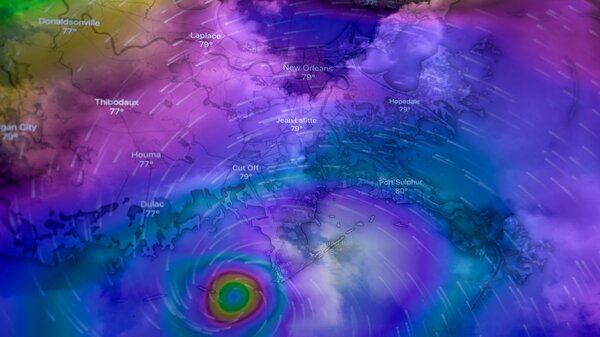
Here Comes Hurricane Ida: What To Do If Your Home is Damaged by a Storm or Flood

Unfortunately, Louisianians have endured many natural disasters in the past several years. From the historic flooding in Baton Rouge in August 2016 to the devastation caused by Hurricanes Laura and Delta in 2020, Gulf Coast residents are very familiar with significant storms and flooding events. While the rebuilding process will take months or years to complete, this article is designed to provide some basic information on how to document and report your property damage claim and apply for and obtain disaster assistance.

  • DOCUMENT, DOCUMENT, DOCUMENT - Once you are able to do so, make sure to document the damages to your home and contents. Whether for a homeowners or flood insurance policy or to obtain government assistance, take plenty of photos of the damage. Make a list of the items in your home that were damaged or destroyed. One way to organize this list is to list each item from each room together, approximate its age, where it was purchased and its value when purchased. As you rebuild, and materials and items are thrown out, it will be much more difficult to document your claim.
  • REPORT YOUR CLAIM – Report your damage to your homeowners or flood insurer as soon as possible. Provide as much detail about the damage as you can. If you are unaware of your insurer, contact your insurance agent who can help you to report your claim.
  • OBTAIN MULTIPLE ESTIMATES - Although it is often difficult to do so after a natural disaster because of the volume of work, obtain multiple estimates for the work needed on your home. Pay for the estimate if necessary. If you have three estimates and the amounts are close, they are much more credible. Also, try and get as much detail as possible in each estimate, including specific materials to be used, dimensions, and finishes.
  • SAVE YOUR RECEIPTS – Whether for repairs you undertake to fix the damage to your home, to replace contents, or for living expenses after the storm, save your receipts. These receipts will be used to document your losses and verify the amount of your claim to your insurer.
  • FOLLOW UP WITH YOUR INSURER - Provide whatever is requested by your insurer as they adjust your claim. Communicate with your insurer on a regular basis. Although it may seem tedious, communication with your insurer during the claim is important.
  • APPLY FOR ASSISTANCE - Especially if your property is not insured, make sure to immediately apply for government assistance. You can apply for federal assistance at www.disasterassistance.gov. Oftentimes, the state government will also administer federal or state disaster assistance funds.

John P. Wolff III

Senior Partner
Insurance
Louisiana