Insight

A Matter of Control of a Bike Results in No Liability under the LPLA

Published on: January 24, 2020

A Louisiana man logged onto eBay. To save some money, hebought a used racing bicycle. While riding this bike through his neighborhood,he noticed an unlevel section of the roadway and attempted a “bunny hop” overthe gap in the pavement. The front wheel disconnected when he landed. Thecyclist lost control and flipped over the handlebars, sustaining seriousinjuries. He later filed suit against Specialized, the manufacturer of thebicycle, under the Louisiana Products Liability Act (“LPLA”). See Delahoussaye v. Boelter, --- So.3d---,2019-0026 (La. App. 1 Cir. 11/15/19).

The evidence in Delahoussaye showed that the bike wasmissing its “secondary retention device,” which keeps the wheel fromdisengaging if the “quick release” on clamp on the front fork is not engagedproperly. Also, no warnings were found on the bike. Based upon this evidence,the cyclist claimed Specialized should be liable because the bike wasdefective; unreasonably dangerous in its design, construction, and manufacture;and inadequate in its instructions and warnings.

To recover from a manufacturer under the LPLA, a plaintiffmust show that the product (here, the bike) was unreasonably dangerous atthe time it left the manufacturer’s control. Photographs of the bike showeda light, silver spot on the bike where the secondary retention device had beenlocated. This confirmed that the secondary retention device was removed afterit originally was manufactured. Evidence also showed that warning stickersoriginally on the bike had been removed.

These changes were made after Specialized lost control of the bike. Because the bike was not defective when the product left Specialized’s control, Specialized, as the bike’s manufacturer, could not be liable under the LPLA for injuries the plaintiff sustained when he lost control of the bike. In short, this case came down to a matter of control.

Reynolds LeBlanc is a partner at Keogh Cox. His practice areas include commercial litigation, personal injury claims, appeals, and other matters. Reynolds is a former teacher, who in his free time plays music and perpetually talks himself into training for his next marathon.

Posted by:

Disclaimer

Keogh Cox & Wilson, Ltd. provides this blog as a public service for general information only. The materials contained herein may not reflect the most current legal developments or even express the opinion of all or even most of Keogh Cox attorneys. Such material does not constitute legal advice or form any attorney-client relationship. Keogh Cox and all contributing author(s) expressly disclaim all liability to any person with respect to the contents of this Web site and Blog and expect that no reliance will be made upon the information provided.

Continue Reading

Explore legal perspectives on the issues shaping Louisiana's key industries and courtrooms.

Insight

Limitation of Liability under the LPLA: Can Internet Retailers be Manufacturers?

The Louisiana Products Liability Act (“LPLA”) contains the exclusivetheories of recovery against a manufacturer for damages caused by its product.The term “manufacturer” within the LPLA includes “the seller of a product whoexercises control over or influences a characteristic of the design,construction, or quality of the product that causes damage.” The rapid growthof e-commerce raises a unique question – how do we classify internet retailers?

Internet retailers generally act as a middleman for third partymanufacturers and online consumers. In this respect, they are not technically“sellers” as defined by the LPLA because they typically do not have controlover the design or construction of the products they sell. Nevertheless, theproper categorization of internet retailers may become important when someoneis injured by a product, as was the case in State Farm Fire and CasualtyCompany v. Amazon.com, Inc., 2019 WL 5616708 (Miss. N.D. 10/31/19) ---F.Supp.3d ---.

In State Farm Fire and Casualty Company v. Amazon.com, Inc., two hoverboards purchased through Amazon caught fire inside a Mississippi home and the home was destroyed. In considering Amazon’s possible liability, the Mississippi Court asked whether Amazon was a “service provider” or a “marketplace.” In Mississippi, a finding that Amazon was a “service provider” would insulate it from the claim. However, if Amazon acted as a “marketplace,” it could be exposed by the common law to a negligent failure-to-warn claim. The Mississippi Court held that, because Amazon operated as a marketplace, the claim against it could go forward.

If similar facts arose in Louisiana, could Amazon or similar retailers be exposed under the LPLA? If an internet retailer established policies that forced a “true” manufacturer to negatively alter product quality, would the LPLA provide a remedy? For example, if an internet retailer sets a price ceiling, this artificial figure, especially if unreasonably low, might pressure a manufacturer to lower product safety. Is setting a price range the exercise of enough control or influence over the “design, construction, or quality of a product” to render internet retailers subject to suit under the LPLA? That is a question likely to be answered in cases to come.

Insight

Summary Judgment Dismissing Unwitnessed Workers’ Comp Accident Affirmed: No Corroborating Evidence

The recent decision in Gibson v. Wal-Mart Louisiana, LLC, 20-0033 (La. App. 4 Cir. 8/27/20), 2020 WL 507804 re-affirms that a workers’ compensation claim based on an unwitnessed accident is subject to pretrial dismissal where there is no corroborating evidence.

In Gibson, the plaintiff, a department manager for Walmart, claimed injury while picking up boxes. Although no one witnessed the incident, the plaintiff claimed that two managers working nearby were made aware of the accident and injuries almost immediately.

Walmart denied the claim in response to numerous “red flags.” For example, the two managers identified by the claimant denied any knowledge. Also, the first reference in a medical record to the alleged June accident came in mid-October.

Walmart filed a motion for summary judgment arguing that plaintiff did not satisfy her evidentiary burden. In response, Gibson countered that the conflict between her testimony, the co-workers’ testimony, and the medical records created genuine issues of material fact to be decided at trial. The OWC trial court granted summary judgment and the plaintiff appealed.

In affirming the dismissal, the Fourth Circuit Court determined that Gibson’s testimony, standing alone, did not create a genuine issue of material fact. The general rule regarding unwitnessed accidents in worker’s compensation cases is well defined. Under this rule, an employee may prove by his or her testimony alone that an unwitnessed accident occurred only if the employee can establish that: (1) no other evidence discredits or casts serious doubt upon the worker's version of the incident; and (2) the worker's testimony is corroborated by the circumstances following the alleged incident. Ardoin v. Firestone Polymers, L.L.C., 10-0245 (La. 1/19/11), 56 So. 3d 215, 218.

Because evidence such as the delay in medical treatment raised doubt and Gibson lacked other corroboration, the dismissal of her claim was upheld. Gibson reminds that questionable unwitnessed accident claims without corroborating evidence can and should be dismissed via pretrial motion, notwithstanding the “relaxed rules of evidence and procedure” in workers’ compensation courts.

Ed Stauss is a partner with Keogh Cox. His practice relates mainly to workers compensation defense and the subrogation recovery. Ed is an avid and long time fan of the professional and major college sports teams in the area. He also enjoys running year-round, from 2 milers & 5Ks in the spring and summer to half marathons and full marathons in the fall and winter.

Insight

Minimal Force of an Impact Matters in Car Accident Litigation

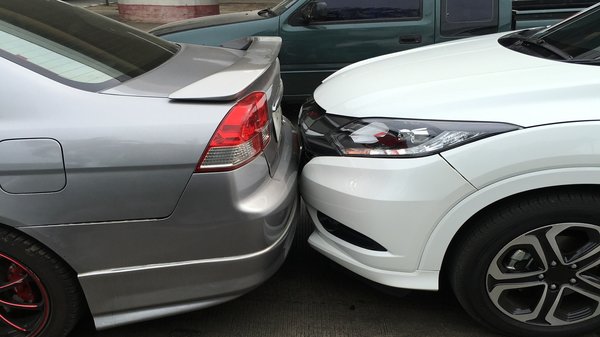
For years, Louisiana plaintiffs attorneys have argued that the force ofimpact in an auto accident is not determinative of their clients’ injuries andshould be afforded little, if any, weight. A recent decision out of theLouisiana First Circuit Court of Appeal does damage to that argument. In Jonesv. Bravata, Jr. and The City of Baton Rouge, 2018 CA 0837 (La. App. 1 Cir.5/9/19), the First Circuit upheld the trial court's jury instruction on “forceof impact” where photographs showed only minor damage and the defendantdescribed the accident as a “bump.”

The accident occurred when a City employee rear-ended the plaintiffs'vehicle. Liability was stipulated and the only question at trial was damages.Mrs. Jones alleged severe neck and back injuries. She began treatment with anorthopedist within a week of the accident and thereafter received five“relatively non-invasive surgical procedures” in lieu of a lumbar fusionsurgery. The jury returned a verdict of $200,000, which included $150,000 inpast medical expenses and $35,000 in future medical expenses, but awardedlittle for general damages. Mrs. Jones appealed the verdict, asserting that thetrial court erred in instructing the jury on force of impact.

The "force of impact" jury instruction in dispute provided:

Whilethe force of a collision may be considered in determining whether a person wasinjured by an accident and the extent of the injuries sustained, it should notbe the only factor to consider in making such a determination. Even though theforce of impact may be slight, it does not preclude an award of damages.However, in determining causation, you may consider the minimal nature of theaccident.

In considering the plaintiff's assignment of error, the First Circuit noted that Mrs. Jones was correct that no witness specifically testified that the accident was too minor to have caused her injuries. However, there was evidence in the record upon which the jury could have reached the conclusion that this was a minimal impact.

Common sense would appear to support a connection between the force of an impact and the injury one could be expected to suffer. The recent Jones decision allows defendants to promote this common sense argument. Where the claimed injuries are disproportionate to the forces involved, this argument can make the difference at trial.

John Grinton is a partner of the firm admitted in state, federal and appellate courts throughout Louisiana. His practice focuses on commercial and construction litigation, representing insurance companies, architects, engineers, contractors and other businesses in all aspects of litigation. His workers’ compensation practice includes representing clients in medical billing disputes, healthcare provider disputes, statutory/borrowing/special employer disputes, and court approved settlements. John has been involved in complex cases involving construction defect claims, breach of contract and negligence actions, insurance coverage issues, lender liability, securities litigation and personal injury matters. He has firsthand experience in jury trials and arbitration's, as well as mediation, appellate briefing and oral argument.

C. Reynolds LeBlanc

Partner
Injury
Liability