Insight

Were You Lying Then, Or Are You Lying Now?

Published on: May 28, 2013
Witness For The Prosecution was a 1957 film about the testimony of a German-born wife whose husband was on trial for murdering a rich woman. Based upon an Agatha Christie novel, the film gave a quote which has been parroted by attorneys ever since.

Sir Wilfrid: And when you said that he had accidentally cut his wrist, again, you lied? 

Helm: Yes!

Sir Wilfrid: And now today you've told us a new story entirely! The question is, Frau Helm, were you lying then, [or] are you lying now? 

Whether in court, deposition or on the big screen, the impeachment of witness creates drama-the kind of drama opposing attorneys try to avoid.

In O'Dwyer v. Our Lady of the Lake, -- So. 3d ---, 2013 WL 2131763 (La. 5/17/13), the Louisiana Supreme Court was asked to decide whether audio recordings of a defense witness must be disclosed before the deposition of the witness. The O'Dwyer plaintiff was a nursing student who alleged that she had been targeted for termination from the nursing program through "harassment, bullying, stalking, and intimidation."

O'Dwyer's attorney sought to depose the nursing program director. The defendant sought production of audiotaped conversations between the program director and another student before the deposition was allowed, and successfully obtained a written order that the audiotapes be produced. The First Circuit denied the plaintiffs' writ, but writs were granted by the Louisiana Supreme Court.

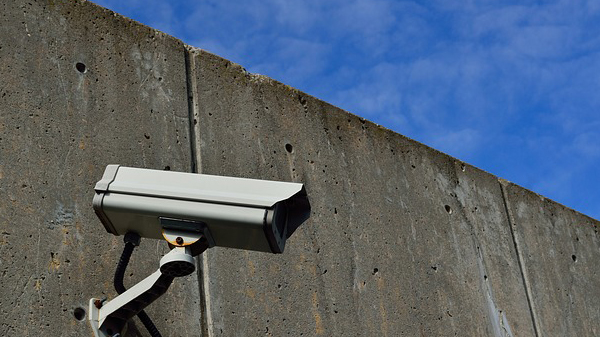
The O'Dwyer Court looked to prior jurisprudence. In Wolford v. JoEllen Smith Psychiatric Hospital, 96-2460 (La. 5/20/97), 693 So. 2d 1164), the Supreme Court held that a defendant was not required to produce surveillance of the plaintiff until after the plaintiff's deposition. The Court highlighted the "important function in the search for truth" served by surveillance. After all, the value of the surveillance could be minimized were a plaintiff able to view the evidence and tailor his or her testimony to match. Therefore, the evidence was viewed as potential impeachment evidence and could be withheld prior to deposition.

In Bell v. Treasure Chest Casino, L.L.C., 06-1538 (La. 2/22/07), 950 So. 2d 654, the Court refused to extend Wolford to the production of video which captured the accident itself. Video of the accident upon which the plaintiff sued was direct evidence and not primarily impeachment evidence. Therefore, it had to be produced prior to the plaintiff's deposition.

In O'Dwyer, the Court concluded that the audiotapes were made for impeachment and therefore need not be produced until after the nursing director's deposition. Justice Weimer, in dissent, challenged the characterization of the audiotapes as exclusively impeachment evidence. He cited to the language of the writ application which described the tapes as "unique evidence that may be used for direct or impeachment evidence at trial."

O'Dwyer indicates that a court may look to the primary function of the evidence in deciding its discoverability. The fact that the audiotapes may serve as direct evidence did not require their production when their primary function was impeachment.

Posted by:

Disclaimer

Keogh Cox & Wilson, Ltd. provides this blog as a public service for general information only. The materials contained herein may not reflect the most current legal developments or even express the opinion of all or even most of Keogh Cox attorneys. Such material does not constitute legal advice or form any attorney-client relationship. Keogh Cox and all contributing author(s) expressly disclaim all liability to any person with respect to the contents of this Web site and Blog and expect that no reliance will be made upon the information provided.

Continue Reading

Explore legal perspectives on the issues shaping Louisiana's key industries and courtrooms.

Insight

Claims for Negligent Spoliation of Evidence Not Supported by Louisiana Law, Reynolds v. Bordelon

In Reynolds v. Bordelon, 2014-2362 (La. 6/30/15), — So.3d—, 2015 WL 3972370, the Louisiana Supreme Court definitively ruled that Louisiana law does not recognize a cause of action for negligent spoliation of evidence. This resolved a disputed issue of Louisiana law.

The Reynolds plaintiff was involved in a multi-car accident in which his airbag failed to deploy. His insurance company paid what was owed for the totaled vehicle under its policy and, in the normal course of business, disposed of the vehicle by auctioning it to a salvage yard. Plaintiff’s petition included a claim against the auto manufacturer for the airbag failure. It also included a claim against his insurance company and the salvage yard for failure to preserve the vehicle as evidence likely to be used in litigation.

The Supreme Court classified the insurer and salvage yard as "third parties" to the lawsuit and categorized the plaintiff's claims against them as a negligent spoliation theory. In rejecting these third-party claims, the Court declared a claim for negligent spoliation to be against Louisiana public policy.

First, the tort would not deter future conduct, but would instead penalize a party unaware of potential wrongdoing. Second, liability for such a tort would be based upon great speculation regarding the value of the evidence at issue. Lastly, it would create unnecessary litigation and place a substantial burden upon society as a whole because third parties not even aware of litigation would be required to adopt cumbersome retention policies to reduce exposure to liability.

To prevent spoliation of evidence by third parties, a plaintiff who anticipates litigation should instead enter into an agreement with the third party or obtain a court order to preserve the evidence. By doing so, the plaintiff preserves a potential breach of contract claim regarding the evidence or can seek remedies for violation of the court order in the event the evidence is lost or destroyed.

Under Reynolds, the plaintiff cannot assert a claim for negligent spoliation of evidence. However, the Court confirmed that discovery sanctions and criminal sanctions remain viable against “first parties” who intentionally destroy evidence, Further, third parties may still be liable if a plaintiff can demonstrate a breach of a contract to preserve the evidence.

Insight

What Happens Outside of Vegas?

The United States Supreme Court recently granted writs in a case that could affect the minimum contacts test used to find jurisdiction were a similar case brought in Louisiana. See Walden v. Fiore, 688 F. 3d 558 (2011). In Walden, the United States Supreme Court will decide whether to uphold the Ninth Circuit's ruling that a court may exercise personal jurisdiction over a defendant whose primary contact with the forum state was his knowledge that the plaintiffs had connections to that state.

In Walden, airline passengers sued a DEA agent who allegedly violated their Fourth Amendment rights in seizing $97,000.00 in cash. At least some of the cash was won on a gambling trip to San Juan, Puerto Rico. The plaintiffs boarded the plane in San Juan with a planned stop in Atlanta in route to Las Vegas.

Once in Atlanta, a drug-detection dog "alerted" to one of the plaintiff's bags. The bags were searched and the $97,000.00 was seized under suspicion of a connection to drug activity. Nevertheless, the plaintiffs were allowed to board their flight to Las Vegas and were promised return of the cash if they could establish its legitimacy.

It was alleged that one of the officers prepared and/or helped to prepare an allegedly false probable cause affidavit to facilitate the forfeiture of the cash to the government. Ultimately, the cash was returned.

The suit was filed in Nevada and was dismissed for lack of personal jurisdiction. In refusing jurisdiction, the District Court cited to the fact that the agent's conduct was "expressly aimed" at Georgia.

On appeal, the Ninth Circuit Court of Appeals, using a three-part test derived from Schwarzenegger v. Fred Martin Motor Co., 374 F.3d 797, 802(9th Cir. 2004), held that the allegations were sufficient to satisfy the "forum-related conduct" prong of the test for specific jurisdiction. Therefore, Nevada jurisdiction was reasonable.

The Ninth Circuit agreed that the officer's seizure of the cash was "expressly aimed" at Georgia and did not support jurisdiction. However, the Ninth Circuit believed that the false probable cause affidavit aspect of the case supported jurisdiction in Nevada.

The Court reasoned that the officer was aware of the plaintiffs' significant connections with Nevada because: the plaintiffs had told the officer that they were going to Las Vegas; some of the funds originated from Las Vegas; and, background checks were run on the plaintiffs after they returned to Nevada. Under these facts, the Court concluded that the officer expressly aimed his conduct at Nevada when he prepared the affidavit and thus subjected himself to the jurisdiction of a Nevada Court.

The facts of Fiore set the stage for an important jurisdictional ruling.

Insight

Sudden Shifts - Burden Shifting under Louisiana Law

Winning or losing in court often comes down to who possesses the burden of proof. Like a driver at a four-way stop, a litigant has to know when it is their turn.

Civil Procedure Article 966, the "Summary Judgment Article," provides that the mover bears the burden of proof. The Louisiana Supreme Court recently addressed this burden in Dan Veuleman & Jody Veuleman v. Mustang Homes, LLC, 2013-C-190 (La. 4/5/13), - So. 3d - in the context of insurance coverage.

The general rule in Louisiana is that an insurer bears the burden of proving that a loss falls within a policy exclusion. In Veuleman, the insurer argued that the loss was excluded through a "work product" exclusion. However, the "work product" exclusion contained a "subcontractor" exception. The plaintiffs argued that the work was performed by a subcontractor and should for that reason be covered under the policy.

At the hearing, the insurer introduced its policy as evidence of the exclusion. However, it offered no evidence to show who performed the work at issue. The plaintiffs attempted to introduce an affidavit to establish that the work was performed by a subcontractor. The court of appeal rejected the affidavit as insufficient and concluded that the plaintiffs did not establish that their claims were spared from the work product exclusion.

The Louisiana Supreme Court disagreed. It stressed that the insurer, not the plaintiff, possessed the burden of proving that the policy exclusion applied. The Court stated that "[t]he insurer offered no proof to accomplish its burden." Id. at 1. 

The Veuleman Court held that the appellate court "erroneously shifted the burden of proof on the motion for summary judgment" to the plaintiffs and that the insurer had the burden to show that "the exception [to the exclusion] is not met." In keeping, the Court vacated the summary judgment and remanded the matter for further proceedings.

The Veuleman decision reminds that a litigant should be aware when it is their turn to go.

Collin J. LeBlanc

Partner
Evidence
Louisiana Supreme Court