Insight

Volunteer Firemen "On the Hook" in Louisiana

Published on: March 26, 2013
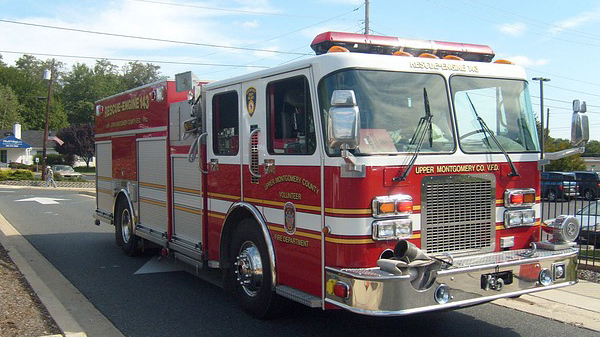
The Louisiana Supreme Court recently held that the workers' compensation tort immunity provided by LSA-R.S. 23:1032 does not apply to suits by one volunteer fireman against another volunteer. See Champagne v. American Alternative Insurance Corp., 12-1697 (La. 3/19/13), -- So.3d ---. LSA-R.S. 23:1036 provides that workers' compensation is the sole and exclusive remedy provided to a volunteer fireman against a fire company. Champagne clarified that this immunity does not similarly apply to claims for personal injury brought by one volunteer fireman against another.

The last sentence of LSA- R.S. 23:1036(A) states as follows:

The remedies provided herein shall constitute the exclusive remedy of the volunteer member against the fire company as provided in R.S. 23:1032.

In Champagne, the attorney for the defendants argued that the legislature's incorporation of LSA-R.S. 23:1032 reflected the intent to extend immunity beyond the language provided by LSA-R.S. 23:1036(A). The defendants asserted that this last sentence has internal inconsistencies; the first portion of the sentence "standing in isolation, can be read to limit workers' compensation immunity solely to the fire company, whereas its last phrase specifically incorporates La. R.S. 23:1032, which applies workers' compensation tort immunity to officers and employees of the employer or principal." Defendants further argued that, "to not include co-volunteers as co-employees under La. R.S. 23:1032 is to render the phrase, 'as provided in La. R.S. 23:1032,' superfluous and meaningless."

The Supreme Court disagreed with the defendants' statutory interpretation arguments. The Court stated: "[t]he fundamental question in all cases of statutory construction is legislative intent and the reasons that prompted the legislature to enact the law." In assessing the legislative intent, the Court gave a "narrow construction" of the statute because the statute sought to provide immunity in derogation of "the delictual rights of injured workers existing in the Louisiana Civil Code." Under this narrow construction, "every presumption should be on the side of preserving the general tort or delictual rights of an injured worker..."

Utilizing a narrow (or "strict") construction of LSA-R.S. 23:1036, the Court found that the legislature did not expressly provide immunity to volunteer firemen. Further, the Court did not find intent to provide such immunity in the legislative history.

Champagne is not the first time a Louisiana court has commented on the application of Louisiana's Workers' Compensation Law to volunteer firemen. In 1994, the First Circuit held that a volunteer fireman was not an "employee" of the fire district and therefore was not eligible for workers' compensation benefits. See Genusa v. Pointe Coupee Volunteer Fire Dist. No. 4, 93-2214 (La. App. 1 Cir. 10/7/94); 644 So.2d 851. The Genusa Court reasoned that workers' compensation did not apply when there was no employer-employee relationship, and that an employer-employee relationship does not exist without compensation.

The Champagne Court expressed its belief that LSA-R.S. 23:1036 was likely enacted in response to Genusa. However, the statute only granted volunteer members of fire companies "some workers' compensation benefits" and did not change "the law to define a volunteer member... as an 'employee' of the fire company for the purposes of immunity under the workers' compensation law." Emphasis added.

Both the Supreme Court and the appellate court in Champagne observed that a denial of immunity to volunteer firemen "may make members of the community reluctant to act as volunteers at their local department." However, the legislature did not clearly provide for such immunity according to Champagne. It would not be surprising to see the Louisiana legislature address the issue of immunity for volunteer firemen moving forward.

Posted by:

Disclaimer

Keogh Cox & Wilson, Ltd. provides this blog as a public service for general information only. The materials contained herein may not reflect the most current legal developments or even express the opinion of all or even most of Keogh Cox attorneys. Such material does not constitute legal advice or form any attorney-client relationship. Keogh Cox and all contributing author(s) expressly disclaim all liability to any person with respect to the contents of this Web site and Blog and expect that no reliance will be made upon the information provided.


Continue Reading

Explore legal perspectives on the issues shaping Louisiana's key industries and courtrooms.

Insight

Workers’ Compensation: A Recent Louisiana Decision Revisits a Fundamental Issue

Historians call it "The Grand Bargain." At its heart, the workers’ compensation law is a bargain, an exchange between the employer and the employee. In this bargain, the employee without having to prove his employer's negligence receives the benefit of continued income and medical treatment. In return, the employer, even if it is at fault, receives protection from tort suits. However, for this bargain to apply, the accident must have occurred within the "course and scope" of employment. But the question of when an accident is considered to have occurred in the "course and scope" is not always as simple to answer as it might otherwise appear.

The issue of course and scope has been litigated many times, in many forums. The recent decision in Jackie Holden v. Mike’s Catfish Inn, Inc. and Massachusetts Bay Insurance Company, 2017 CA 1056 (La. App. 1 Cir. 2/27/18) explores course and scope in the context of an employee who was on break.

In Holden, the plaintiff was "clocked in" and on the premises of her employer. When her daughter called and asked to meet her outside, the plaintiff took an employer-sanctioned work break, walked outside, and fell on the steps, causing injury to her left knee. She filed a tort suit against her employer alleging negligence for failing to remove a foreign substance which allegedly caused her to fall. The employer sought to dismiss the suit under the contention that the plaintiff’s exclusive remedy for the fall was workers’ compensation.

The trial court dismissed the suit as barred by the employer's workers’ compensation protections and plaintiff appealed. The sole issue before the appellate court was whether the plaintiff was in the course and scope. Plaintiff argued that she was on break and had left her designated work duties to speak with her daughter such that her activities at the time of the fall were not work-related. The employer countered that plaintiff remained on the clock during her break and was on the employer’s premises when she fell.

In assessing course and scope, courts consider the time of the accident, the place where the accident occurred, and the employee’s activities at the time of the accident. “An accident occurs in the course and scope of employment when the employee sustains an injury while actively engaged in the performance of her duties during work hours, either on the employer’s premises or at other places where employment activities take the employee.” Holden at p. 6, citing, McLin v. Industrial Specialty Contractors, Inc., 02-1539 (La. 7/2/03), 851 So. 2d 1135.

In ruling against the plaintiff, the Holden court colorfully concluded:

"An employee who is getting paid, is on her employer’s premises, and is on an approved work break is in the course and scope of her employment whether she is visiting her daughter, getting a breath of fresh air, smoking a cigarette, or walking outside to drink a diet coke."

While workers’ compensation is a bargain, Holden reminds that it is a bargain workers will continue to try to escape.

Virginia “Jenny” McLin is a partner at Keogh Cox who practices in the fields of corporate litigation, insurance defense, and workers' compensation defense. When she is not practicing law, Jenny can be found volunteering with the Junior League of Baton Rouge; cheering for the LSU Tigers with her husband, Ryan; or shuffling her two kids to and from dance practice.

Insight

Sudden Emergency Defense: Now More Dispositive

On August 28, 2015, the Louisiana Supreme Court denied a Writ Application in Leandro Carias v. Vernon A. Loren, et al. This denial signifies that the "sudden emergency" defense may be properly applied at the summary judgment level. The defense in the Carias litigation was handled by Keogh Cox attorneys Gracella Gail Simmons and Collin J. LeBlanc.

In Carias, the defendant operated his 18-wheeler traveling eastbound over the Mississippi River Bridge when, according to his testimony, a "phantom driver" abruptly entered into his lane of travel and forcefully applied their brakes. In the sliver of time allowed, the defendant sought to quickly determine if he could safely move from his lane of travel. Incorrectly, he believed that there was sufficient space in the lane to his right and impacted a truck in that lane. In turn, that vehicle rear-ended the plaintiff.

A Motion for Summary Judgment was filed and won based upon the sudden emergency defense, which provides that one is not negligent when they fail to take reasonable measures to avoid an accident when they were presented with: 1) a sudden emergency; 2) which was not of their making; and, 3) which did not allow sufficient time for deliberation. In opposition to the Motion, the plaintiff cited testimony that the defendant was "following too closely," and contended that the defendant was therefore at fault and unable to seek the protections of the defense. In response, it was argued that whether the defendant driver allowed sufficient space between his vehicle and the vehicle to the front was non-material when it was the actions of the phantom driver which exclusively created the sudden emergency.

Plaintiff appealed the grant of summary judgment to the Louisiana First Circuit. Prior to Carias, the Louisiana First Circuit had questioned whether the sudden emergency defense could ever be used at the dispositive motion stage. On this subject, the Louisiana First Circuit stated as follows in Manno v. Gutierrez, 05-0476 (La. App. 1st Cir. 3/29/06); 934 So. 2d 112, 117-118: "while we cannot say that it would never be possible to apply the doctrine on a motion for summary judgment, our research has disclosed no cases from this court that have so applied it, and by the nature of the sudden emergency doctrine, it would seem rarely appropriate on a motion for summary judgment." Nevertheless, the First Circuit upheld the Carias summary judgment finding that, unlike earlier cases, there was no conflicting testimony regarding the defendant's lack of opportunity to assess the situation or take other evasive actions.

In the Writ Application to the Supreme Court, the plaintiff cited to a "split in the Circuits" concerning whether the sudden emergency defense may be used at the summary judgment stage.  In response, it was argued that the decades of jurisprudence following the Louisiana Supreme Court’s establishment of the sudden emergency defense in Hickman v. Southern Pacific Trans. Co., 262 La. 102, 113-114, 262 So.2d 385, 389 (1972) demonstrate that the lower courts have not struggled with this doctrine and that nothing in Hickman nor the Summary Judgment Article prevent a consideration of the sudden emergency defense through motion practice.

As a practical matter, summary judgment may still be difficult to obtain in the context of the sudden emergency defense because of the highly factual context into which the defense is often sought for application. Nevertheless, after Carias, it appears likely that there is no legal prohibition to the use of the doctrine in support of a dispositive Motion for Summary Judgment

Written by:

Gracella Gail Simmons and Collin J. LeBlanc

Insight

Case on a Wire - Last Minute Fax Filing

The Louisiana Supreme Court recently held that a request for service of process made by facsimile filing within ninety days from the filing of the petition, but not perfected until after the ninety days has passed, is a timely request for service of process under LSA-C.C.P. art. 1201. See Brenda Morales and Jerson Rodriguez v. State of Louisiana Through the Board of Supervisors of LSU Through Earl K. Long Medical Center, 12-2301 (La. 1/11/13), --So.3d---.

In reaching its decision, the Morales court addressed whether Louisiana's Facsimile Filing Statute, LSA- R.S. 13:850, required both the payment of fees and the receipt of the original request for service before service is considered to have been requested. Under Louisiana procedure, the petitioner has 90 days to request service upon all defendants. See LSA-C.C.P. art. 1201. When service is not timely requested, the case can be involuntarily dismissed without prejudice on the motion of another party. See LSA-C.C.P. art. 1672(C). This dismissal can result in a later bar to the claim if the re-filed suit is then prescribed and the defendants can show bad faith in the failure to request service or the suit involves a claim against the state or a political subdivision of the state.

In Morales, the Louisiana First Circuit had found that the request for service was not timely because the fax filing fees were not paid by the attorney until after the ninetieth day. The First Circuit relied on the Louisiana Supreme Court's previous ruling in Trachant v. State of Louisiana, Louisiana State University Health Sciences Center, 08-0978 (La. 1/21/09), 5 So.3d 832 which stated that "[a] valid request for service under La. R.S. 13:6107(D)(1) is made when the clerk receives the request for service and can then act on it." The First Circuit reasoned that a clerk cannot act upon a request for service when there is no original request and the corresponding fees had not been paid. However, Trachant did not involve fax filing and instead considered whether a request for service is effective when it is placed in the mailbox or when it is received by the clerk. This is sometimes referred to as the "mailbox rule." The Trachant court held that actual receipt of the request was required.

The Louisiana Supreme Court in Morales disagreed with the First Circuit and found that the clerk can "act upon" receipt of the facsimile filing. The Court emphasized that LSA- R.S. 13:850(A) provides that a facsimile filing "shall be deemed complete at the time that the facsimile transmission is received and a receipt of transmission has been transmitted to the sender by the clerk of court." The Morales Court harmonized its ruling with Trachant by finding that the Court has always held that the receipt of the request must occur within the 90 day period.

Even after Morales, a request for service of process should be followed by the prompt mailing of the original signed document and the required transmission fee. However, Morales indicates that Louisiana's highest court is likely to give consideration to preserving a claim when interpreting the otherwise strict requirements of Louisiana's Facsimile Filing Statute.

No items found.
Louisiana Supreme Court
Supreme Court
Workers' Compensation