Insight

Treating Physician Testimony – Pitfalls for Plaintiffs & Opportunities for Defendants

Published on: October 24, 2018

A party that wants to rely upon the testimony of a treating physician to support a personal injury case in federal court should be sure to consult the Federal Rules of Civil Procedure. Different rules will apply depending on the scope of the treating physician’s testimony.

Rule 26 sets two standards for expert disclosures. 26(a)(2)(C) sets a “lower standard” that typically applies to treating physicians. Under this standard, the treating physician may provide testimony beyond his personal knowledge, but he must base his opinions on “facts or data obtained or observed in the course of the sequence of events giving rise to the litigation.” LaShip, LLC v. Hayward Baker, Inc., 296 F.R.D. 475 (E.D.La. Nov. 13, 2013). Further, the physician may be permitted to testify regarding causation and future medical treatment if these opinions come from the doctor’s actual treatment of the party.

Under this “lower standard,” the party seeking to offer the physician’s testimony, usually the plaintiff, must timely disclose: (1) the subject matter on which the treating physician is expected to present evidence; and (2) a summary of the facts and opinions to which he is expected to testify. Importantly, production of a plaintiff’s medical records alone is not sufficient – the plaintiff must actually provide a summary of the physician’s opinions. See e.g. Williams v. State, 2015 WL 5438596, at *4 (M.D. La. Sept. 14, 2015). If the party fails to timely disclose this information, he runs a substantial risk of having his testimony excluded from trial.

Where the physician’s testimony goes beyond the medical records or his treatment of the plaintiff, a “higher standard” can apply to the physician’s testimony. Rule 26(a)(2)(B). The physician may be required to produce a complete expert report to disclose: (1) a complete statement of all opinions the witness will express and the basis and reasons for them; (2) the facts or data considered by the witness in forming them; (3) any exhibits that will be used to summarize or support them; (4) the witness’s qualifications, including a list of publications authored in the last 4 years; (5) a list of all cases the expert has been used as an expert at trial or in depositions; and (6) a statement of the compensation the witness is to be paid for his work and testimony.

Application of this “higher standard” often turns on the frequency and recency of the physician’s treatment. Courts are also more likely to apply the higher standard when the physician’s opinions are based general scientific knowledge of the plaintiff’s condition rather than his actual treatment of the plaintiff.

John Grinton, a Keogh Cox associate whose practice areas include commercial and construction litigation. When he is not practicing law, John spends most of his time with his wife and son, and their two dogs.

Posted by:

Disclaimer

Keogh Cox & Wilson, Ltd. provides this blog as a public service for general information only. The materials contained herein may not reflect the most current legal developments or even express the opinion of all or even most of Keogh Cox attorneys. Such material does not constitute legal advice or form any attorney-client relationship. Keogh Cox and all contributing author(s) expressly disclaim all liability to any person with respect to the contents of this Web site and Blog and expect that no reliance will be made upon the information provided.

Continue Reading

Explore legal perspectives on the issues shaping Louisiana's key industries and courtrooms.

Insight

When the Stakes are High: Class Actions in Louisiana

They make movies about “class actions” exactly because they can involve high stakes, with millions, even billions of dollars on the line. The class action procedure can create exposure at this level because of the large numbers of potential claims involved. Class actions are used to address losses experienced from unfair or fraudulent business practices, natural disasters, industrial explosions, or any event or action which is alleged to have damaged a large group in a similar way.

As a procedural device, the class action combines several claims (often hundreds or thousands) into a single action. A key battle in most Louisiana class actions is whether the proposed claim can properly be “certified” as a class action under Louisiana procedure. The recent Fourth Circuit decision in Duhon v. Harbor Homeowners’ Ass’n., Inc., 2016 WL 3551620 (La. App. 4 Cir. 6/30/16) addressed whether the lower court’s class “certification” was proper under Louisiana Code of Civil Procedure Article 591.

Duhon involved damages experienced following hurricanes Katrina and Rita. In particular, the class representatives sought damages against the Harbor View Condominium Association and its insurers claiming that the association was guilty of faulty repairs following these two hurricanes. In deciding whether certification was proper, the Duhon court considered the following elements, all of which must be present to certify a proper class action:

Numerosity- the class must be so numerous that joinder of all involved persons would prove impractical;

Commonality- the case must present questions of law and fact that are common to the class;

Typicality- the claims and defenses of the representative parties must be typical of the claims or defenses of the class; and,

Adequacy of representation- the representative parties must be positioned to fairly and adequately protect the interest of the class.

After analyzing each of these “elements,” the Duhon court upheld the Trial Court’s certification of the claim as a class action. Further, the court concluded that the questions of law and fact common to the members of the class predominated over any questions affecting only individual members such that a class action was superior to other available methods to fairly and efficiently adjudicate the controversy.

While the class action procedure has its detractors, it is sometimes the only real option to address a harm to a large group. Now that the class in Duhon has been certified, the case will proceed through discovery and towards trial on the merits. Who knows, they may make a movie about it someday.

Insight

Impact of the U.S. Supreme Court’s Decision in Trump v. CASA, Inc. on Universal Injunctions and Class Actions

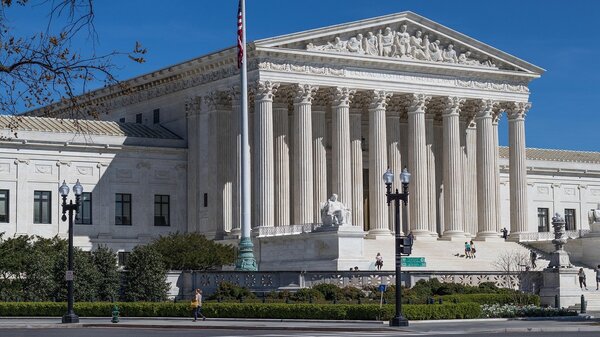
On June 27, 2025, in an Opinion authored by Justice Amy Coney Barrett, the United States Supreme Court determined that “universal injunctions,” injunctions issued by district judges that apply nationwide, “likely exceed the equitable authority that Congress has given to federal courts.” In Trump v. CASA, Inc., the Supreme Court, with a 6-3 vote, concluded that district courts do not have authority to issue universal injunctions which seek to prohibit the enforcement of a law or policy against anyone nationwide. The decision limits the relief afforded by the district courts in consolidated matters to only the parties in those actions.

By prohibiting the use of “universal injunctions” in federal courts, litigants already have started to utilize another procedure to seek the relief they seek – class actions. Class actions are a special procedure provided by both federal and state law that allows one or more class representatives to file suit and seek to represent the interests of other similarly situated individuals or companies. Prior to the Supreme Court’s ruling in Trump v. CASA, Inc., a single litigant could apply for a universal injunction through an individual action. Now that the Supreme Court has declared that process unavailable for application of an injunction nationwide, class actions may be the procedural process litigants attempt to use to achieve that same purpose. It remains to be seen whether class actions will be an effective way to achieve broader relief for individuals impacted by government policies.

References:

Trump v. CASA, Inc., --- S.Ct. ---, No. 24A884, 2025 WL 1773631 (U.S. June 27, 2025).

Insight

Novel Coronavirus Breeds Novel Litigation: Business Interruption Suits in the Age of COVID-19

The nation’s first suit seeking a declaration of coverage under a commercial property policy for business interruption and extra expenses incurred as a result of COVID-19 was filed in a Louisiana state court on March 20, 2020. Since then, similar suits have been filed across the nation by restaurants, casinos, dentists, dive shops, movie theatres, repertory theatre companies, etc. Clearly, the same coverage issues raised in the Louisiana case will be litigated throughout the nation.

The suit in Cajun Conti, LLC, et al v. Certain Underwriters at Lloyd’s, London, et al, Suit No. 2020-02558, was filed on March 16, 2020, in the Civil District Court for the Parish of Orleans, State of Louisiana. Plaintiffs, doing business as Oceana Grill, a restaurant in the French Quarter, allege coverage should be declared to exist because: 1) the property policy is an “all risks” policy such that all risks are covered unless the insurer can clearly and specifically establish an exclusion from coverage; 2) the policy does not contain any exclusion “for losses from a virus or global pandemic;” 3) the virus has “physically impact[ed] public and private property” as it “physically infects and stays on the surface of objects or materials, ‘fomites,’ for up to twenty-eight days;” 4) such “contamination … [is] a direct physical loss needing remediation;” and, alternatively and in addition, 5) the current and future state orders limiting its operations serve to trigger the civil authority provisions of its policy.

A key issue in Cajun Conti as well as in the other COVID-19 business interruption coverage litigation will be whether the existence of the novel coronavirus constitutes a “direct physical loss or damage” under the intendment of an all risks property policy. The Cajun Conti plaintiffs cite to Widder v. Louisiana Citizens Prop. Ins. Corp., 2011-0196 (La. App. 4 Cir. 8/10/11), 82 So.3d 294, writ denied, 2011-2336 (La. 12/2/11) for the premise that the existence of a hazardous condition that renders the insured property unusable or uninhabitable is sufficient to constitute a “physical loss or damage” sufficient to trigger coverage. Notably, in Widder, the actual presence of inorganic lead in the insured property was confirmed to exist and coverage was therefore available. Because policyholders have the burden to establish the existence of “physical loss or damage,” reliance on Widder may require the Cajun Conti plaintiffs to establish coronavirus was actually present in their property or that its presence otherwise caused their property to be unusable or uninhabitable. Presence in the community may not be sufficient to prove the coronavirus made the insured property uninhabitable or unusable.

One of the items of proof required for the triggering of coverage under the civil authority provisions of a commercial property policy is that the alleged business loss was caused by an action by the civil authority that prohibited access to the insured premises. Relying on out-of-state jurisprudence, one Louisiana federal court has determined this factor requires proof that access to the insured premises be “actually and completely prohibited,” which is not satisfied if the access is merely “limited or hampered.” Kean, Miller v. National Fire Ins. Co. of Hartford, C.A. No. 06-770 (M.D. La. Aug. 29, 2007), 2007 WL 2489711, *4-*6. The state orders expressly referenced in the Cajun Conti suit would appear not to satisfy this standard as they served only to limit occupancy and required earlier closures. Even the subsequent stay-at-home orders [Proclamation Number 33 JBE 2020 and 41 JBE 2020, issued respectively on March 22, 2020 and April 2, 2020], may likely be insufficient to satisfy this requirement as they do not expressly mandate closure of restaurants, but simply require restaurants to “reduce operations to continue minimum contact with members of the public,” expressly allow for curbside delivery, drive-thru, and delivery services, and only prohibit the consumption of food and beverages on site.

The specific facts of each business interruption claim and the terms of the relevant policy should be considered in every occasion. Yet, these suits may face problems of proof generally. For now, we expect the novel suits to continue.

John has been practicing over 30 years and is a Senior Partner with firm where he serves on the Management Committee. He has devoted attention to non-profit boards dedicated to assisting at risk children. He enjoys time with his three children and grandchildren. He also enjoys tennis and hiking.

Nancy B. Gilbert is a partner with Keogh Cox in Baton Rouge, Louisiana. She is a puzzle-solver by nature, and specializes in providing clear and in-depth analysis of complex litigation issues.

No items found.
Federal Courts
Litigation