Insight

Outdoor Living:  Federal Court Rules That Uneven Terrain in Parking Lot Does Not Present an Unreasonable Risk of Harm

Published on: October 5, 2022

A federal court for the Middle District of Louisiana recently ruled that a 1½ inch elevation change in a Walmart parking lot did not present an unreasonable risk of harm to the plaintiff patron in Lacaze v. Walmart Stores, Inc. The case involved a slip and fall/trip and fall accident in the parking lot of Walmart’s Burbank Drive store in Baton Rouge. The defendant moved to dismiss the suit where the plaintiff claimed she tripped and fell as she crossed the area where the black asphalt parking lot adjoined the concrete crosswalk as pictured below.
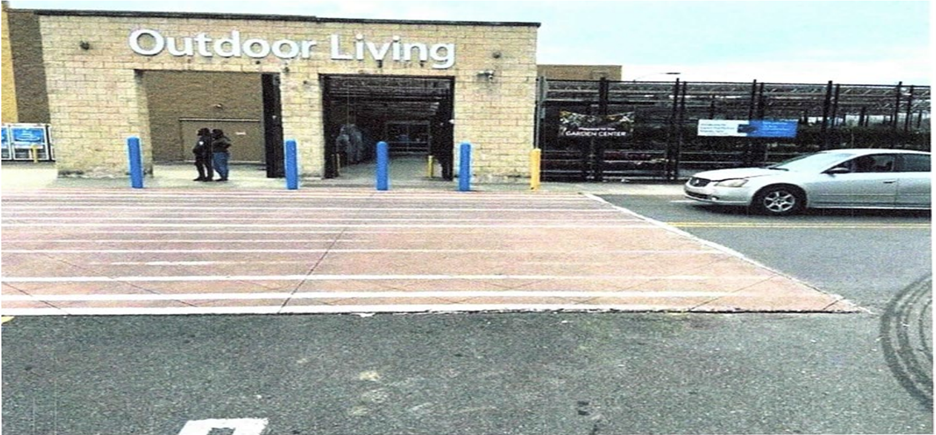
In the area where the asphalt meets the crosswalk, the surface presented a ¼ inch to 1½ inch change in elevation. Plaintiff admitted the black pavement was distinct in appearance and color from the concrete crosswalk. Surveillance showed that plaintiff looked down at her cell phone at the time she tripped and fell. Though in a high pedestrian traffic area, Wal-Mart maintained this was the first reported incident.

The Court found the condition was open and obvious and did not present an unreasonable risk of harm. To reach this decision, the Court made the following observations:

  1. Parking lots have clear and apparent utility. Crosswalks do as well. Crosswalks give patrons a designated area to traverse the lot safely.
  2. The likelihood and magnitude of the risk posed by the condition was low. The Court noted it is common for surfaces of parking lots and sidewalks to be irregular, and no other patrons reported problems or accidents.
  3. The cost of preventing the harm was high. The Court would not consider only the cost of fixing the specific injury-causing defect. Rather, it considered the cost of eliminating all defects in the Walmart parking lot.
  4. Plaintiff conducted an ordinary commercial activity that was not dangerous in nature.

The Court concluded that all but factor four pointed to a single conclusion: the 1½ inch elevation difference did not pose an unreasonable risk of harm. The Court reached this conclusion even though the plaintiff retained an expert who gave opinions regarding possible violations of the Americans with Disabilities Act (ADA) and OSHA regulations. The expert’s opinions were insufficient to defeat summary judgment when the condition was open and obvious. In reaching its ultimate conclusion, the Court joined with several other courts, including the following:

  • Chambers v. Vill. of Moreauville, where a one-and-one half inch deviation did not present an unreasonable risk of harm;
  • Reed v. Wal-Mart Stores, where a height variance of one-fourth to one-half inch between concrete blocks in parking lot did not present an unreasonable risk of harm; and
  • Boyle v. Board of Sup'rs, Louisiana State University, where a depression of up to one inch in a sidewalk did not pose unreasonable risk of harm.

Case References: Lacaze v. Walmart Stores, Inc., No. CV 20-696-JWD-EWD, 2022 WL 4227240 (M.D. La. Sept. 13, 2022); Chambers v. Vill. of Moreauville, 2011-0898 (La. 01/24/12), 85 So.3d 593; Reed v. Wal-Mart Stores, 97-1174 (La. 03/04/98), 708 So.2d 362; and Boyle v. Board of Sup'rs, Louisiana State University, 96-1158 (La. 01/14/97), 685 So.2d 1080.

Posted by:

Disclaimer

Keogh Cox & Wilson, Ltd. provides this blog as a public service for general information only. The materials contained herein may not reflect the most current legal developments or even express the opinion of all or even most of Keogh Cox attorneys. Such material does not constitute legal advice or form any attorney-client relationship. Keogh Cox and all contributing author(s) expressly disclaim all liability to any person with respect to the contents of this Web site and Blog and expect that no reliance will be made upon the information provided.

Continue Reading

Explore legal perspectives on the issues shaping Louisiana's key industries and courtrooms.

Insight

Louisiana Court Limits Use of Biomechanical Expert Testimony

The use of biomechanical expert testimony in Louisiana courts has evolved over the last few years. A recent decision from the Louisiana Fifth Circuit Court of Appeal provides an example of the changing standards for the admissibility of biomechanical expert testimony and its relation to medical causation.

In Pollard v. 21st Century Centennial Ins. Co., 21-65 (La. App. 5 Cir. 12/23/21), 334 So. 3d 1013, writ denied, 2022-00163 (La. 4/20/22), the defendants argued that the underlying accident involved a minor rear-end impact not likely to cause injury. The defendants hired a biomechanical expert who was also a medical doctor. The expert performed an “impact severity analysis” to determine the force of impact in the collision.

The expert concluded that the accident involved a minimum damage collision; he relied upon the “force reflection method” and test data at his crash test facility to determine how fast the rear-ending vehicle would have traveled to cause the damage present on the plaintiff’s vehicle. Based upon his findings, the expert opined that the plaintiff was not seriously injured in the collision. He went further to testify that specific injuries could not have been caused by the forces involved.

The Fifth Circuit noted the same expert was previously excluded in a case that went to the Louisiana Supreme Court in Blair v. Coney, 2019-00795 (La. 4/3/20), reh'g denied, 2019-00795 (La. 7/9/20), 298 So. 3d 168, where the Court found the expert’s testimony to be based upon insufficient facts or data. In Blair, the Supreme Court found the expert’s testimony should be excluded because he did not (1) inspect either vehicle involved in the collision; (2) speak with the damage appraisers; (3) know the plaintiff’s body position at the time of the accident; (4) inspect plaintiff’s vehicle for variance from the test-vehicle or (5) interview the plaintiff. Thus, his testimony failed to meet the requirements of C.E. art. 702(A)(2).

Citing the Blair decision, the Louisiana Fifth Circuit in Pollard concluded that the expert “relied on the same [improper] methodology in reaching his conclusions.” Therefore, the appellate court found the trial court erred in denying a motion in limine to exclude the expert’s testimony. Although the expert cited to peer-reviewed literature to support his conclusions, the evidence revealed that “most of the research and articles” he cited were either written by him or one of his employees.

Effective January 1, 2021, Louisiana amended La. R.S. 32.295.1, which now allows the admission of a plaintiff’s failure to wear a seat belt as a factor to be considered in comparative fault. Defendants will seek to use biomechanical experts to prove that the failure to use a seatbelt substantially caused or contributed to the damages.

Biomechanical testimony may be allowed. However, as shown in Pollard, biomechanical opinions which lack sufficient inquiry to match the analysis to the real-world impact will be treated with skepticism. Taking Blair and Pollard together, the courts appear to resist expert biomechanical opinions which seek to definitively resolve medical causation which often involves subjective elements and credibility determinations reserved for the trier of fact.

It is certain that defendants will continue to advance the “low impact” argument because force-of-impact testimony is a relevant factor in determining causation or extent of injuries. See, e.g., Merrells v. State Farm Mutual Auto, Ins. Co., 33-404 (La. App. 2 Cir. 6/21/00), 764 So. 2d 1182. What is less than certain is the role of the biomechanical expert. Following the Fifth Circuit’s decision in Pollard, the Louisiana Supreme court denied the defendant’s writ application 4 to 3, with all three dissenters advising they would have granted the writ. Issues surrounding the use and scope of testimony from biomechanical experts appear far from settled.

Insight

Louisiana Supreme Court Clarifies “Reasonably Anticipated Use” in Product Liability Claim

Plaintiff Brady Hardisty and a coworker attempted to use chains attached to a tractor to pull a Caterpillar bulldozer from the mud. A chain snapped and struck plaintiff in the head and face. Hardisty sued Caterpillar under allegations that its product was unreasonably dangerous. Caterpillar filed a Motion for Summary Judgment arguing Hardisty was not engaged in a “reasonably anticipated use” of its product. Both the trial court and the appellate court identified “material issues of fact” in denying Caterpillar’s motion. The Supreme Court reversed, and entered summary judgment for Caterpillar.^

Caterpillar cited its Operation Manual that warned against the use of chains and gave a safer alternative. Hardisty asserted that material issues of fact existed as to whether Caterpillar “knew or should have known” that users were not following product warnings. Hardisty offered opinions from its expert witness that: (1) Caterpillar knew of the danger because it warned against the use of chains and (2) experience showed that the use of chains was a common practice in the industry.

The Hardisty court reasoned that the expert’s own “experience” was insufficient to refute Caterpillar’s evidence that it received no report of prior similar accidents. However, the Court cited to earlier case law for the proposition that even actual knowledge would not defeat the motion, stating:

The jurisprudence has recognized that knowledge of the potential and actual intentional abuse of a product does not create a question of fact on the question of reasonably anticipated use when the manufacturer expressly warned against the danger of such misuse.

In a recent case handled by Keogh Cox, the federal Fifth Circuit affirmed summary judgment for defendants, citing Hardisty for the proposition that a manufacturer may reasonably expect that its users will follow “clear and direct” product warnings. See Friels v. Louisiana State Administrative Office of Rick Management, et al.

References:

^Hardisty v. Walker, 25-00239 (La. 6/3/25), 410 So,3d 774.

Louisiana State Administrative Office of Rick Management, et al., No. 24-30688, 8/15/25. Opinion not designated for publication. 5th Cir. R. 47.5.

Insight

Erratic Driving and the Duty of Law Enforcement

The Louisiana First Circuit Court of Appeal recently ruledon the duty of law enforcement and the potential for tort liability should thatduty be breached. In Aaron L. Van Cleave and Christy Van Cleave v.Arthur Wayne Temple, et. al., 2018 CA 1353 (La. App. 1 Cir. 5/31/19), theappellate court considered the duty of law enforcement to the general publicafter the police receive a report of erratic driving.

Arthur Wayne Temple was driving a 2006 Ford F-250 truck inSt. Helena Parish when he crossed the center line of Louisiana Highway 16 andstruck a truck driven by Allen Marchand. Aaron Van Cleave was a passengerinjured in the accident.

About an hour before the collision, June Blades was driving behind Temple, observed erratic driving, and called the police. In response, a sheriff’s deputy was dispatched to the area but could not locate the truck. Van Cleave sued a number of potentially liable parties. Aware that the police knew of the erratic driving before the accident, he included the sheriff’s department as a defendant. He argued that the sheriff’s department possessed a duty to locate the erratic driver before they cause harm.

Louisiana jurisprudence recognizes that the police have an affirmative duty to ensure that motorists are not subjected to an unreasonable risk of harm. But, the scope of that duty is based on the particular facts of the case and the relationships of the parties; and must be reasonable. In this case, the court found that the sheriff’s department acted reasonably by immediately dispatching an officer to attempt to locate the truck, even if they were unable to ultimately stop the accident.

Virginia "Jenny" McLin has experience handling cases from the initial client consultation to preparing a writ of certiorari to the United States Supreme Court. Her experience allows her to work with clients to develop a cost-effective litigation plan for each case. Recently, Jenny was on the defense team that prevailed in a workers' compensation case involving a discovery-related issue that was upheld on appeal to the Louisiana Supreme Court. This had a state-wide effect on the handling of discovery in workers’ compensation matters.

Tori S. Bowling

Partner
Injury
Louisiana
Slip and Fall