Insight

Louisiana Supreme Court Sets New Standard for Review of General Damage Awards

Published on: March 25, 2024
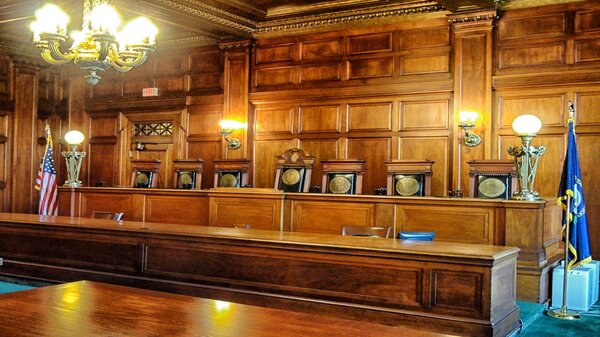
In recent years, the dollar amount of general damage awards to personal injury plaintiffs has been on the rise. However, the Louisiana Supreme Court recently issued an opinion that may signal greater scrutiny for heightened general damage awards going forward. In Pete, v. Boland Marine and Manufacturing Co., the state’s highest court changed the standard of review in quantum disputes to require courts of appeal to consider general damage awards in similar cases when determining whether a trial court has abused its discretion in awarding a specific general damage award.

In Pete, a 74-year old mesothelioma patient was awarded $9.8 million in general damages after it was found he was exposed to asbestos. The jury awarded $2 million for past and future physical pain and suffering, $2.3 million for past and future mental pain and suffering, $3 million for past and future disability, and $2.5 million for past and future loss of enjoyment of life. The appellate court held the defendant failed to demonstrate the general damage award “shocks the conscience,” and found the jury did not abuse its discretion.

The Louisiana Supreme Court reversed the decision. In so holding, it also changed the standard by which appellate courts evaluate whether a trial court abused its discretion in awarding general damages. The Louisiana Supreme Court now instructs appellate courts to compare general damage awards to those awarded in similar cases in their review of the reasonableness of the trial court’s award. Applying the new standard, the Louisiana Supreme Court found the trial court abused its discretion and reduced the Pete plaintiff’s general damage award from $9.8 million to $5 million.

Previously, Louisiana courts employed a two-step analysis in evaluating general damage awards. First, the court of appeal determined whether the trial court’s award constituted a clear abuse of discretion. Second, and only if the court first determined that there was an abuse of discretion, the appellate court would consider prior damage awards in similar cases to determine what an appropriate award should have been. This test had proven problematic because there were no clear objective standards for determining whether the trial court’s award was an abuse of discretion.

The appellate court’s decision in Pete v. Boland Marine serves as an excellent example of the problems this test presented. While the majority found that the $9.8 million awarded to Pete did not “shock the conscience,” a dissenting judge believed the award did shock the conscience, because it far exceeded general damage awards in similar cases. The “shocking the conscience” test has been long criticized because of its lack of objectivity, as the result ultimately depended on the thoughts and feeling of the presiding judges. Critics argued this led to unpredictability within the law.

The Louisiana Supreme Court’s decision reforms the two part test in an attempt to resolve this issue. The new test mandates that appellate courts consider damage awards in similar cases in the initial inquiry, to objectively consider whether the trial court abused its discretion under the particular facts and circumstances of the case at hand. The second step of the test remains unchanged. If the court finds that the trial court abused its discretion, then the appellate court will look to recent cases to determine what is the highest or lowest award a reasonable trier of fact could have found and then reform the damage award accordingly.

This decision is a significant change in the law. It aims to increase predictability within the law and affords defendants objective standards by which to challenge damage awards. However, it remains to be seen how courts will implement this new test in practice.

References:

Pete v. Boland Marine & Mfg. Co., LLC, 23-170 (La. 10/20/23), reh'g denied, 23-170 (La. 12/7/23), 374 So. 3d 135.

Posted by:

Disclaimer

Keogh Cox & Wilson, Ltd. provides this blog as a public service for general information only. The materials contained herein may not reflect the most current legal developments or even express the opinion of all or even most of Keogh Cox attorneys. Such material does not constitute legal advice or form any attorney-client relationship. Keogh Cox and all contributing author(s) expressly disclaim all liability to any person with respect to the contents of this Web site and Blog and expect that no reliance will be made upon the information provided.


Continue Reading

Explore legal perspectives on the issues shaping Louisiana's key industries and courtrooms.

Insight

Court Cannot Vouch for Voucher Funding

The Louisiana Supreme Court has ruled 6-1 that the funding method for the private school tuition voucher program approved by the Legislature last year is unconstitutional under La. Const. art. VIII, Sect. 13(B). The decision leaves uncertain the status of the approximately 8,000 students who had been approved for vouchers for the 2013-2014 school year.In Louisiana Federation of Teachers et al. (No. 2013-CA-0120), the Court held that once funds are dedicated to the state's Minimum Foundation Program for public education, the Constitution prohibits the use of those funds for the tuition costs of nonpublic schools and nonpublic entities. The Court reasoned that it could not sanction the voucher program's funding method when the source of those funds specifically mandated that they be spent on public education. The Court rejected the argument that the voucher program violated the constitutional requirement that a legislative bill have only "one object."The voucher program was part of a 2012 school reform program that allowed the State to offer vouchers to a large number of Louisiana students and to expand the number of privately managed charter schools.The Jindal administration has pledged to continue the program. In response to the ruling, Jindal stated, "We're disappointed the funding mechanism was rejected, but we are committed to making sure this program continues and we will fund it through the budget."The passing of the voucher program legislation was a high-profile affair prominently covered by local and even national media. In this context, the Court felt it advisable to confirm the Supreme Court's role in approving or rejecting legislation. The first page of the opinion includes the following quote:

The determination of how to best provide for the education of children is not the role of the court in this matter. We defer that determination to those more learned in the fields of education and public policy. The court's role is to evaluate the law set forth in the constitution to determine whether the matters addressed by the legislature comply with the relevant constitutional provisions and "not to legislate social policy on the basis of our own personal inclinations." State v. Smith, 99-0606, 99-2094, 99-2015, 99-2019, p. 11 (La. 7/6/00), 766 So. 2d 501, 510. [Emphasis added]

One might reasonably expect that this will not be the last time the Louisiana Supreme Court will be asked to consider the voucher program.

Insight

The Duty to Defend Continues to Evolve in Louisiana

Louisiana is a "direct action" state that continues to present new challenges for insurers. Over the years, Louisiana courts have expanded the duty to defend. This expansion created pitfalls for the insurer and forced the provision of a complete defense, even when all or a majority of the claim was not covered by the insurance policy. However, some of this expansion has been drawn back by the Louisiana Supreme Court which recently ruled that, in latent, long-term exposure cases, the duty to defend is to be spread across a number of years­­­--as opposed to the arbitrary selection of a single insurer to defend the entirety of the case. This change presents opportunities for immediate risk transfer and reimbursement to recoup what can be significant dollars invested in the defense of legacy and environmental actions.

A General Overview: Like many other states, an insurer’s duty to defend suits against its insured is broader than its liability for damage claims. The duty to defend is determined by the factual allegations contained in the plaintiff's petition, which are to be broadly construed. American Home Assurance Co. v. Czarniecki, 230 So.2d 253 (La. 1969). The court examines the duty under the “eight corners” rule which means that the duty attaches if a review of the four corners of the policy and the petition raises the potential for coverage and coverage is not unambiguously excluded. Once a complaint states one claim within the policy's coverage, the insurer has the duty to defend the entire claim, even though other claims in the complaint fall outside the policy's coverage. Treadway v. Vaughn, 633 So.2d 626 (La. App. 1 Cir. 1993), writ denied, 635 So.2d 233 (La. 1994).

Execution of the defense duty can present big challenges given that Louisiana is a direct action state where the attorney is often called upon to represent both the insured and the insurer. If the insurer does not properly handle the assignment, coverage positions can be waived. See Steptore v. Masco Const. Co., 643 So. 2d 1213 (La. 8/18/94); Sosebee v. Steadfast Ins. Co., 701 F.3d 1012, 1020 (5th Cir. 2012). Additionally, insurers must recognize that Louisiana has recognized Cumis (insured selected) counsel in situations when coverage positions issue. Belanger v. Gabriel Chemicals, Inc., 00-0747 (La.App. 1 Cir. 5/23/01); 787 So.2d 559, writ denied, 01-2289 802 (La. 2001); So.2d 612 (citing 46 C.J.S.§ 1157 (1993). In such a situation, independent counsel must be separately retained to represent the diverging interests.

When is the duty to defend discharged: The court will determine whether exhaustion of policy limits will terminate an insurer’s obligation to defend the insured on a case-by-case basis, taking into consideration whether the settlement was made in good faith. Holtzclaw v. Falco, 355 So.2d 1279 (La. 1977). An insurer that “hastily enters a questionable settlement simply to avoid further defense obligations under the policy” does not act in good faith and may be held liable for damages caused to its insured. Pareti v. Sentry Indemnity Co., 536 So.2d 417, 423 (La. 1988). The timing of its withdrawal from the suit is critical to a determination of the insurer’s good faith. A tender of policy limits into the registry of the court may terminate the duty to defend; however, the tender must comply with all of the statutory requirements (to include the admission of liability). In this connection, an insurer who wishes to tender its limits and admit liability may well face a challenge from the insured that such action is a breach of its good faith obligations. Pareti, supra.

Long-Tail Exposure Cases: For some time now, Louisiana courts have recognized the concept of “horizontal spreading” over a number of years based on the “trigger” of coverage each year a policy was in place. See Cole v. Celotex Corp., 599 So. 2d 1058 (La. 1992) and Norfolk Southern Corp. v. Cal. Union Ins. Co., 859 So. 2d 167, 192 (La. App. 2003),writ denied, 861 So. 2d 578 (2003). The practical effect is to hold each insurer liable to indemnify only for its pro-rata time on the risk and, if the insured was not covered for a period of time, it bore its own pro-rata portion of the risk.

Until recently, the courts held that the duty to defend in such actions was a solidary (joint and several) obligation, meaning that the insured could select any carrier and require it to defend the entire claim. Simply, the courts held that the duty to defend was not subject to proration such that an insurer who was on the risk for a very short time could be compelled to pay all of the fees and costs and must then file a reimbursement action to collect from other insurers. But, the Louisiana Supreme Court recently ruled that defense costs are now subject to proration in the same manner as with indemnity. Arceneaux v. Amstar Corp., 15-0588 (La. 9/7/16); 200 So 3d 277.

At the outset, almost every long-tail exposure claim is a complex action that can take years to resolve. It is nearly always a very expensive proposition in terms of defense costs. The Arceneaux decision has meaningful, real-world impact upon both the insurer and the insured.

From the insurer’s perspective, it can easily calculate its percentage of time on the risk and thereby readily ascertain what it owes in the defense of the action. Insurers can applaud the fact that they no longer pay for uninsured time on the risk or the portion of recalcitrant insurers who do not wish to “participate” in a joint defense.

From the insured’s perspective, new incentive exists to scour all avenues to find older policies that may have been on the risk to avoid having direct participation in defense costs. In this regard, the insured will now have strong monetary incentive to keep all policies on file (or to take depositions of agents and brokers to identify coverage that may have been in place). Of course, insurers who otherwise might have remained unknown might now have an active role in long-tail exposure cases.

John Wolff is a member of the management committee and a senior partner at Keogh Cox with more than thirty years of experience. John has made his mark in a practice that has included complex litigation, commercial disputes, serious injury, bad-faith and insurance coverage, legacy/long-term exposure, and other matters. He has litigated numerous significant cases in state and federal courts and regularly appears before the courts of appeals in and out of the state. John has devoted attention to non-profit boards dedicated to assisting at-risk children. In his spare time, he enjoys spending time with wife, his three children, and grandchildren, playing tennis, and hiking.

Insight

Court Addresses the Reach of the Louisiana Health Emergency Powers Act’s Immunity Provision for Claims Against Health Care Providers

The Louisiana Health Emergency Powers Act (LHEPA), La. R.S. 29:760 et seq, was enacted in 2003 to allow the government to use extraordinary powers in order to respond to potential or actual public health emergencies. Historically, claims against medical providers have been governed by a negligence standard, which requires a plaintiff to prove the provider failed to act with reasonable care. However, La. R.S. 29:771(2)(c), which was enacted as part of the LHEPA, provides what has been described as a limited or quasi-immunity for health care providers:

During a state of public health emergency, any health care providers shall not be civilly liable for causing the death of, or injury to, any person or damage to any property except in the event of gross negligence or willful misconduct.

This provision imposes a heightened standard of gross negligence or willful misconduct for claims against health care providers and their employees. “Gross negligence” has been defined as “the entire absence of care and the utter disregard of the dictates of prudence, amounting to complete neglect of the rights of others.”* Therefore, absent a showing of gross negligence or willful misconduct, the provision provides immunity from civil liability for all claims against all health care providers.

The reach and application of this heightened standard of gross negligence under the LHEPA has been the subject of recent rulings from Louisiana courts. In Lejeune v. Steck, which was decided before COVID-19 in connection with a public health emergency declared following Hurricane Katrina, the Louisiana Fifth Circuit Court of Appeals ruled that the LHEPA’s heightened standard applied to all medical providers in the state while the state was in a public health emergency.^

In Lejeune, a doctor left a sponge in a patient during a surgery. The plaintiff argued that a general negligence standard should apply because the surgery occurred outside the Hurricane Katrina emergency area. However, the Court found that the plaintiff must prove gross negligence or willful misconduct because the LHEPA “does not provide for a limited set of health care providers, nor does it limit its application to only those medical personnel rendering emergency assistance voluntarily due to the emergency in the area.” Thus, the Court ruled the LHEPA was broad reaching and covered all health care providers in all areas of Louisiana during the public health emergency.

More recently, Governor Edwards invoked the LHEPA on March 11, 2020 in response to COVID-19. In line with the all-inclusive application seen in Lejeune, the Louisiana Second Circuit Court of Appeals recently held that the LHEPA applied to all claims against health care providers that arose during the public health emergency declared for COVID-19.

In Lathon v. Leslie Lakes Ret. Ctr., the Second Circuit applied the LHEPA to a premises liability claim.^^ The plaintiff slipped and fell in a puddle at Leslie Lakes Retirement Center. The accident occurred during the declared public health emergency. The retirement center filed a motion for summary judgment and argued that because it qualified as a health care provider, the gross negligence standard set forth in the LHEPA should apply to the plaintiff’s claim.

The court agreed and found that the statute dictated that immunity applied in favor of any healthcare provider for any personal injury or property damage claim as long as it arose during a public health emergency. In so holding, the Court stated that the purpose of the LHEPA was to alleviate the liability burden on healthcare providers during public health emergencies. Therefore, the Court found its ruling aligned with the purpose of the act. The Lathon decision is significant because it applied the LHEPA’s statutory immunity to personal injury claims against healthcare providers outside of a medical malpractice setting.

At least one justice on the Louisiana Supreme Court voiced a desire to address the constitutionality of this statutory immunity provision. However, the Court ultimately declined to review the Second Circuit’s ruling. Therefore, under Lathon, it appears the statutory immunity granted under the LHEPA applies to any claim brought against any healthcare provider for acts that occur during a public health emergency. While it remains to be seen how courts will address this issue in the future, these decisions show the reach and application of the LHEPA continue to evolve.

References:
*Ambrose v. New Orleans Police Dep't Ambulance Serv., 93-3099 (La. 7/5/94), 639 So. 2d 216.

^Lejeune v. Steck, 13-1017 (La. App. 5 Cir. 5/21/14), 138 So. 3d 1280, writ denied sub nom. Daigle v. Steck, 2014-1408 (La. 10/3/14), 149 So. 3d 800.

^^Lathon v. Leslie Lakes Ret. Ctr., 54,479 (La.App. 2 Cir. 9/21/22); 348 So.3d 888, writ denied, 2022-01566 (La. 12/20/22); 352 So.3d 80.

Brian T. Butler

Partner
Judicial Review
Louisiana Supreme Court