Insight

Hurricane Ida: Louisiana Department of Insurance Implements Mediation Program

Published on: December 10, 2021
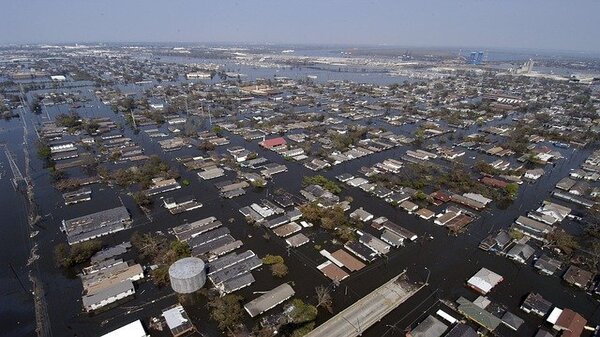
In the wake of Hurricane Ida, the Louisiana Department of Insurance (LDI) implemented a mediation program to assist policy holders with disputed insurance claims. Effective October 18, 2021, the program was implemented to assist in the prompt and reasonable settlement of disputed insurance claims.

The program is open to all authorized property and casualty insurers, as well as all surplus line insurers for personal lines residential insurance claims up to $50,000.00. Both the insurer or policyholder can submit a written request for mediation; the opposing party is free to accept or deny the invitation. If initially denied, the parties are free to later opt to participate.

If both parties agree to mediation, a mediator will be assigned and within 30 days a mediation will be scheduled at a local Mediation & Arbitration Professional Systems (MAPS) or Perry Dampf Dispute Solutions location in the Baton Rouge or New Orleans area. The initial mediation session allows for 90-minutes; however, parties are allowed to continue the mediation beyond the initial session at the agreement of the mediator.

The mediation program is free to all policyholders and a $600 fee is assessed to the insurer for the first 90-minute mediation session. If the parties and mediator agree to continue the mediation beyond the initial 90-minute session, additional fees will be assessed for the mediator’s services. The parties are to determine among themselves who will be responsible for the additional costs.

The parties are required to provide all relevant documentation to the assigned mediator and a detailed explanation of the claim and any obstacles to resolution. The policyholder can represent themselves or through counsel. They are even encouraged to bring knowledgeable individuals such as adjusters, appraisers, or contractors.

If a resolution is reached, even just partial, both parties will reduce the agreement to writing and sign the agreement. The insurer will be required to furnish any required payment to the policyholder within ten (10) days of signing the agreement. If the parties only reach a partial agreement, they will be permitted to continue to use the mediation services and schedule future mediation dates.

At this time, the program is scheduled to continue through June 30, 2022.

Posted by:

Disclaimer

Keogh Cox & Wilson, Ltd. provides this blog as a public service for general information only. The materials contained herein may not reflect the most current legal developments or even express the opinion of all or even most of Keogh Cox attorneys. Such material does not constitute legal advice or form any attorney-client relationship. Keogh Cox and all contributing author(s) expressly disclaim all liability to any person with respect to the contents of this Web site and Blog and expect that no reliance will be made upon the information provided.

Continue Reading

Explore legal perspectives on the issues shaping Louisiana's key industries and courtrooms.

Insight

You’ve Been Served – Now What? Understanding “Louisiana’s Pre-trial Procedure”

A deputy arrives at your home or office and announces that you have been served. You quickly realize you have been named as a defendant in a lawsuit. Now what?Whether the suit involves a breach of contract, an automobile accident, or the one and a million other circumstances that can lead to a suit being filed, the process is essentially the same in Louisiana state courts. This blog provides a general roadmap of Louisiana’s “pre-trial” procedure, which applies in most situations. Different procedures are involved with workers’ compensation claims, administrative proceedings, medical malpractice claims, and other areas.Petition/Answer - When a person or company believes they have been damaged by fault, breach, or neglect, Louisiana law provides that the person allegedly wronged, the plaintiff, may file a Petition for Damages. Louisiana does not have a “loser pays” system. For this reason, there is little disincentive to a plaintiff who wants to sue. Once the Petition is filed with the Clerk of Court, the Sheriff serves the defendant with a certified copy of the Petition and the “Citation.”A defendant has fifteen days to file an Answer or to secure an extension from either the plaintiff attorney or the Judge, by filing a Motion for Extension of Time to File Responsive Pleadings. A failure to respond to a suit or obtain an extension within 15 days of service may result in a default judgment.Trial by Judge or Jury -The parties advise if they desire a judge or jury trial in the initial filings. There is no right to a jury in cases which do not have a possible value of more than $50,000. If a plaintiff “stipulates” that case value is at or below $50,000, the defendant has no right to demand a jury trial under Louisiana Code of Civil Procedure article 1732.Exceptions - Defendants have the right to raise “exceptions” to the suit. Common exceptions include a claim that the suit is vague; is filed in the wrong venue (i.e., the wrong location); or is untimely, and therefore “prescribed.” Defendants can use the exception process to challenge the plaintiff’s legal ability to recover. Many exceptions are waived if they are not filed before or with the Answer.Discovery

  • Written - After the Answer is filed, the discovery process typically begins. Discovery is an information-gathering process done through different methods. The parties to a lawsuit may issue written Interrogatories, Requests for Admission, and Requests for Production of Documents.
  • Depositions - Depositions are a key component of discovery. A deposition allows the attorneys (or the parties themselves, if unrepresented) to ask questions of witnesses before a court reporter. The testimony is taken under oath and can be used later for certain purposes. For example, if the witness is not available to testify at trial, the deposition testimony can often be introduced in lieu of live testimony. Also, if a witness changes his testimony at trial, the deposition can be used to attack the testimony and credibility of the witness.

Case Deadlines - Typically, the court will establish a scheduling order to establish key dates such as deadlines to identify witnesses, exhibits, and any experts who may testify on behalf of the parties. The court often sets a deadline to file “dispositive” motions, such as motions for summary judgment where the plaintiff or the defendant tries to have the case determined before the trial.Alternative Dispute Resolution - Frequently, the parties agree to attempt to mediate the case with the assistance of a mediator. This is a voluntary process. In some cases, the parties will be bound by an agreement to arbitrate which will be conducted outside of the normal court process.There is no law or statute which sets the time frame for the “pre-trial” process. Depending upon the complexity of the suit, the pre-trial phase of a suit may take months, and often years.

Insight

Louisiana Appeal Court Finds Nonparty “Nonresident” Industrial Site Owner Is Subject to Louisiana’s Subpoena Power

Can a nonresident corporation, who is not a party to a pending action, be compelled to respond to discovery in Louisiana? The Louisiana Fifth Circuit says YES. See Molaison v Cust-O-Fab Specialty Services, LLC, a case where Keogh Cox successfully handled the appeal.

The Molaison case involved an industrial accident claim where catastrophic injuries were alleged. In this context, the appellate court found that a non-resident company has sufficient presence in Louisiana to subject it to the court’s subpoena power. However, the trial court must first assess the scope of discovery to ensure it is calculated to lead to discoverable evidence and is not too onerous.

In Molaison, the owner of an industrial plant who employed the plaintiff claimed that its nonresident status prevented the parties from requiring it to respond to discovery by deposition or otherwise. The plant owner cited a Louisiana Supreme Court case that held personal jurisdiction, without more, did not subject a nonparty, out-of-state defendant to submit to discovery in this state.

But, in this case, the nonparty maintained a facility in Louisiana and employed the plaintiff. As a consequence, the Molaison court found that the Louisiana “discovery rules control” and “the trial court did not err in finding that (the company) was subject to the subpoena power of a Louisiana court.”

The contractor established it issued the subpoena to obtain evidence from the chemical plant owner that was relevant to the allocation of fault under Louisiana’s pure comparative fault tort system. Therefore, the appeal court reasoned that the nonresident plant owner was subject to the subpoena, “even if (the company) is not obligated to pay in tort by operation of workers compensation immunity.”

Of note, the court also held that the review of a discovery order that finds a nonresident company subject to the subpoena power is a final appealable judgment, as opposed to an interlocutory order subject the discretionary review on supervisory writ.

Case Reference: Molaison v Cust-O-Fab Specialty Services, LLC, 21-585 (La. App 5 Cir. 6/1/22); 343 So. 3d 866.

Insight

Novel Coronavirus Breeds Novel Litigation: Business Interruption Suits in the Age of COVID-19

The nation’s first suit seeking a declaration of coverage under a commercial property policy for business interruption and extra expenses incurred as a result of COVID-19 was filed in a Louisiana state court on March 20, 2020. Since then, similar suits have been filed across the nation by restaurants, casinos, dentists, dive shops, movie theatres, repertory theatre companies, etc. Clearly, the same coverage issues raised in the Louisiana case will be litigated throughout the nation.

The suit in Cajun Conti, LLC, et al v. Certain Underwriters at Lloyd’s, London, et al, Suit No. 2020-02558, was filed on March 16, 2020, in the Civil District Court for the Parish of Orleans, State of Louisiana. Plaintiffs, doing business as Oceana Grill, a restaurant in the French Quarter, allege coverage should be declared to exist because: 1) the property policy is an “all risks” policy such that all risks are covered unless the insurer can clearly and specifically establish an exclusion from coverage; 2) the policy does not contain any exclusion “for losses from a virus or global pandemic;” 3) the virus has “physically impact[ed] public and private property” as it “physically infects and stays on the surface of objects or materials, ‘fomites,’ for up to twenty-eight days;” 4) such “contamination … [is] a direct physical loss needing remediation;” and, alternatively and in addition, 5) the current and future state orders limiting its operations serve to trigger the civil authority provisions of its policy.

A key issue in Cajun Conti as well as in the other COVID-19 business interruption coverage litigation will be whether the existence of the novel coronavirus constitutes a “direct physical loss or damage” under the intendment of an all risks property policy. The Cajun Conti plaintiffs cite to Widder v. Louisiana Citizens Prop. Ins. Corp., 2011-0196 (La. App. 4 Cir. 8/10/11), 82 So.3d 294, writ denied, 2011-2336 (La. 12/2/11) for the premise that the existence of a hazardous condition that renders the insured property unusable or uninhabitable is sufficient to constitute a “physical loss or damage” sufficient to trigger coverage. Notably, in Widder, the actual presence of inorganic lead in the insured property was confirmed to exist and coverage was therefore available. Because policyholders have the burden to establish the existence of “physical loss or damage,” reliance on Widder may require the Cajun Conti plaintiffs to establish coronavirus was actually present in their property or that its presence otherwise caused their property to be unusable or uninhabitable. Presence in the community may not be sufficient to prove the coronavirus made the insured property uninhabitable or unusable.

One of the items of proof required for the triggering of coverage under the civil authority provisions of a commercial property policy is that the alleged business loss was caused by an action by the civil authority that prohibited access to the insured premises. Relying on out-of-state jurisprudence, one Louisiana federal court has determined this factor requires proof that access to the insured premises be “actually and completely prohibited,” which is not satisfied if the access is merely “limited or hampered.” Kean, Miller v. National Fire Ins. Co. of Hartford, C.A. No. 06-770 (M.D. La. Aug. 29, 2007), 2007 WL 2489711, *4-*6. The state orders expressly referenced in the Cajun Conti suit would appear not to satisfy this standard as they served only to limit occupancy and required earlier closures. Even the subsequent stay-at-home orders [Proclamation Number 33 JBE 2020 and 41 JBE 2020, issued respectively on March 22, 2020 and April 2, 2020], may likely be insufficient to satisfy this requirement as they do not expressly mandate closure of restaurants, but simply require restaurants to “reduce operations to continue minimum contact with members of the public,” expressly allow for curbside delivery, drive-thru, and delivery services, and only prohibit the consumption of food and beverages on site.

The specific facts of each business interruption claim and the terms of the relevant policy should be considered in every occasion. Yet, these suits may face problems of proof generally. For now, we expect the novel suits to continue.

John has been practicing over 30 years and is a Senior Partner with firm where he serves on the Management Committee. He has devoted attention to non-profit boards dedicated to assisting at risk children. He enjoys time with his three children and grandchildren. He also enjoys tennis and hiking.

Nancy B. Gilbert is a partner with Keogh Cox in Baton Rouge, Louisiana. She is a puzzle-solver by nature, and specializes in providing clear and in-depth analysis of complex litigation issues.

No items found.
Flood
Louisiana
Mediation
Hurricane
Insurance