Insight

First Circuit Orders Multiple AMOs Without Audio or Video Recording

Published on: October 7, 2020

Defendants often request an AMO (“Additional Medical Opinion,” formerly called “IME”) under La. Code of Civil Procedure article 1464 which grants the courts power to order the examination of a plaintiff’s physical or mental condition when in controversy. Increasingly, plaintiff’s counsel will object outright to such examinations or seek to impose onerous restrictions designed to limit or prevent the examination. In Sistrunk v. Florida Marine, LLC, et al, 20-0771 (La. App. 1 Cir. 9/28/20), 2020 WL 575645, the First Circuit rejected limitations sought by the plaintiff and imposed by the trial court.

In Sistrunk, the plaintiff alleged brain injury and psychological problems caused by a blow to the head. In view of the seriousness of the alleged injuries, the defense requested examinations by a neurologist, neuropsychologist, neurosurgeon, and psychiatrist. In response, the plaintiff agreed to examinations but only in areas plaintiff planned to offer medical testimony and under restrictions to include the presence of a third-party and audio or video recording. Although the trial court ordered the AMOs to move forward, it allowed the presence of a third-party who could then audio or videotape the exams. With respect to the neuropsychological examination, the trial court rejected observation by a third-party based upon industry standards which do not allow for such observation.

The defense in Sistrunk sought review from the First Circuit. Without comment, the First Circuit rejected the condition imposed by the trial court that the exams be captured through audio or videotaping. Sistrunk joins similar decisions such as Henry v. Barlow, 06-283 (La. App. 3 Cir. 8/9/06), 937 So. 2d. 895 which likewise prevented audio or videotaping of AMOs. In Henry, the court reasoned that the recording of an AMO would restrict the number of physicians willing to participate.

Brian has been doing defense work for the last 28 years. He has handled all types of defense matters over his career, but in recent years his practice has been focused in serious injury or damage cases and has worked extensively with experts involving complex cases, fire cases, and forensic work.

Posted by:

Disclaimer

Keogh Cox & Wilson, Ltd. provides this blog as a public service for general information only. The materials contained herein may not reflect the most current legal developments or even express the opinion of all or even most of Keogh Cox attorneys. Such material does not constitute legal advice or form any attorney-client relationship. Keogh Cox and all contributing author(s) expressly disclaim all liability to any person with respect to the contents of this Web site and Blog and expect that no reliance will be made upon the information provided.

Continue Reading

Explore legal perspectives on the issues shaping Louisiana's key industries and courtrooms.

Insight

Keeping Testimony of Future Medical Expenses “Out of the Gate”

Ina recent case involving Keogh Cox attorneys, the Eastern District of Louisiana in MichaelBrander, Jr. v. State Farm Mutual Auto. Ins. Co., Civ. A. No. 18-982(Feb. 14, 2019), 2019 WL 636423 barred testimony of substantial projectedmedical expenses because it was not based on a reliable methodology. Thisruling stands to impact many other cases where plaintiffs seek to usefar-reaching projections of a life-long need for radiofrequency ablations("RFAs") or other pain-management modalities to "board" sixand even seven-figure numbers for future medical expenses.

InDaubert v. Merrill Dow Pharmaceuticals, Inc., 509 U.S. 579 (1993), theUnited States Supreme Court recognized the trial judge as the “gatekeeper” of expertopinion testimony and held that only reliable and relevant expert opinions maybe admitted. The reliability requirement serves to keep expert opinions“outside the gate” when they constitute unsupported speculation or meresubjective belief; only scientifically valid expert opinions are allowedinside. To ascertain whether an expert opinion is scientifically valid, Daubertinstructs the trial court to consider:

∙ whether theexpert’s theory can or has been tested;

∙ whether it hasbeen subject to peer review and publication;

∙ the known orpotential rate of error when applying the theory;

∙ applicablestandards and controls; and,

∙ the degree towhich the theory has been generally accepted in the scientific community.

InBrander, the plaintiff advanced medical testimony that he would needRFAs every year of his expected lifetime, a period of 36 years. The courtdisallowed the testimony, noting that the plaintiff’s physicians had less thanten years personal experience in administering RFAs to patients, the medicalliterature only considered the effectiveness of RFAs over a span of seven toten years, and there was no showing that the 36-year treatment plan was ingeneral acceptance by the medical community. According to the court, theexpert opinions offered by plaintiff failed Daubert “on all points.” Asa result, the plaintiff was permitted to introduce testimony of future RFAs foronly a seven-year period.

The reasoning of Brander may be equally applicable to projections of lifetime treatment involving other medical procedures, such as medial branch blocks, Botox injections, or spinal cord stimulators, for which the long-term efficacy has not been firmly established in the medical literature. Opinions unsupported by personal treatment experience and peer-reviewed medical studies are not scientifically valid and are properly halted “at the gate.”

Nancy B. Gilbert is a partner with Keogh Cox in Baton Rouge, Louisiana. She is a puzzle-solver by nature, and specializes in providing clear and in-depth analysis of complex litigation issues.

Insight

A Decade Old Article Finds New Life: Televised Testimony

Courts across the country now grapple with the changing face of trials in a time of social distancing and spikes of COVID-19 complicated by the confines of the courtroom. Attorneys and litigants must also adapt to this new “normal.” In this setting, an older law may help to bring new technology into the courtroom.

COVID-19 spawned the immediate use of videoconferencing and other technology in the courtroom. Fortunately, over a decade prior to the current pandemic, the Louisiana Legislature adopted Louisiana Civil Code of Procedure article 1633.1 which expressly provides for live televised testimony at a trial. Pursuant to Article 1633.1:

The court may order, upon a showing of appropriate safeguards, live testimony of a witness to be presented in open court by teleconference, video link, or other visual remote technology, if the witness is beyond the subpoena power of the court or when compelling circumstances are shown. The order may be entered at a pretrial conference or, in exceptional circumstances, on motion set for hearing at least ten days prior to trial or at another time that does not prejudice the parties.

The Article, titled “Live trial testimony by video,” does not limit the live video testimony feature only at trial. Commentary suggests that the term “trial” is intended to include evidentiary hearings on exceptions as well as summary matters. The comments further provide that a showing must be made to the court's satisfaction of appropriate safeguards, such as (1) reliable transmission procedures and image quality, (2) an orderly process for reference to exhibits by the witness and all counsel or parties conducting the examination, and (3) an absence of any outside influence on the witness during testimony. Even if all the parties agree to the use of live televised testimony, the Article nevertheless requires a court order.

Pursuant to the Article, the court may order televised testimony when “compelling circumstances are shown.” These circumstances may exist where a witness has a pre-existing condition or is restricted from live attendance by their physician. They may also exist for witnesses barred from work-related travel by their employer.

Although adopted in 2007, Article 1633.1 remains largely unused by both courts and litigants; it appears its time has come.

Insight

Torts: “Loss of Chance”: Claim Limited to Medical Malpractice

InNiang v. Dryades YMCA School of Commerce, Inc., 19-0425 (La. App. 4 Cir.12/4/19), - - - So.3d - - -, the Fourth Circuit declined to expand the “loss ofchance of survival” cause of action to non-medical defendants. Despite astatute which arguably supported such a cause of action under case facts, theFourth Circuit felt constrained to reject the claim.

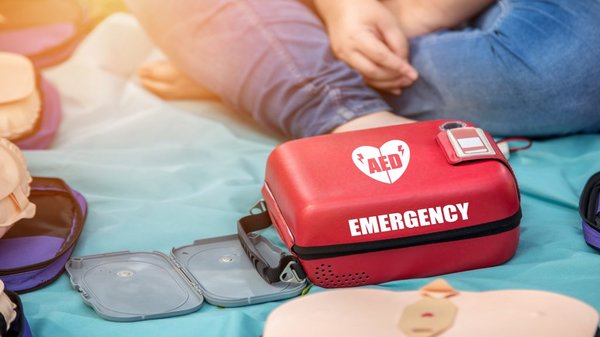
OnMarch 7, 2017, Mouhamadou Niang collapsed while playing basketball at aYMCA. Mrs. Niang was certified in cardiac life support, and requested anautomated external defibrillator (“AED”) to attempt to resuscitation. Mrs. Niang was advised that an AED machine was not available. Thereafter,Mr. Niang was transported to University Medical Center where he died on March11, 2017 secondary to cardiac arrest.

Mrs.Niang sued the YMCA for failing to have an AED machine on premises and assertedmultiple claims including a loss of chance of survival claim. Shecontended that the lack of the defibrillator contributed to her husband’sdeath. Under La. R. S. 40:1137.3, all “physical fitness facilities” suchas the YMCA are required to have an AED available.

TheYMCA filed a Motion for Partial Summary Judgment which was granted. Inits reasons, the trial court held that the “loss of chance” cause of action waslimited to claims raised in a medical malpractice context. The FourthCircuit affirmed.

TheFourth Circuit found that, although styled as a Motion for Partial SummaryJudgment, the YMCA had actually raised an Exception of No Cause of Action andtherefore analyzed the issue as a pure question of law. The FourthCircuit reviewed prior Louisiana Supreme Court decisions providing a right torecover damages for a loss of chance of survival in the medical malpracticecontext including the decision in Hastings v. Baton Rouge Gen. Hosp., 498So.2d 713 (La. 1986). In Hastings, the Louisiana Supreme Courtidentified a cause of action where a stab wound victim with weak vital signswas transferred from the hospital after the patient lacked insurance. The Hastingscourt commented on the reduced burden of proof in such cases:

“The law does not require the plaintiff to prove to a certainty that the patient would have lived had he received more prompt diagnosis and treatment for the condition causing the death.”

TheFourth Circuit identified no cases directly “on point” when the defendant wasnot a medical practitioner. Therefore, the Fourth Circuit gaveconsideration to a noted Oklahoma decision in Hardy v. Southwestern BellTel. Co., 910 P.2d 1024 (Okla. 1996) which addressed the issue. Thecourt in Hardy considered the public policy implications associated withexpanding the loss of chance of survival claim to non-medical cases andreasoned that the policy concerns which justify a reduced burden of causationin medical malpractice claims do not transfer to ordinary negligencecases. The cause of action against medical providers is supported by the“special relationship” of the physician and the patient. No suchrelationship exists in a non-medical setting.

Citingto Hardy, the Niang court determined that allowing a loss ofchance of survival claim with general negligence would allow for improperspeculation as to a person’s chance of survival. Identifying nocontrolling cases and the lack of any statute creating a cause of action innon-medical malpractice cases, the Niang court concluded that loss ofchance of survival claims are not supported outside of the medical context.

Collin is a Keogh Cox partner who litigates injury,commercial, and legal malpractice disputes. He lives in nearby Zachary,Louisiana with his wife Melissa and three all too active children. He is anoutdoorsman, a league tennis player, a cook, and a hobbyist writer.

Brian T. Butler

Partner
Medical
Trial Court