Insight

Can a Corporation Drive Drunk?: A Look at Employer Liability for Punitive Damages

Published on: July 5, 2016

The power to punish is generally the role of the criminal courts. Civil courts concern themselves with making a plaintiff "whole." In fact, it would be legal error for a civil court to impose recovery against a defendant as a form of punishment--with one notable exception. When "punitive damages" are allowed, a civil court may "punish" a defendant.

In Louisiana, punitive damages are only allowed when a statute specifically says they may be awarded. One of these statutes is La. Civil Code article 2315.4, which allows punitive damages when the plaintiff’s injuries were caused “by a defendant whose intoxication while operating a motor vehicle was a cause in fact of the resulting injuries.” Based upon the words used, punitive recovery for drunk driving would appear limited to recovery against the individual who was "operating a motor vehicle." However, what if the driver was intoxicated while “on the clock,” in the "course and scope" of his employment? Can his employer also be liable for punitive damages? Unfortunately, the answer to these questions is unclear and may vary depending upon where the case was filed.

The First and Third Circuits indicate that an employer should not be liable for these damages. In Darby v. Sentry Ins. Auto. Mut. Co., the First Circuit held that an employer could not be liable for punitive damages when its intoxicated employee was at fault for an accident, even when the employer was aware the employee had a history of alcohol abuse. The court reasoned that the principle of strict construction of punitive statutes prevented it from holding anyone other than the driver liable. 2007-0407 (La. App. 1 Cir. 3/23/07), 960 So. 2d 226, writ denied, 2007-0638 (La. 3/28/07), 953 So. 2d 59. Similarly, in Romero v. Clarendon Am. Ins. Co., the Third Circuit ruled that an employer could only be liable for the compensatory damages caused by its employee, to the exclusion of punitive damages. 2010-338 (La. App. 3 Cir. 12/29/10), 54 So. 3d 789, writ denied, 2011-0551 (La. 4/25/11), 62 So. 3d 96. A federal court decision from the Western District of Louisiana also supports this conclusion. See Lankford v. Nat'l Carriers Inc., 2015 WL 518736 (W.D. La. Feb. 6, 2015).

In contrast, the Fourth and Fifth Circuits have found that an employer can be liable for its intoxicated employee’s punitive damages. The Fourth Circuit, offering little commentary, found that an employer could be responsible for damages caused by its employee’s acts, including punitive damages under art. 2315.4. See Curtis v. Rome, 98-0966 (La. App. 4 Cir. 5/5/99), 735 So. 2d 822. Punitive damages were also awarded against an employer in a Fifth Circuit case, Levet v. Calais & Sons, Inc., 751 So.2d 153 (La. Ct. App. 1987). However, in Levet, the employer stipulated to liability and essentially agreed to be responsible for punitive damages.

While the Louisiana Supreme Court has not squarely addressed the issue, language from Berg v. Zummo tends to indicate that the employer may not be liable for drunk-driving punitive damages. In Berg, the Supreme Court examined art. 2315.4 to determine whether a bartender could be liable for providing an intoxicated driver with alcohol prior to the accident. In that context, the Court held that art. 2315.4 did not extend to someone who “contributed to” the intoxication because that Article “reflects the legislature’s intent to penalize only the intoxicated driver.” 2000-1699 (La. 4/25/01), 786 So. 2d 708, 718. However, the Berg Court specifically acknowledged lower court decisions that permitted such liability for employers, reserving its judgment on that issue for another day.

So, if someone asks you whether a corporation can drive drunk, the proper answer may be this: depends on who you ask.

Posted by:

Disclaimer

Keogh Cox & Wilson, Ltd. provides this blog as a public service for general information only. The materials contained herein may not reflect the most current legal developments or even express the opinion of all or even most of Keogh Cox attorneys. Such material does not constitute legal advice or form any attorney-client relationship. Keogh Cox and all contributing author(s) expressly disclaim all liability to any person with respect to the contents of this Web site and Blog and expect that no reliance will be made upon the information provided.

Continue Reading

Explore legal perspectives on the issues shaping Louisiana's key industries and courtrooms.

Insight

“Collectibility” in Legal Malpractice: Can a client have greater rights against an attorney that existed in the underlying case?

It is well-established that a client in legal malpractice shall have no greater rights against their attorney than they had against the original defendant. That is, until the recent decision by the Supreme Court in Ewing v. Westport Insurance Corporation, 20-00339 (LA. 11/19/20), 2020 WL 6789490 where the Louisiana Supreme Court held that the “collectibility“ of the underlying judgment against the defendant is neither part of the plaintiff’s burden of proof nor the proper subject of an affirmative defense.

In Ewing, the defendant/attorney fax-filed a petition for damages but failed to forward the original petition within seven days as required by statute. As a result, the claim he sought to advance on behalf of Elaine Ewing prescribed. Ewing sued her attorney and his insurer.

Prior to trial, the tortfeasor testified that he would have filed for bankruptcy had an excess judgment been entered. On this basis, the defendants obtained a motion for summary judgment establishing that the underlying tortfeasor would have been unable to pay any amount above the $30,000 in available insurance coverage. Following trial, an award of $30,000 was entered in favor of the plaintiff and the plaintiff appealed.

The appellate court reversed citing to the decision in Rodriguez v. Traylor, 468 So.2d 1186, 1188 (La. 1985) which held that “the wealth or poverty of a party to a lawsuit is not a proper consideration in the determination of compensatory damages.“

The Supreme Court upheld the appellate opinion. In the analysis, Chief Justice Johnson on behalf of the majority also cited to the Rodriguez decision for the proposition that the wealth of the tortfeasor is not relevant to damages. The majority acknowledged that a majority of courts nationwide hold that the collectibility of a judgment is an essential element of a plaintiff’s legal malpractice case. It also observed “a growing trend” in other states to allow the defendant/attorney to plead collectability as an affirmative defense. Nevertheless, the Supreme Court in Ewing chose to follow neither position.

The defendants in Ewing did not argue that collectibility was part of the plaintiff’s burden. However, they did assert an affirmative defense on this basis. In rejecting this defense, the Ewing court found that nothing in statutory law of Louisiana limits damages based upon the collectibility of a judgment against a particular tortfeasor. In Ewing, it was established that the tortfeasor would have been immediately unable to pay an excess judgment. Nevertheless, the majority highlighted that a money judgment is valid for 10 years and may be revived for successive 10-year periods. As such, the court concluded that the money judgment has intrinsic value, regardless of immediate collectibility. To quote the majority, “impecunity is a snapshot in time.”

The concurring opinion by Justice Weimer reasons that there may be certain and rare cases where the underlying tortfeasor is truly judgment proof. In that circumstance, he writes that summary judgment in favor of the defendant may be appropriate but not under the record before the court.

Writing for the dissent, Justice Crain observed: “Thirty states have determined collectibility is relevant in a legal malpractice action. No state has reached a contrary conclusion, until now.” According to the majority, the absence of any statute making collectability a relevant consideration mandated the result under our civilian traditions. Justice Crain disagreed and argued that the majority opinion is inconsistent with the Code of Evidence articles which generally allow the admissibility of relevant evidence such as an inability to pay. La. L.C.E. art. 402. In support of his position, Justice Crain gave a hypothetical scenario involving an insolvent, uninsured driver who rear-ends a world-class professional athlete rendering him a paraplegic, resulting in damages and $50 million. About this hypothetical, he states:

“What did the plaintiff lose, or what harm did the lawyer cause the plaintiff, when the lawyer failed to preserve the claim against the insolvent, uninsured driver? The lawyer did not cause the paraplegia, nor did he caused a loss of $50 million, as that money was clearly uncollectible.“

To Justice Crain, the determinative question is the value of the lost judgment.

Insofar as the majority and concurring opinions highlight the absence of any statutes to support their conclusions, it would not be surprising for this issue to be considered by the legislature in coming years.

Collin is a Keogh Cox partner who litigates injury, commercial, and legal malpractice disputes. He lives in nearby Zachary, Louisiana with his wife Melissa and three all too active children. He is an outdoorsman, a tennis player, a cook, and a hobbyist writer.

This blog was written in partnership with Andrew "Drew" Blanchfield whose practice also includes professional liability defense.

Insight

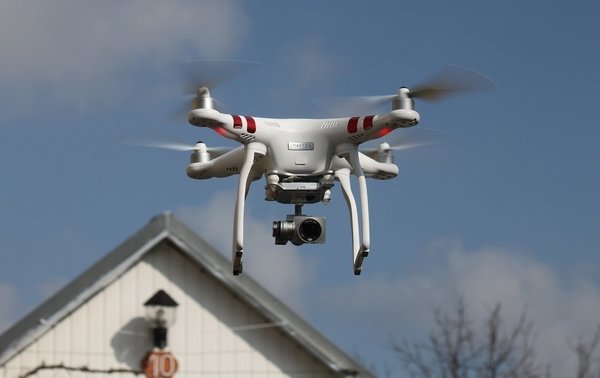
When "Drone" Used to be a Boring Word

Webster's top two definitions of the word "drone" are as follows:

1: A stingless male bee (as of the honeybee) that has the role of mating with the queen and does not gather nectar or pollen.

2: one that lives on the labors of others: parasite

While bees and parasites have their allure, Webster's third definition of the word "drone" is the one with current intrigue.

According to Webster's, a drone is also "an unmanned aircraft or ship guided by remote control or onboard computers." Drones began as play things; but are now poised to revolutionize industry, retail, agriculture, journalism, art, and law at an ever-increasing pace.

Currently, drones are regulated by the Federal Aviation Administration which has for decades regulated flight by planes and helicopters; but not everyone can own an airplane or helicopter. Everyone can own a drone and many soon will.

The soon-to-be pervasive use of drones will stretch at the fabric of criminal and civil law and raises intriguing questions with hazy answers. For example,

1: Without probable case, can the government park a drone over a house or building, or even a crime-ridden city block, and monitor for criminal activity with sensors that easily peer through walls?

2: Does one have a reasonable expectation of privacy within a fenced-in back yard?

3: Is following a personal injury plaintiff via drone considered stalking?

4: Can a business fly a drone over a competitor's work yard to observe it processes without recourse?

5: Is it legal to use technology (which is now available) to disrupt or even crash drones flying overhead? Would that be a tort?

In an upcoming Keogh Cox blog, we will advise of pending changes to the law that may begin to answer some of these questions. For now, we will observe that the word "drone" is no longer a boring word.

Insight

Technical Difficulties: Incomplete “Fax Filed” Petition Interrupts Prescription

Tim Berners-Lee, computer scientist and founder of the World Wide Web Consortium, famously stated, “We can’t blame the technology when we make mistakes.” One Louisiana appellate court disagrees.

In Worm v. The Berry Barn, LLC, 20-1086 (La. App. 1 Cir. 10/21/21), the Louisiana First Circuit utilized a broad interpretation of Louisiana’s fax-filing statute, La. R.S. 13:850. In Worm, the plaintiff was injured in an accident on October 7, 2018. Plaintiff’s counsel fax-filed the Petition to the Tangipahoa Parish Clerk of Court’s office on Friday, October 4, 2019. The next Monday, the Clerk sent a “Fax Filing Confirmation” to Plaintiff’s counsel. Plaintiff’s counsel filed the original Petition with the Clerk of Court on October 11, 2019.

Defendants filed an exception of prescription, arguing that the faxed Petition did not interrupt prescription because Plaintiff’s original Petition was not “identical” to the faxed Petition, as required by La. R.S. 13:850. Defendants correctly pointed out that portions of the first and second pages of the fax filed Petition were “cut off … thereby eliminating some of the substance of plaintiff’s allegations.” Plaintiff opposed the exception, arguing that any error in the receipt or printing of the fax filed petition was attributable to the Clerk of Court and/or its fax machine.

The trial court recognized that the difference between the fax filed Petition and the original Petition was “ultimately the result of, we think a machine error.” Nevertheless, the court sustained defendants’ exception and dismissed plaintiff’s claims as prescribed. Plaintiff appealed.

The First Circuit Court of Appeals noted that Louisiana’s prescription statutes are to be strictly construed against prescription and in favor of the obligation sought to be extinguished. The court held, “There is no dispute that the physical copies contained in the record show that the fax filed petition and the original petition are different. However, the differences are due to missing as opposed to substantively different or altered portions of the petition. … As reasoned by the trial court, the apparent error in receipt and printing of plaintiff’s fax filed petition by the Clerk of Court was attributable to ‘machine error …’” The First Circuit held that the fax filed Petition interrupted prescription and reversed the decision of the trial court.

While the explicit language of La. R.S. 13:850 requires that a fax filed pleading be “identical” to the original pleading, the First Circuit’s decision in Worm suggests that the statute has at least some flexibility. Although the plaintiff in Worm was able to “blame the technology,” the impact of the decision may ultimately be limited to its specific facts where the “machine error” was caused by the Clerk’s system.

C. Reynolds LeBlanc

Partner
Attorney
Collision