Insight

Good Restrictions Can Make Good Neighbors

Published on: December 16, 2025
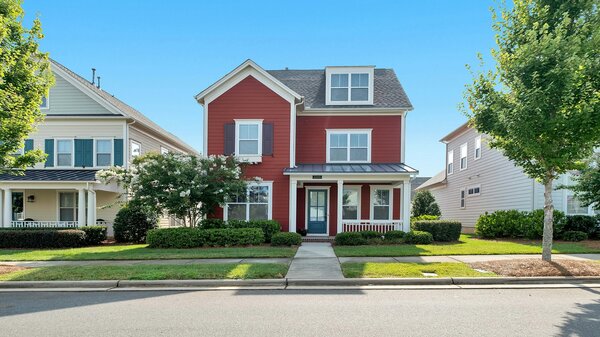
Picture it – you purchase a new home in a quiet, family-friendly neighborhood. On your first night, you notice that the neighbors are having a party – a big loud party. Your haven of peace and tranquility is interrupted by thumping bass and the shrieks of people jumping into a pool. The next day, the neighbors are gone, and the block is quiet again. However, the party returns the next weekend, bigger and louder than before. You do some research and find the house is listed on a popular website for short term rentals. What do you do?

This is the exact question that was posed to the Louisiana Court of Appeals for the Second Circuit in Marina Homeowners Association, Inc. v. Cahill. In that case, the Marina Homeowner’s Association filed a petition seeking declaratory judgment against the owner of the house on the basis that the use of the home as a short-term rental violated the covenants of the homeowner’s association. In response, the property owners argued that the covenants had expired and were no longer applicable. Therefore, they claimed they were free to use their property as they saw fit.

Many homeowners in Louisiana are familiar with building restrictions. Authority for the issuance of building restrictions is found in Louisiana Civil Code article 775. A building restriction is a real right under Louisiana Civil Code article 777. However, Louisiana Civil Code article 778 provides that if there is doubt as to the existence, validity, or extent of building restrictions, the issue should be resolved in favor of the unrestricted use of the immovable. These articles also provide a subsequent purchaser of the immovable property is also bound by the building restrictions if they are recorded in the public records.

The building restrictions for the subdivision at issue provided that the restrictions had a term of twenty years and then would renew automatically in ten-year periods. These restrictions bound the original property owners and all subsequent property owners. The court found that even though the original twenty-year term for the building restrictions had expired, the restrictions would automatically renew unless amended by the Association. Therefore, the property owner’s house was subject to the building restrictions.

Importantly for this case, the building restrictions specifically prohibited the use of the property for any reasons other than residential purposes. Therefore, the operation of a short-term rental was a violation of the building restrictions.

The Homeowners Association prevailed in this case – the property owners were no longer able to use their property for short term rentals. As the moral of the story – to be a good neighbor – it helps to follow the rules. And it is always important to check the fine print to know what those rules are!

References:

Marina Homeowners Ass'n, Inc. v. Cahill, 56,423 (La. App. 2 Cir. 8/27/25), 420 So. 3d 782.

Posted by:

Disclaimer

Keogh Cox & Wilson, Ltd. provides this blog as a public service for general information only. The materials contained herein may not reflect the most current legal developments or even express the opinion of all or even most of Keogh Cox attorneys. Such material does not constitute legal advice or form any attorney-client relationship. Keogh Cox and all contributing author(s) expressly disclaim all liability to any person with respect to the contents of this Web site and Blog and expect that no reliance will be made upon the information provided.


Continue Reading

Explore legal perspectives on the issues shaping Louisiana's key industries and courtrooms.

Insight

Louisiana Appeal Court Finds Nonparty “Nonresident” Industrial Site Owner Is Subject to Louisiana’s Subpoena Power

Can a nonresident corporation, who is not a party to a pending action, be compelled to respond to discovery in Louisiana? The Louisiana Fifth Circuit says YES. See Molaison v Cust-O-Fab Specialty Services, LLC, a case where Keogh Cox successfully handled the appeal.

The Molaison case involved an industrial accident claim where catastrophic injuries were alleged. In this context, the appellate court found that a non-resident company has sufficient presence in Louisiana to subject it to the court’s subpoena power. However, the trial court must first assess the scope of discovery to ensure it is calculated to lead to discoverable evidence and is not too onerous.

In Molaison, the owner of an industrial plant who employed the plaintiff claimed that its nonresident status prevented the parties from requiring it to respond to discovery by deposition or otherwise. The plant owner cited a Louisiana Supreme Court case that held personal jurisdiction, without more, did not subject a nonparty, out-of-state defendant to submit to discovery in this state.

But, in this case, the nonparty maintained a facility in Louisiana and employed the plaintiff. As a consequence, the Molaison court found that the Louisiana “discovery rules control” and “the trial court did not err in finding that (the company) was subject to the subpoena power of a Louisiana court.”

The contractor established it issued the subpoena to obtain evidence from the chemical plant owner that was relevant to the allocation of fault under Louisiana’s pure comparative fault tort system. Therefore, the appeal court reasoned that the nonresident plant owner was subject to the subpoena, “even if (the company) is not obligated to pay in tort by operation of workers compensation immunity.”

Of note, the court also held that the review of a discovery order that finds a nonresident company subject to the subpoena power is a final appealable judgment, as opposed to an interlocutory order subject the discretionary review on supervisory writ.

Case Reference: Molaison v Cust-O-Fab Specialty Services, LLC, 21-585 (La. App 5 Cir. 6/1/22); 343 So. 3d 866.

Insight

“Forensic Defendants” Dismissed from Wrongful Conviction Suit

On December 9, 1982, a victim was raped and stabbed multiple times in her Baton Rouge residence. In those harrowing moments, the victim was face-to-face with her assailant and vowed that she would remember the characteristics of her assailant in the unlikely event she survived. A friend arrived at the residence and entered the second-floor room containing the assailant and the wounded victim. Fortunately, at that moment, noise from a postal employee caused the assailant to flee the scene. The investigation began that same day.

Sometime later, Archie Williams became a suspect and was then criminally charged after the victim identified Mr. Williams as her attacker. The victim identified a prominent scar on the assailant which, in an unfortunate twist of fate, tended to match a scar on Mr. Williams. Several of the governmental officers involved in the investigation and the April 1983 criminal trial of Mr. Williams were sued many years later in the case styled Archie Williams v. City of Baton Rouge, ET AL. Keogh Cox attorneys Drew Blanchfield, Collin LeBlanc, Cathy Giering, and Chelsea Payne represented a forensic scientist, a lab technician, and a print examiner in the suit (the “Forensic Defendants.”) In his June 10, 2024 ruling, Judge Brian A. Jackson granted a Motion for Summary Judgment in favor of these defendants, dismissing the claims against them with prejudice.

At the 1983 criminal trial, Forensic Defendants testified that they could not identify Mr. Williams as the attacker. Similarly, both the prosecutor and defense counsel advised the jury that the physical evidence did not implicate Mr. Williams. Nevertheless, Mr. Williams was convicted based upon the passionate but mistaken testimony of the victim. Mr. Williams had not committed these crimes but remained incarcerated until his release decades later.

Mr. Williams consistently denied guilt. In 2008, he hoped DNA testing would help to prove his innocence. However, the DNA evidence was of no assistance. In 1999, The FBI launched its National Fingerprint Database (“IAFIS.”) Yet, a 2009 search generated no matches to fingerprints from the crime scene that had not already been identified. In 2014, Next Generation Identification (NGI) replaced IAFIS. By 2016, NGI held approximately 72,000,000 criminal fingerprints and 50,000,000 civil fingerprints. A 2019 search of this ever-expanding database matched fingerprint evidence taken from the 1983 crime scene to the prints of a convicted rapist who had died in prison years before. Mr. Williams was innocent and was soon released through a joint filing by the State of Louisiana and Mr. Williams. His lawsuit against multiple defendants followed.

In response, the Forensic Defendants filed a Motion that advanced the “qualified immunity” granted to governmental officials. In opposition to the Motion, the plaintiff possessed the burden: 1) to raise a fact dispute on whether his constitutional rights were violated by the defendants’ individual conduct; and 2) to show those rights were “clearly established” at the time of the alleged violation. The Court found that the plaintiff did not meet this burden. Although Plaintiff alleged that certain fingerprint evidence had been “suppressed” in violation of the “Brady Rule,” the Court cited the robust factual record showing that the jury was fully aware that no fingerprint evidence identified Mr. Williams and that unidentified prints were present at the crime scene. The Court also rejected the claim that there was any fabricated exculpatory blood or serology evidence.

The facts in Williams highlight the great technological improvements since the early 1980s which now aid the court system, prosecutors, and defense attorneys to protect against the conviction of an innocent suspect. These facts also tell a sad human story of an individual who spent more than 30 years in jail for a crime he did not commit. While it does not replace the lost years, Louisiana has created a fund which provides some financial resources to wrongfully convicted individuals to help them re-enter society. Williams was able to take advantage of this fund.

References:

Archie Williams v. City of Baton Rouge, ET AL, United States District Court, Middle District of Louisiana, No. 3:20-cv-00162.

Insight

Preparing for a Storm

Fortunately, the 2024 hurricane season has been relatively calm. We previously blogged about steps that can be taken after your property is damaged by a hurricane or other natural disaster. (Click here to access our prior blog). With a Tropical Storm, and potential Hurricane, threatening our coast, here are some steps to consider taking to prepare before a storm arrives in the event you must make a property insurance claim for damages after the storm:

  • DOCUMENT, DOCUMENT, DOCUMENT – The best way to prove the condition of your property before damage is caused is to document it. Take pictures and videos of the interior and exterior of your home or business. Create an inventory of your contents. Narrate the video to provide better descriptions. If your property is damaged, this documentation will be used to verify its condition and make it easier for your insurer to adjust and pay your claim.
  • INSPECT YOUR PROPERTY – As you are making your preparations, you may consider taking a walk around your property to notice any prior damage to your property. Identify any issues that could affect a potential insurance claim.
  • KNOW YOUR INSURANCE COVERAGES – Make sure you are aware of the coverages that your insurance policy provides. The Declarations Page to your policy should provide much of this information – the coverage limits, types of coverage provided, deductible, etc. While your insurance agent likely maintains this for you, it is good practice to maintain and know this information, which lets you know what will or will not be covered.
  • MITIGATE YOUR DAMAGES – You can take steps to prevent damage to your property during the storm. You can pick up items around the property that could become airborne and take whatever precautions you can to prevent damage to your property, particularly the exterior. If your property is damaged, you can make temporary repairs to prevent further damage until your insurance company can get to you (like placing a tarp on the roof).

Virginia J. ‘Jenny’ McLin

Partner
Contracts
Louisiana
Property