Insight

Court Finds Real Estate Agents Are Not Required to Research the Truthfulness of Their Client’s Representations

Published on: February 5, 2026
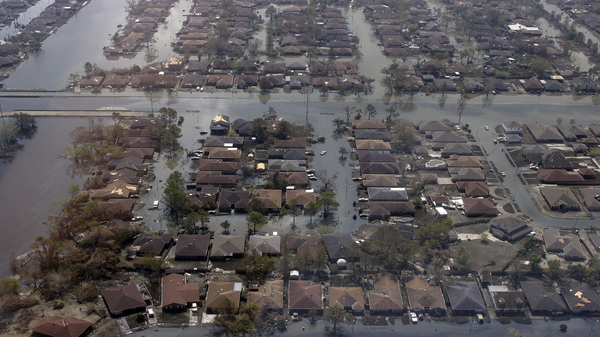
In Smith v. Grantham, homebuyers sued the sellers for alleged failure to disclose prior flooding of the home. The buyers also sued the sellers’ real estate agent for negligent misrepresentation, arguing the realtor knew or should have known of a prior history of flooding. The plaintiff referenced the previous sellers’ property disclosure documents located in the MLS listing database, which disclosed a prior flooding incident. However, the property disclosure document that the realtor received from her clients denied any prior flooding of the property or structure.

The Court of Appeal affirmed summary judgment in favor of the sellers’ agent, noting that her clients represented in their property disclosure document that the property had never flooded, and she had no actual knowledge contradicting their representation. The Court stated that under La. R.S. 9:3894(B), a real estate agent is relieved of liability for providing false information furnished by her client if she did not have actual knowledge that the information was incorrect. The court held that imposing a higher duty on a real estate agent would improperly “create a situation in which the agent had to independently verify information before conveying it to the buyer.”

Reference:

Smith v. Grantham, 93-0881 (La. App. 1 Cir. 9/4/24), 394 So.3d 316.

Posted by:

Disclaimer

Keogh Cox & Wilson, Ltd. provides this blog as a public service for general information only. The materials contained herein may not reflect the most current legal developments or even express the opinion of all or even most of Keogh Cox attorneys. Such material does not constitute legal advice or form any attorney-client relationship. Keogh Cox and all contributing author(s) expressly disclaim all liability to any person with respect to the contents of this Web site and Blog and expect that no reliance will be made upon the information provided.

Continue Reading

Explore legal perspectives on the issues shaping Louisiana's key industries and courtrooms.

Insight

Keogh Cox Obtains Summary Judgment in Premises Liability Action

The First Circuit Court of Appeals affirmed the Trial Court’s ruling that granted summary judgment in a premises liability case filed following an accident that occurred at the LSU Hilltop Arboretum. The Louisiana Supreme Court recently denied writs seeking review of the lower courts’ rulings. Keogh Cox attorneys, Brian T. Butler and C. Reynolds LeBlanc, defended the case.

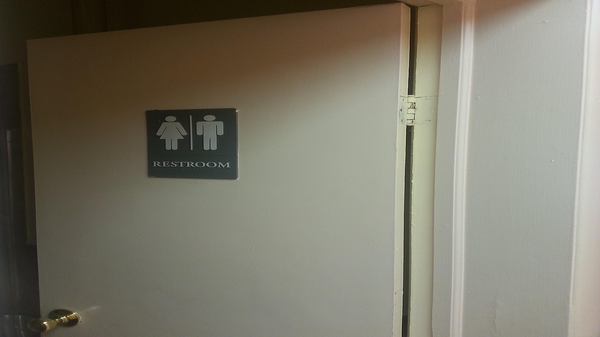
In Hebert v. Louisiana State Univ. Sys. Bd. of Supervisors Through Louisiana State Univ., the plaintiff went to the LSU Hilltop Arboretum to attend a wedding. Before the wedding, she went to the ladies’ room located in the outdoor pavilion area. The door to the restroom is controlled by an automatic door closer. The plaintiff alleged that the door began to close with “excessive force” when she exited the ladies’ room, and her finger was injured when it slid into the hinge-side of the door.

The plaintiff claimed the automatic door closer was defective because it was not properly adjusted at the time of the accident. The plaintiff retained an expert professional engineer to support her claims. The expert inspected the door and the door closer approximately 19 months after the incident. He testified that when he inspected the door, it was closing too fast, was out of adjustment, and had been improperly maintained. The plaintiff argued these findings showed the door was also defective at the time of the accident.

The expert also said the doors should have been inspected and adjusted every six months. The plaintiff argued the alleged problem with the door would have been discovered if it was inspected as her expert recommended.

Keogh Cox filed a Motion for Summary Judgment on behalf of the defendants. First, we argued the plaintiffs failed to produce evidence that the door was defective on the date of the accident. While the expert opined the door was defective when it was inspected nineteen months after the accident, the plaintiff had no evidence to show the alleged defect existed at the time of the accident. Keogh Cox asserted that the expert’s testimony claiming a defect was pure speculation. The court agreed and found the plaintiff failed to show the door presented an unreasonable risk of harm.

Second, we argued the plaintiff could not show LSU had prior notice that the door was defective at the time of the accident. As the door to the primary restroom on the premises, it was frequently used. There was no evidence of any prior complaints or reports of problems with the door before the accident. The plaintiff argued that notice could be found because LSU did not have a set inspection plan for the door as her expert recommended.

The court rejected this argument, stating “The opposite is true; in the absence of other facts such as recorded complaints about a defect or hazard, the lack of a plan of inspection implies that the public entity has no knowledge of dangerous defects or conditions.” Thus, the court found the plaintiff failed to show LSU had notice of the alleged problem with the door.

Reference:

Hebert v. Louisiana State Univ. Sys. Bd. of Supervisors Through Louisiana State Univ., 2025-0246 (La. App. 1 Cir. 11/7/25), 424 So. 3d 809, writ denied, 2025-01542 (La. 2/10/26), 425 So. 3d 1205.

Insight

Real Estate Liability: Recovery Denied in “As Is” Sale Despite Quick Discovery of Mold

In the recent case of Riedel v. Fenasci,2018-0540 (La. App. 1 Cir. 12/28/18), _______ So. 3d _______, 2018 WL 6818716,home buyers sued the sellers and the involved real estate agents after mold wasdiscovered shortly following the sale. This is a common fact pattern in humidSouth Louisiana. The buyers lost in the trial court when there was no evidencethat the sellers or the agents knew of the problem. The result was affirmed bythe First Circuit Court of Appeal.

The Riedels identified mold weeks afterthe closing and filed a claim with their homeowner’s insurer. But the claim wasdenied when the insurer’s inspection revealed long- term damage, rot, anddeterioration in a ceiling due to water damage. That finding prompted thesuit.

Against the sellers, the Riedels contendedthat they “had to have known” about the moisture and mold in the home prior tothe sale. Because the home was sold “as is,” they had to establish fraudto recover. However, the sellers had not lived in the home for years and hadreceived no complaints from tenants over this time. Under such facts, the claimof fraud was not supported.

The Riedels also sued both agents for negligent misrepresentation, and their own agent for breach of fiduciary duty. In assessing the claim against the agents, the Riedel Court agreed that real estate agents are liable for negligent misrepresentation when they fail to disclose hidden defects in the property which were known or should have been known to them. The Court also agreed that a purchaser’s real estate agent owes a fiduciary duty, the highest duty of care recognized by law. Nevertheless, when the plaintiffs’ own inspector found no visible evidence of mold prior to the sale and there was no indication that the agents possessed prior knowledge of the mold, the claim against the agents was also dismissed.

Marty Golden has been practicing law based in Baton Rouge, Louisiana for over thirty years, concentrating in civil litigation primarily involving injuries, property damage, insurance coverage, and contract disputes. Much of his practice is defending and advising real estate agents in suits by property buyers and sellers, but Marty also defends other professionals, insurance companies, manufacturers, and business owners. Marty has a special interest in all things procedural, because they are the rules of the road for litigators and knowing them better than his opponent gives him a leg up in court.

Insight

Preparing for a Storm

Fortunately, the 2024 hurricane season has been relatively calm. We previously blogged about steps that can be taken after your property is damaged by a hurricane or other natural disaster. (Click here to access our prior blog). With a Tropical Storm, and potential Hurricane, threatening our coast, here are some steps to consider taking to prepare before a storm arrives in the event you must make a property insurance claim for damages after the storm:

  • DOCUMENT, DOCUMENT, DOCUMENT – The best way to prove the condition of your property before damage is caused is to document it. Take pictures and videos of the interior and exterior of your home or business. Create an inventory of your contents. Narrate the video to provide better descriptions. If your property is damaged, this documentation will be used to verify its condition and make it easier for your insurer to adjust and pay your claim.
  • INSPECT YOUR PROPERTY – As you are making your preparations, you may consider taking a walk around your property to notice any prior damage to your property. Identify any issues that could affect a potential insurance claim.
  • KNOW YOUR INSURANCE COVERAGES – Make sure you are aware of the coverages that your insurance policy provides. The Declarations Page to your policy should provide much of this information – the coverage limits, types of coverage provided, deductible, etc. While your insurance agent likely maintains this for you, it is good practice to maintain and know this information, which lets you know what will or will not be covered.
  • MITIGATE YOUR DAMAGES – You can take steps to prevent damage to your property during the storm. You can pick up items around the property that could become airborne and take whatever precautions you can to prevent damage to your property, particularly the exterior. If your property is damaged, you can make temporary repairs to prevent further damage until your insurance company can get to you (like placing a tarp on the roof).
No items found.
Property
Real Estate
Summary Judgment