Insight

Nursing Home Liability: Big Brother is Watching Granny?

Published on: April 1, 2019
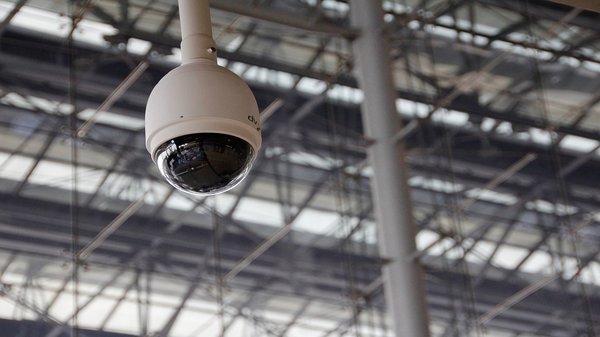
As an integral theme to his best-selling novel Nineteen Eighty-Four, George Orwell once used the slogan: “Big Brother is Watching You.” This slogan embodied the idea that a person’s actions and intentions are being monitored by the government as a means of controlling and suppressing the will of the populace.

Although not as extreme as Orwell’s dystopian novel, Louisiana families will now be able to install video monitoring systems in their loved ones’ nursing home rooms pursuant to Act 596 of the 2018 Regular Session of the Louisiana Legislature. According to the “Nursing Home Virtual Visitation Act,” nursing homes can not prohibit the cameras or retaliate against residents who want to install them. The video systems will monitor residents who often cannot speak for themselves.

However, several requirements must be met to abide by the Act:

  1. The resident, or family if the resident lacks capacity, must provide notice of installation to the facility;
  2. Visual recordings must include date and time;
  3. The device must be stationary and fixed, not oscillating;
  4. Residents must pay all costs for installation, upkeep, and removal;
  5. Written consent is required from all roommates;
  6. Room changes are required if a roommate does not consent;
  7. Residents and applicants cannot be retaliated against for authorizing devices; and
  8. Signage must be installed at the front door of the facility (at the facility’s cost) and at the resident’s room (at the resident’s cost) advising of surveillance in the rooms.

Furthermore, nursing homes must provide forms to nursing home residents, or their legal guardians, outlining the ways the cameras can be installed. Under the Act, surveillance should be addressed at admission as a resident right. To promote compliance, the Act prohibits the use of any recordings in litigation when the device was installed or used without the nursing home’s knowledge or used without adherence to the required forms. Additionally, compliance with the Act is a complete defense against lawsuits brought purely because monitoring devices are in use.

Nursing facilities and the families of residents and patients should take care to comply with all of the requirements in the act to ensure that the video footage is actually admissible and that the facilities are not opening themselves to privacy lawsuits from other residents. “Big Brother” might not be watching, but the increase in affordable, high quality, surveillance cameras, coupled with the Virtual Visitation Act, means nursing facilities should anticipate that someone could be watching very soon.

Posted by:

Disclaimer

Keogh Cox & Wilson, Ltd. provides this blog as a public service for general information only. The materials contained herein may not reflect the most current legal developments or even express the opinion of all or even most of Keogh Cox attorneys. Such material does not constitute legal advice or form any attorney-client relationship. Keogh Cox and all contributing author(s) expressly disclaim all liability to any person with respect to the contents of this Web site and Blog and expect that no reliance will be made upon the information provided.

Continue Reading

Explore legal perspectives on the issues shaping Louisiana's key industries and courtrooms.

Insight

The “Great Flood of 2016”--Update and Resources

“Disaster Declaration” Expanded. The list of parishes now declared disaster areas by the federal government has increased to include the following parishes: Acadia, Ascension, East Feliciana, Iberia, Lafayette, Pointe Coupee, St. Landry, and Vermilion.

http://gov.louisiana.gov/news/additional-parishes-added-to-federal-disaster-declaration-8-16-16

Potential Tax Implications for Flood Victim. For those insured, it is critical that you document your losses with as much detail as possible; serial numbers, make/model/description—the more detail the better. Keep receipts and credit card statements. Time-dated photos are also important. Even those without flood insurance should do the same as it may assist in obtaining FEMA assistance. However, the same documentation of your losses could also help to reduce your tax exposure. The attached link provides key information and outlines the impact the flooding may have on tax-filing and other deadlines.

https://www.irs.gov/uac/tax-relief-for-victims-of-severe-storms-flooding-in-louisiana

Insight

Another Year, Another Natural Disaster: What to do if Your Home is Damaged by a Storm or Flood

Unfortunately, Louisianans (and their property insurers) have endured many natural disasters in the past several years. From the historic flooding in the greater Baton Rouge area in August 2016 to the devastation caused by Hurricane Harvey in August 2017, Gulf Coast residents are all too familiar with significant storms and flooding events. While the rebuilding process will take months or years, this article is designed to provide some basic information on how to document your property claim and apply for and obtain disaster assistance.

  • DOCUMENT, DOCUMENT, DOCUMENT - Once able, make sure to document the damages to your home and contents. Whether for a homeowners or flood insurance policy or to obtain government assistance, take plenty of photos and even video of the damage. Make a list of the items in your home that were damaged or destroyed. One way to organize this list is to group items from each room together; approximate the item’s age, where it was purchased, and its value when purchased. If you have receipts, try to salvage them. As you rebuild, and materials and items are thrown out, it will become more difficult to document your claim. Proper documentation will lessen the burden upon your insurer’s claims handlers and adjusters and may speed the processing of your claim. A lack of documentation may require the insurer to investigate longer and result in delay.
  • OBTAIN MULTIPLE ESTIMATES - Although the volume of work and distractions which follow a natural disaster make this difficult, try to obtain estimates for the work needed on your home. Pay for the estimate, if necessary. If you have three estimates and the amounts are close, they are more credible. Also, try and get as much detail as possible in each estimate, including specific materials to be used, dimensions, and finishes. Your insurer is looking to determine the true amount of the loss and thorough estimates help to define your claim.
  • APPLY FOR ASSISTANCE - Especially if your property is not insured, make sure to immediately apply for government assistance. You can apply for federal assistance at disasterassistance.gov. Oftentimes, the state government will also administer federal and state disaster assistance funds.

Recovering after a disaster may not be a quick or easy process, but spending more time and effort initially may ultimately save you time and allow you to present a claim your insurer will agree to pay.

Insight

La. Supreme Court Determines Impact of Failure to Pay Filing Fee in Medical Review Panel

The Louisiana Supreme Court recently held that failure to pay filing fees necessary to add a defendant does not invalidate the proceeding as to other defendants. Prior to the ruling, Louisiana courts held that a failure to pay for one defendant invalidated the entire proceeding.

In Kirt v. Metzinger 2019-C-1162 (La. 04/03/20), plaintiffs requested a medical review panel after the death of their mother due to complications after surgery. Plaintiffs named three defendants—two doctors and the hospital. A letter from the Patient’s Compensation Fund Oversight Board (PCF) was mailed to the plaintiffs, confirming that the defendants were qualified under the Louisiana Medical Malpractice Act, and informing the plaintiffs that they were required by La. R.S. 40:1231.8 to pay a filing fee of $100 per named defendant within forty-five days of the mailing of the letter. Plaintiffs responded, requesting to add two additional defendants to the panel, one of whom was an unidentifiable nurse. Plaintiffs also included payment of $500.

The PCF responded that it was unable to add the nurse without proper identification. Three weeks later, plaintiffs notified the PCF they were also unable to identify the nurse. Upon request, Parish Anesthesia was added to the panel instead. Nearly five months later, plaintiffs provided the PCF with the identity of the nurse in question and requested she be added. The PCF sent confirmed the addition and requested another $100 filing fee which was never paid. Nevertheless, the medical review panel thereafter determined that none of the defendants, including the nurse, breached their standard of care. Suit followed against all defendants.

The defendants moved for summary judgment, arguing that the failure to pay the additional filing fee invalidated the proceeding as to all defendants. The trial court granted this motion, and the appellate court affirmed. Reversing the lower courts, the Supreme Court found that the failure to pay the additional $100 filing fee did not invalidate the entire proceeding. The court observed that separate confirmation letters sent by the PCF provided a different forty-five day period during which to pay the filing fee tied to each individual defendant.

The Kirt court stated: “[t]he notion of ‘one filing fee’ for every panel proceeding cannot be reconciled with the different payment deadlines that arise when the PCF sends separate letters confirming defendants’ qualified status. A single filing fee cannot be subject to different payment deadlines.” The court dismissed only the nurse and remanded the remainder of case to the lower courts.

Chad A. Sullivan is a partner with Keogh, Cox & Wilson, Ltd. Prior to becoming an attorney, he worked as a licensed Registered Nurse. He utilizes his background in nursing on a daily basis in his law practice that primarily focuses on automobile liability, medical malpractice, nursing home litigation, healthcare professional licensure and discipline, and products liability.

No items found.
Louisiana