Insight

New Orleans Ladies On Parade for Equal Pay

Published on: February 17, 2017

When President John F. Kennedy signed the Equal Pay Act, he called it a "first step" and one which "affirms our determination that when women enter the labor force they will find equality in their pay envelopes.” Despite the many federal statutes passed since the Equal Pay Act, "equal pay" remains a hot-button issue and the subject of protests aimed at correcting an actual and/or perceived disparity. Locally, the New Orleans Police Department estimates that between 10,000 and 15,000 protesters took part in the Women’s March in New Orleans on Saturday, January 21, 2017.

New Orleans Mayor Mitch Landrieu issued an executive order during the week following the protests wherein he requested that a pay disparity survey be conducted by the Civil Service Commission. He further announced a ban of questions about salary history during the hiring process for New Orleans city employees, noting, “It is unacceptable that, on average, women make just 79% of what men make. We need equal pay for equal work.”

Mayor Landrieu's order is limited to city jobs and follows a year when some state officials, including Gov. John Bel Edwards, were dealt a defeat in the Legislature on a separate equal pay measure. The state “equal pay” measure ultimately passed the Senate, but was defeated in a House committee.

The right of employees to be free from discrimination in their compensation is protected under many federal laws, including the Equal Pay Act of 1963, Title VII of the Civil Rights Act of 1964, the Age Discrimination in Employment Act, and the Americans with Disabilities Act. Specifically, the Equal Pay Act requires that men and women be given equal pay for equal work. Pay differentials are permitted only when they are based on seniority, merit, quantity or quality of production, or a factor other than sex. Of course, these bases provide affirmative defenses that can be raised by the employer in the event of a lawsuit.

Whether the recent protests will become a catalyst for further "equal pay" legislation is not known; what is known is that the issue has been around since before John F. Kennedy and does not appear to be going away anytime soon.

Posted by:

Disclaimer

Keogh Cox & Wilson, Ltd. provides this blog as a public service for general information only. The materials contained herein may not reflect the most current legal developments or even express the opinion of all or even most of Keogh Cox attorneys. Such material does not constitute legal advice or form any attorney-client relationship. Keogh Cox and all contributing author(s) expressly disclaim all liability to any person with respect to the contents of this Web site and Blog and expect that no reliance will be made upon the information provided.


Continue Reading

Explore legal perspectives on the issues shaping Louisiana's key industries and courtrooms.

Insight

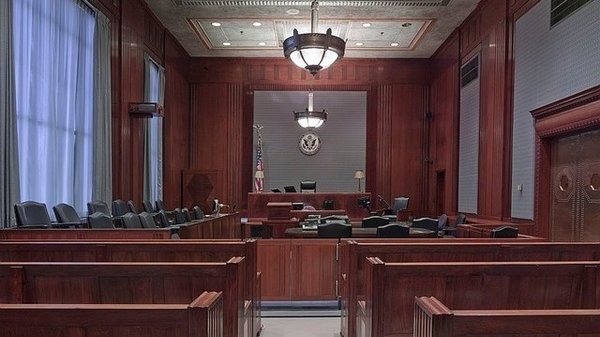
Jury Duty Part 1: Am I qualified to be a juror?

“Jury: A group of 12 people, who, having lied to the judge about their health, hearing, and business engagements, have failed to fool him.” - Henry Louis MenckenCongratulations, you have been selected for jury duty. As American as baseball, jury duty is a pillar of the American system of justice, and you can step right up and participate-if you are qualified. In this two-part series, we outline the qualifications and exemptions for potential jurors in Louisiana.In Louisiana, “all qualified citizens shall have the opportunity to be considered for jury service in the district courts of Louisiana and shall have an obligation to serve as jurors when summoned for that purpose, and that no citizen shall be excluded from jury service in the district courts of Louisiana on account of race, color, religion, sex, national origin or economic status.” La. Sup. Ct. R. 25To serve as a juror for a civil or criminal case, you must meet the following criteria:

  1. Be both a citizen of the United States and Louisiana who has resided within the parish in which he or she is to serve for at least one year immediately preceding his jury service.
  2. Be at least eighteen years of age.
  3. Be able to read, write, and speak the English language and be possessed of sufficient knowledge of the English language.
  4. Not be under interdiction or incapable of serving as a juror because of a mental or physical infirmity, provided that no person shall be deemed incompetent solely because of the loss of hearing in any degree.
  5. Not be under indictment for a felony nor have been convicted of a felony for which he has not been pardoned by the governor. C.Cr.P. art. 401, La. Rev. Stat. Ann. § 13:3041.

If you receive a jury duty notice and do not meet one of the above requirements, you are encouraged to contact the jury commissioner’s office. Who knows, you may be free in time for the first pitch.

Insight

Keeping Testimony of Future Medical Expenses “Out of the Gate”

Ina recent case involving Keogh Cox attorneys, the Eastern District of Louisiana in MichaelBrander, Jr. v. State Farm Mutual Auto. Ins. Co., Civ. A. No. 18-982(Feb. 14, 2019), 2019 WL 636423 barred testimony of substantial projectedmedical expenses because it was not based on a reliable methodology. Thisruling stands to impact many other cases where plaintiffs seek to usefar-reaching projections of a life-long need for radiofrequency ablations("RFAs") or other pain-management modalities to "board" sixand even seven-figure numbers for future medical expenses.

InDaubert v. Merrill Dow Pharmaceuticals, Inc., 509 U.S. 579 (1993), theUnited States Supreme Court recognized the trial judge as the “gatekeeper” of expertopinion testimony and held that only reliable and relevant expert opinions maybe admitted. The reliability requirement serves to keep expert opinions“outside the gate” when they constitute unsupported speculation or meresubjective belief; only scientifically valid expert opinions are allowedinside. To ascertain whether an expert opinion is scientifically valid, Daubertinstructs the trial court to consider:

∙ whether theexpert’s theory can or has been tested;

∙ whether it hasbeen subject to peer review and publication;

∙ the known orpotential rate of error when applying the theory;

∙ applicablestandards and controls; and,

∙ the degree towhich the theory has been generally accepted in the scientific community.

InBrander, the plaintiff advanced medical testimony that he would needRFAs every year of his expected lifetime, a period of 36 years. The courtdisallowed the testimony, noting that the plaintiff’s physicians had less thanten years personal experience in administering RFAs to patients, the medicalliterature only considered the effectiveness of RFAs over a span of seven toten years, and there was no showing that the 36-year treatment plan was ingeneral acceptance by the medical community. According to the court, theexpert opinions offered by plaintiff failed Daubert “on all points.” Asa result, the plaintiff was permitted to introduce testimony of future RFAs foronly a seven-year period.

The reasoning of Brander may be equally applicable to projections of lifetime treatment involving other medical procedures, such as medial branch blocks, Botox injections, or spinal cord stimulators, for which the long-term efficacy has not been firmly established in the medical literature. Opinions unsupported by personal treatment experience and peer-reviewed medical studies are not scientifically valid and are properly halted “at the gate.”

Nancy B. Gilbert is a partner with Keogh Cox in Baton Rouge, Louisiana. She is a puzzle-solver by nature, and specializes in providing clear and in-depth analysis of complex litigation issues.

Insight

Jury Duty Part 2: Am I exempt from being a juror?

“There were eleven votes for 'guilty.' It's not easy for me to raise my hand and send a boy off to die without talking about it first.” - Reginald Rose, Twelve Angry MenJury service is a civil duty. Our system would collapse without the diligent individuals who respond and serve, but the law does provide exemptions and exceptions which may be utilized to be excused. Part 2 of this blog will explore those circumstances.General Exemptions

Louisiana provides two general exemptions from jury service.

1 - Age. Persons seventy years of age or older shall be exempt from jury service and may decline to serve as jurors. La. Const. Ann. art. V, § 33. However, they are free to serve if otherwise qualified.

2 - Prior Service. The second, all “persons who have served as grand or petit jurors in criminal cases or as trial jurors in civil cases or in a central jury pool during a period of two years immediately preceding their selection for jury service.” La. Sup. Ct. R. 25.

No exemption is automatic. A prospective juror qualifying for one of the above exemptions must assert the exemption by contacting the appropriate jury commission.

Recognized Excuses

In criminal cases, a juror may be excused when such service “would result in undue hardship or extreme inconvenience.” C.Cr.P. art. 783

In civil cases, a juror may be excused when service would result in “undue or extreme physical or financial hardship.” However, these circumstances are limited to circumstances in which an individual would:

1. Be required to abandon a person under his or her personal care or supervision due to the impossibility of obtaining an appropriate substitute care giver during the period of participation in the jury pool or on the jury; or

2. Incur costs that would have a substantial adverse impact on the payment of the individual's necessary daily living expenses or on those for whom he or she provides the principal means of support; or

3. Suffer physical hardship due to an existing illness or disease. La. Rev. Stat. Ann. § 13:3042

With respect to both criminal and civil service, a request for excusal can be mailed to the issuing court and should include an explanation of circumstances. In most cases, the letter must also include supporting documentation, such as, “state income tax returns, medical statements from licensed physicians, proof of dependency or guardianship, and similar documents, which the judge finds to clearly support the request to be excused.” “Failure to provide documentation shall result in a denial of the request for a waiver.” La. Rev. Stat. Ann. § 13:3042You should serve if you can but, if you need to be excused, questions regarding exemptions, excusals, and/or qualifications should be directed to the appropriate jury commissioner’s office.

Tori S. Bowling

Partner
State Courts