Insight

Minimal Force of an Impact Matters in Car Accident Litigation

Published on: September 23, 2019
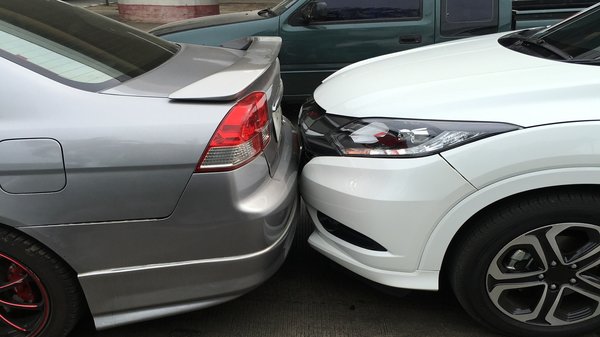
For years, Louisiana plaintiffs attorneys have argued that the force ofimpact in an auto accident is not determinative of their clients’ injuries andshould be afforded little, if any, weight. A recent decision out of theLouisiana First Circuit Court of Appeal does damage to that argument. In Jonesv. Bravata, Jr. and The City of Baton Rouge, 2018 CA 0837 (La. App. 1 Cir.5/9/19), the First Circuit upheld the trial court's jury instruction on “forceof impact” where photographs showed only minor damage and the defendantdescribed the accident as a “bump.”

The accident occurred when a City employee rear-ended the plaintiffs'vehicle. Liability was stipulated and the only question at trial was damages.Mrs. Jones alleged severe neck and back injuries. She began treatment with anorthopedist within a week of the accident and thereafter received five“relatively non-invasive surgical procedures” in lieu of a lumbar fusionsurgery. The jury returned a verdict of $200,000, which included $150,000 inpast medical expenses and $35,000 in future medical expenses, but awardedlittle for general damages. Mrs. Jones appealed the verdict, asserting that thetrial court erred in instructing the jury on force of impact.

The "force of impact" jury instruction in dispute provided:

Whilethe force of a collision may be considered in determining whether a person wasinjured by an accident and the extent of the injuries sustained, it should notbe the only factor to consider in making such a determination. Even though theforce of impact may be slight, it does not preclude an award of damages.However, in determining causation, you may consider the minimal nature of theaccident.

In considering the plaintiff's assignment of error, the First Circuit noted that Mrs. Jones was correct that no witness specifically testified that the accident was too minor to have caused her injuries. However, there was evidence in the record upon which the jury could have reached the conclusion that this was a minimal impact.

Common sense would appear to support a connection between the force of an impact and the injury one could be expected to suffer. The recent Jones decision allows defendants to promote this common sense argument. Where the claimed injuries are disproportionate to the forces involved, this argument can make the difference at trial.

John Grinton is a partner of the firm admitted in state, federal and appellate courts throughout Louisiana. His practice focuses on commercial and construction litigation, representing insurance companies, architects, engineers, contractors and other businesses in all aspects of litigation. His workers’ compensation practice includes representing clients in medical billing disputes, healthcare provider disputes, statutory/borrowing/special employer disputes, and court approved settlements. John has been involved in complex cases involving construction defect claims, breach of contract and negligence actions, insurance coverage issues, lender liability, securities litigation and personal injury matters. He has firsthand experience in jury trials and arbitration's, as well as mediation, appellate briefing and oral argument.

Posted by:

Disclaimer

Keogh Cox & Wilson, Ltd. provides this blog as a public service for general information only. The materials contained herein may not reflect the most current legal developments or even express the opinion of all or even most of Keogh Cox attorneys. Such material does not constitute legal advice or form any attorney-client relationship. Keogh Cox and all contributing author(s) expressly disclaim all liability to any person with respect to the contents of this Web site and Blog and expect that no reliance will be made upon the information provided.

Continue Reading

Explore legal perspectives on the issues shaping Louisiana's key industries and courtrooms.

Insight

Supreme Court Abrogates Louisiana’s “Professional Rescuer’s Doctrine”

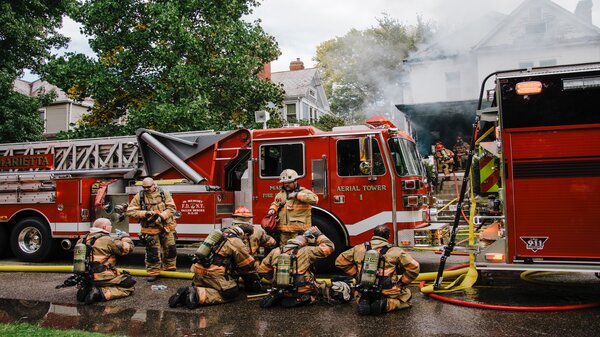
Historically, Louisiana law provided that a professional rescuer injured in the performance of his or her duties “assumes the risk” of an injury and is not entitled to damages. See Worley v. Winston, 550 So.2d 694, 696 (La. App. 2 Cir.), writ denied, 551 So.2d 1342 (La. 1989). This is known as the Professional Rescuer’s Doctrine and applied as a defense to claims raised by firefighters, policeman, and others. The doctrine prevented recovery because the professional rescuer “assumed the risk” of injury. Recently, the Louisiana Supreme Court in Doe v. McKesson, 2021-00929 (La. 3/25/22) rejected the doctrine as a bar to suit by the professional rescuer.

In Doe, the Supreme Court of Louisiana accepted a certified question from the Fifth Circuit of the United States Court of Appeals as to the viability of the doctrine. In response, the Supreme Court held that the Professional Rescuer’s Doctrine has been abrogated in Louisiana both legislatively under La. C.C. art. 2323 and jurisprudentially in Murray v. Ramada Inns, Inc., 521 So.2d 1123, 1132 (La. 1988).

The Court cited La. C.C. art. 2323(A), which provides that the fault of “all persons […] shall be determined” in a civil action. Subsection (B) of the article provides this rule applies “to any claim for recovery of damages for injury, death, or loss asserted under any law or legal doctrine or theory of liability, regardless of the basis of liability.”

In Murray, the Supreme Court previously held that the doctrine of assumption of risk no longer had a place in Louisiana tort law following the adoption of comparative fault. Nevertheless, the Murray Court identified two exceptions:

  • Cases “where the plaintiff, by oral or written agreement, expressly waives or releases a future right to recover damages from the defendant,” if “no public policy concerns would invalidate such a waiver, the plaintiff's right to recover damages may be barred on a release theory;” and
  • “[I]n the sports spectator or amusement park cases (common law’s “implied primary” assumption of risk cases).”

Murray, 521 So.2d at 1134. (internal citations omitted).

The Doe court observed that Murray provided no exception relative to professional rescuers. The Court further observed that, while the legislature had enacted statutes that bar plaintiff recovery in other settings, no such statute had been passed to codify the Professional Rescuer’s Doctrine.

Although professional rescuers injured in the performance of their duties may still be found at fault, the is no longer an automatic bar to suit.

Insight

Supreme Court Establishes Shifting Burden of Proof for Additional Medical Opinions (“AMO”)

Louisiana Code of Civil Procedure article 1464 allows a defendant to select a physician to perform a physical and/or mental examination of a plaintiff to challenge the plaintiff’s claimed physical and mental injuries. This is called an Additional Medical Opinion (AMO); this was previously referenced as an Independent Medical Examination (IME). Earlier this year, the Louisiana Supreme Court, outlined the “good cause” requirement of the statute—an essential element required to proceed with an AMO. But, what remained as a question was the scope of an AMO and which party had the burden to deal with requested restrictions on the physician’s medical exam. This question was answered: In Augustine v. Safeco Insurance Company of Oregon, the Louisiana Supreme Court held that after “good cause” has been shown for the examination, the party seeking to limit the scope of the AMO bears the burden to justify the restrictions.

In Augustine, a sequel to Hicks v. USAA General Indemnity Company, Et al, the Court held that if the party to be examined for the AMO, usually the plaintiff, wants to place limits upon the examination, that party then has the burden of proof to justify the need for any restrictions or limitations with competent evidence. This ruling appears to show a trend in which the Court is confirming a defendant’s ability to obtain an AMO to support its defenses to a personal injury claim. Augustine follows another Supreme Court decision from March of 2022, in which the Court held that a party establishes “good cause” for an AMO if that party shows a “reasonable nexus” between the requested examination and the condition in controversy. See Hicks v. USAA General Indemnity Company, Et al. The Hicks decision eased the hurdles that defendants faced when seeking to compel AMOs pursuant to Louisiana Code of Civil Procedure article 1464. For more information on the Hicks decision, see our prior blog here. Supreme Court Clarifies “Good Cause” for Additional Medical Opinion (“AMO”) (keoghcox.com)

In Augustine, the defendants requested an AMO. The plaintiff agreed to the examination, but the parties were unable to agree on “certain restrictions” the plaintiff sought to impose on the scope of the examination. The defendants ultimately filed a Motion to Compel regarding this issue. The District Court limited the examination to only those tests that the plaintiff’s treating physicians had performed. The District Court also noted that it did not want the AMO to turn into a “fishing expedition.” The Court of Appeal denied the defendant’s request for review of the Trial Court’s decision. The defendants then sought relief from the Supreme Court, which vacated the Trial Court’s ruling and remanded the case for further proceedings consistent with its opinion.

In its opinion, the Supreme Court set forth the burden of proof each party has in the context of a Motion to Compel an AMO. As outlined in Hicks, the party requesting the AMO initially has the burden to establish “good cause” for the AMO. Importantly, the Augustine court found that once “good cause” has been found, “the court should presume that the examination will be conducted in a reasonable manner.” Because it is presumed the examination will be conducted reasonably, if a party opposing the AMO wants to place restrictions on the examination, the burden now shifts to that party to establish “special circumstances” that justify the restrictions they request. To meet this burden, the opposing party must produce “competent evidence” to establish (1) the need for the restriction and (2) that harm that will result if the restrictions are not imposed. The type of evidence that may support AMO restrictions under Augustine likely will vary depending on the unique facts of each case. However, Hicks and its “sequel,” Augustine, provide clarification and guidance to parties seeking to compel or limit an AMO under article 1464.

Case References:

Augustine v. Safeco Insurance Company of Oregon, 2021-01753 (La. 10/1/22), __ So.3d __.

Hicks v. USAA General Indemnity Company, Et al., 2021-00840 (La. 3/25/22), 339 So.3d 1106.

Written by Chad A. Sullivan and George A. Wright

Insight

Summary Judgment Affirmed Because Alleged Defect was Open and Obvious

The First Circuit Court of Appeals recently affirmed summary judgment in Rainey v. Knight, on grounds that the alleged defect was open and obvious. Its ruling shows that the open and obvious defense remains viable and supports summary judgment when reasonable minds can only agree that a condition is not unreasonably dangerous.

In Rainey, the plaintiff fell and was injured while leaving a veterinary hospital. Evidence showed the plaintiff frequented the premises for nearly twenty years before the incident. The plaintiff attempted to descend four steps from the hospital’s elevated porch but stepped off the porch and fell twenty-one inches to the ground. Rainey filed suit for his injuries, alleging the defendant failed to maintain its property. Specifically, he claimed that the elevated porch lacked a railing, which created a defect.

The defendant filed a motion for summary judgment and argued (1) the front porch ledge was an open and obvious defect and (2) the plaintiff could not show the defendant had knowledge of the allegedly dangerous condition of the porch. The defendant also produced evidence to show it had no prior problems with anyone falling from the porch.

The plaintiff opposed the defendant’s motion, but his opposition was filed one day late. Because the opposition was not filed timely, the appellate court noted it was unable to consider the plaintiff’s opposition and exhibits under the Louisiana Supreme Court’s ruling in Auricchio v. Harriston.

On appeal, the court focused its analysis on whether the defendant breached a duty owed to the plaintiff, applying Louisiana’s risk/utility balancing test to consider the utility of the condition, the likelihood and magnitude of harm, the cost of preventing the harm, and the nature of the plaintiff's activities.

In examination of the likelihood and the magnitude of the harm, the appellate court noted that summary judgment may be granted if a condition is open and obvious. If reasonable minds could only agree that the condition was not unreasonably dangerous, that condition would be open and obvious, and the plaintiff would be unable to establish the defendant breached any duty owed to the plaintiff.

Considering the evidence before the court, the First Circuit found a reasonable person would have found the lack of a railing on the porch open and obvious and would have avoided the area where plaintiff fell when exiting the building. Importantly, the court found the lack of a railing was apparent to all who encountered it such that it was open and obvious.

The Rainey court also noted that the lack of reported complaints about the alleged condition indicated a low risk of harm. The height of the porch also showed the likelihood and magnitude of the plaintiff’s harm was minimal. In light of this evidence, the lack of railing around the entire porch was not an unreasonably dangerous condition. No reasonable factfinder could find that the defendant breached any duty owed to the plaintiff, and summary judgment was appropriately granted.

References:

Rainey v. Knight, 2023-0133 (La. App. 1 Cir. 11/3/23) (La. App. 1st Cir. Nov. 3, 2023)

Auricchio v. Harriston, 2020-01167 (La. 10/10/21), 332 So.3d 660

No items found.
Collision
Louisiana
Injury