Insight

Louisiana Court Finds No Coverage Under Policy Based Upon Insured’s Failure to Cooperate

Published on: July 8, 2026
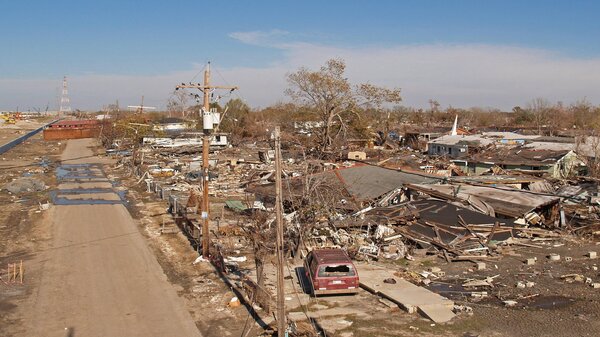
In South Alexander Development I, LLC v. Markel American Insurance Co., the U.S. District Court for the Middle District of Louisiana granted an insurer’s motion for summary judgment finding that the insured’s failure to cooperate violated the policy’s coverage terms and voided coverage.

The dispute arose from a commercial first-party property loss following Hurricane Ida. The insurer moved quickly to adjust the claim by retaining an independent adjuster and engineers to evaluate the damage to and value of the insured property. It also asked the insured to produce documentation needed to complete the adjustment, including records of installation costs, monthly revenues, and repair estimates. The insured did not respond.

Additionally, the insurer sent numerous emails over the course of the claim requesting information about (1) the costs the insured had incurred; (2) documentation supporting the income loss claim, along with quotes, estimates, and proposals for repairs; and (3) the scope of work for testing and repairs. However, most of these requests went unanswered.

Based on this evidence, the court determined that the insured violated the terms of the policy because it failed to cooperate with the insurer’s investigation. Most notably, the insured obtained repair estimates and proposals from its own contractor and withheld them from the insurer until after suit was filed. The insured also never submitted a completed proof of loss, even though the policy required submission of such a document that included estimates and “other reasonable information” the insurer needed to settle the loss. These acts showed the insured failed to “cooperate with [the insurer] in performing all acts required by this policy.”

The insurer showed that it pursued the information diligently and that the insured’s breach was both material and prejudicial. The court found (1) the insurer had documented repeated, specific requests for nearly a year, (2) the withheld documents went directly to quantifying the loss, and (3) the insured’s noncompliance deprived the insurer of its right to investigate the insured’s claim.

As a result, the court granted summary judgment finding no genuine issue of material fact relating to the insured’s breach of the policy’s cooperation clause. The insured was precluded from bringing a breach of insurance contract claim and therefore, without a valid contractual claim, the insured also could not pursue a bad faith claim against the insurer.

References:

South Alexander Development I, LLC v. Markel American Insurance Co., CV 23-1436-JWD-SDJ, 2026 WL 1819120 (M.D. La. June 24, 2026).

Posted by:

Disclaimer

Keogh Cox & Wilson, Ltd. provides this blog as a public service for general information only. The materials contained herein may not reflect the most current legal developments or even express the opinion of all or even most of Keogh Cox attorneys. Such material does not constitute legal advice or form any attorney-client relationship. Keogh Cox and all contributing author(s) expressly disclaim all liability to any person with respect to the contents of this Web site and Blog and expect that no reliance will be made upon the information provided.


Continue Reading

Explore legal perspectives on the issues shaping Louisiana's key industries and courtrooms.

Insight

Louisiana First Circuit Finds for State Trooper in Fatal Shooting

On July 27, 2023, the Louisiana First Circuit entered judgment in favor of Louisiana State Trooper Andre Bezou in the shooting death of Coltin LeBlanc. The case was defended by Keogh Cox attorneys Drew Blanchfield, Brian Butler, and Collin LeBlanc. In support of its ruling, the First Circuit cited La. R.S. 9:2798.1 which provides qualified immunity for an officer’s actions, unless their action constituted “criminal, fraudulent, malicious, intentional, willful, outrageous, reckless, or flagrant misconduct.” The court found Trooper Bezou was entitled to qualified immunity under the facts of this case.

After midnight in an area of Hammond, La. dotted with bars and restaurants, Trooper Bezou spotted LeBlanc driving a large Ford truck. Trooper Bezou testified that he witnessed two traffic violations and initiated a stop. “Bodycam” footage captured the interaction. LeBlanc exited the vehicle, and when the trooper asked for identification, LeBlanc indicated it was in his truck. LeBlanc moved to the cab of the truck, and Trooper Bezou followed, stopping within the open driver’s side door. Based upon his observations during this interaction, Trooper Bezou suspected LeBlanc was intoxicated. Later testing confirmed that LeBlanc had a blood alcohol level more than two times the legal limit.

But LeBlanc was not attempting to retrieve his license. Instead, he revved the engine and attempted to flee with Trooper Bezou immediately next to the vehicle. Trooper Bezou later testified he feared that LeBlanc would steer the vehicle to run him over with the back left wheel. In reaction, Trooper Bezou latched onto the truck and LeBlanc sped around a corner and down the roadway. Trooper Bezou was able to draw his weapon and gave multiple orders to stop. Trooper Bezou testified that he feared he would be thrown from the vehicle or scraped against parked cars in the area. When the trooper received no indication LeBlanc would relent, he opened fire. Thereafter, the truck came to a rest.

In the subsequent litigation, plaintiffs argued that Trooper Bezou used “excessive force” and should have attempted to move away and allow LeBlanc to flee the scene. In response, Keogh Cox cited Harmon v. City of Arlington, 16 F.4th 1159 (5th Cir. 2021), where the federal Fifth Circuit held that no “clearly established precedent” would prohibit an officer from firing while perched on the running board of a fleeing vehicle. Finding no excessive force under the facts of the case, Harmon acknowledged the simple truth that “there is an obvious threat of harm to an officer” who is “on the side of a fleeing vehicle.” The facts presented to the First Circuit showed that Trooper Bezou gave more warning to relent than was given in Harmon.

The New York Times covered this incident in an article titled, “Before the Final Frame: When Police Missteps Create Danger.” 11/17/21. In its coverage, the New York Times reported that Trooper Bezou “appeared to be in grave danger.” It then suggested that the trooper could have just backed away. However, courts are instructed not a gauge questions of immunity from an out-of-context application of “20/20 hindsight.” Because the facts in this case showed Trooper Bezou was in grave danger “at the moment” force was used and was faced with a split-second decision, he was protected from liability.

Insight

Keeping Testimony of Future Medical Expenses “Out of the Gate”

Ina recent case involving Keogh Cox attorneys, the Eastern District of Louisiana in MichaelBrander, Jr. v. State Farm Mutual Auto. Ins. Co., Civ. A. No. 18-982(Feb. 14, 2019), 2019 WL 636423 barred testimony of substantial projectedmedical expenses because it was not based on a reliable methodology. Thisruling stands to impact many other cases where plaintiffs seek to usefar-reaching projections of a life-long need for radiofrequency ablations("RFAs") or other pain-management modalities to "board" sixand even seven-figure numbers for future medical expenses.

InDaubert v. Merrill Dow Pharmaceuticals, Inc., 509 U.S. 579 (1993), theUnited States Supreme Court recognized the trial judge as the “gatekeeper” of expertopinion testimony and held that only reliable and relevant expert opinions maybe admitted. The reliability requirement serves to keep expert opinions“outside the gate” when they constitute unsupported speculation or meresubjective belief; only scientifically valid expert opinions are allowedinside. To ascertain whether an expert opinion is scientifically valid, Daubertinstructs the trial court to consider:

∙ whether theexpert’s theory can or has been tested;

∙ whether it hasbeen subject to peer review and publication;

∙ the known orpotential rate of error when applying the theory;

∙ applicablestandards and controls; and,

∙ the degree towhich the theory has been generally accepted in the scientific community.

InBrander, the plaintiff advanced medical testimony that he would needRFAs every year of his expected lifetime, a period of 36 years. The courtdisallowed the testimony, noting that the plaintiff’s physicians had less thanten years personal experience in administering RFAs to patients, the medicalliterature only considered the effectiveness of RFAs over a span of seven toten years, and there was no showing that the 36-year treatment plan was ingeneral acceptance by the medical community. According to the court, theexpert opinions offered by plaintiff failed Daubert “on all points.” Asa result, the plaintiff was permitted to introduce testimony of future RFAs foronly a seven-year period.

The reasoning of Brander may be equally applicable to projections of lifetime treatment involving other medical procedures, such as medial branch blocks, Botox injections, or spinal cord stimulators, for which the long-term efficacy has not been firmly established in the medical literature. Opinions unsupported by personal treatment experience and peer-reviewed medical studies are not scientifically valid and are properly halted “at the gate.”

Nancy B. Gilbert is a partner with Keogh Cox in Baton Rouge, Louisiana. She is a puzzle-solver by nature, and specializes in providing clear and in-depth analysis of complex litigation issues.

Insight

Past Mistakes: Waiver of Coverage Defenses

What does it mean to “waive” something? To an insurer in Louisiana, the meaning is clear; a waiver can mean thousands or even millions of dollars in insurance coverage that may otherwise be excluded. Recently, the Louisiana Supreme Court in Forvendel v. State Farm Mutual Automobile Insurance Company, 2017-C-2074 (June 27, 2018) clarified when an insurer will be found to have waived coverage defenses.

Waiver is generally understood as the “intentional relinquishment of a known right, power, or privilege.” Waiver occurs when there is: 1) a right; 2) that is known; and, 3) an actual intention to forego the right or conduct so inconsistent with an intent to enforce the right so as to induce a reasonable belief that it has been relinquished. The waiver rule is generally applied to an insurer who defends itself and its insured without having obtained a nonwaiver agreement to preserve its coverage defense. The joint defense of the insured and the insurer, without asserting a known defense, is deemed to be conduct inconsistent with the enforcement of the coverage defense and therefore a waiver.

In Forvendel, the Louisiana Supreme Court considered whether an insurer’s waiver of a coverage defense in a prior claim served to waive the coverage defense in a subsequent claim involving the same insured and similar circumstances. The key issue in the case was whether the insurer’s conduct in allowing the same insured to "stack" two UM coverages contrary to Louisiana's "anti-stacking" law (La. R.S. 22:1295 (1)(c)) when adjusting an accident claim in 2007 served as a waiver of the right to assert the anti-stacking law when adjusting a 2013 accident claim.

Luckily for insurers, who could be forever bound by past mistakes in their handling of claims, the Louisiana Supreme Court reversed the two lower courts and found the right was not waived. In so ruling, the Court distinguished prior case law in which a coverage defense was found to have been waived because the insurer’s conduct took place while handing the same claim, not a prior claim. The Louisiana Supreme Court also drew on a line of cases that allowed insurers to recover previously made payments under well-established principles of Louisiana law allowing for the recoupment of payments not due.

The Forvendel case provides a common-sense result by relieving insurers from unintended consequences from past omissions in the handling of an insured’s new claim.

Nancy B. Gilbert is a partner with Keogh Cox. She is a puzzle-solver by nature and uses these skills to provide clear and in-depth analysis of complex litigation issues. Nancy is a devoted grandmother, an avid camper and gardener, and enjoys renovating her 80-year-old home.

Cole C. Frazier

Partner
Bad Faith
Hurricane
Insurance
Summary Judgment