Insight

Jury Duty Part 2: Am I exempt from being a juror?

Published on: November 10, 2017
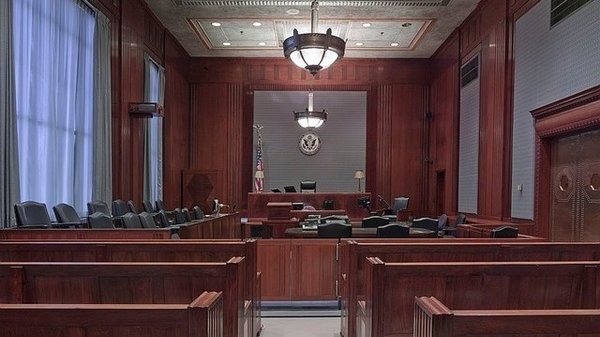
“There were eleven votes for 'guilty.' It's not easy for me to raise my hand and send a boy off to die without talking about it first.” - Reginald Rose, Twelve Angry MenJury service is a civil duty. Our system would collapse without the diligent individuals who respond and serve, but the law does provide exemptions and exceptions which may be utilized to be excused. Part 2 of this blog will explore those circumstances.General Exemptions

Louisiana provides two general exemptions from jury service.

1 - Age. Persons seventy years of age or older shall be exempt from jury service and may decline to serve as jurors. La. Const. Ann. art. V, § 33. However, they are free to serve if otherwise qualified.

2 - Prior Service. The second, all “persons who have served as grand or petit jurors in criminal cases or as trial jurors in civil cases or in a central jury pool during a period of two years immediately preceding their selection for jury service.” La. Sup. Ct. R. 25.

No exemption is automatic. A prospective juror qualifying for one of the above exemptions must assert the exemption by contacting the appropriate jury commission.

Recognized Excuses

In criminal cases, a juror may be excused when such service “would result in undue hardship or extreme inconvenience.” C.Cr.P. art. 783

In civil cases, a juror may be excused when service would result in “undue or extreme physical or financial hardship.” However, these circumstances are limited to circumstances in which an individual would:

1. Be required to abandon a person under his or her personal care or supervision due to the impossibility of obtaining an appropriate substitute care giver during the period of participation in the jury pool or on the jury; or

2. Incur costs that would have a substantial adverse impact on the payment of the individual's necessary daily living expenses or on those for whom he or she provides the principal means of support; or

3. Suffer physical hardship due to an existing illness or disease. La. Rev. Stat. Ann. § 13:3042

With respect to both criminal and civil service, a request for excusal can be mailed to the issuing court and should include an explanation of circumstances. In most cases, the letter must also include supporting documentation, such as, “state income tax returns, medical statements from licensed physicians, proof of dependency or guardianship, and similar documents, which the judge finds to clearly support the request to be excused.” “Failure to provide documentation shall result in a denial of the request for a waiver.” La. Rev. Stat. Ann. § 13:3042You should serve if you can but, if you need to be excused, questions regarding exemptions, excusals, and/or qualifications should be directed to the appropriate jury commissioner’s office.

Posted by:

Disclaimer

Keogh Cox & Wilson, Ltd. provides this blog as a public service for general information only. The materials contained herein may not reflect the most current legal developments or even express the opinion of all or even most of Keogh Cox attorneys. Such material does not constitute legal advice or form any attorney-client relationship. Keogh Cox and all contributing author(s) expressly disclaim all liability to any person with respect to the contents of this Web site and Blog and expect that no reliance will be made upon the information provided.
Continue Reading

Explore legal perspectives on the issues shaping Louisiana's key industries and courtrooms.

Insight

Outdoor Living:  Federal Court Rules That Uneven Terrain in Parking Lot Does Not Present an Unreasonable Risk of Harm

A federal court for the Middle District of Louisiana recently ruled that a 1½ inch elevation change in a Walmart parking lot did not present an unreasonable risk of harm to the plaintiff patron in Lacaze v. Walmart Stores, Inc. The case involved a slip and fall/trip and fall accident in the parking lot of Walmart’s Burbank Drive store in Baton Rouge. The defendant moved to dismiss the suit where the plaintiff claimed she tripped and fell as she crossed the area where the black asphalt parking lot adjoined the concrete crosswalk as pictured below.

In the area where the asphalt meets the crosswalk, the surface presented a ¼ inch to 1½ inch change in elevation. Plaintiff admitted the black pavement was distinct in appearance and color from the concrete crosswalk. Surveillance showed that plaintiff looked down at her cell phone at the time she tripped and fell. Though in a high pedestrian traffic area, Wal-Mart maintained this was the first reported incident.

The Court found the condition was open and obvious and did not present an unreasonable risk of harm. To reach this decision, the Court made the following observations:

  1. Parking lots have clear and apparent utility. Crosswalks do as well. Crosswalks give patrons a designated area to traverse the lot safely.
  2. The likelihood and magnitude of the risk posed by the condition was low. The Court noted it is common for surfaces of parking lots and sidewalks to be irregular, and no other patrons reported problems or accidents.
  3. The cost of preventing the harm was high. The Court would not consider only the cost of fixing the specific injury-causing defect. Rather, it considered the cost of eliminating all defects in the Walmart parking lot.
  4. Plaintiff conducted an ordinary commercial activity that was not dangerous in nature.

The Court concluded that all but factor four pointed to a single conclusion: the 1½ inch elevation difference did not pose an unreasonable risk of harm. The Court reached this conclusion even though the plaintiff retained an expert who gave opinions regarding possible violations of the Americans with Disabilities Act (ADA) and OSHA regulations. The expert’s opinions were insufficient to defeat summary judgment when the condition was open and obvious. In reaching its ultimate conclusion, the Court joined with several other courts, including the following:

  • Chambers v. Vill. of Moreauville, where a one-and-one half inch deviation did not present an unreasonable risk of harm;
  • Reed v. Wal-Mart Stores, where a height variance of one-fourth to one-half inch between concrete blocks in parking lot did not present an unreasonable risk of harm; and
  • Boyle v. Board of Sup'rs, Louisiana State University, where a depression of up to one inch in a sidewalk did not pose unreasonable risk of harm.

Case References: Lacaze v. Walmart Stores, Inc., No. CV 20-696-JWD-EWD, 2022 WL 4227240 (M.D. La. Sept. 13, 2022); Chambers v. Vill. of Moreauville, 2011-0898 (La. 01/24/12), 85 So.3d 593; Reed v. Wal-Mart Stores, 97-1174 (La. 03/04/98), 708 So.2d 362; and Boyle v. Board of Sup'rs, Louisiana State University, 96-1158 (La. 01/14/97), 685 So.2d 1080.

Insight

The Louisiana Legislature Overhauls the “Direct Action” Statute

For decades, Louisiana law provided a claimant or injured person an uncommon opportunity (1) to directly name an insurer in a lawsuit, and (2) to make the jury aware of the presence of insurance. This was known nationally as the “Louisiana Direct Action Statute.” This statute, embodied in LSA—R.S. 22:1269, has long been a topic of debate.

The Louisiana Legislature recently amended the “direct action statute” in Act 275 and declared that the injured person “shall have no right of direct action against the insurer” unless at least one of the exceptions applies: the insured files for bankruptcy, the insured is insolvent, service cannot be made on the insured, a tort cause of action exists against a family member, uninsured motorist claims, the insured is deceased, or when the insurer issues a reservation of rights or coverage denial (but only for the purpose of establishing coverage). The Act further provides that the insurer shall not be included in the caption of the case. And, the existence of insurance is not to be disclosed unless the Louisiana Code of Evidence requires it. This new legislation is effective August 1, 2024.

But, the Act also provides for new provisions that allow for the joinder of an insurer after settlement or in connection with a final judgment. The Act further includes specific provisions enacted to provide notice to an insurer of an action and outlines the procedures and timelines for how insurers assert reservation of rights or a denial of coverage.

The revisions to LSA—R.S. 1269 represent a significant change in how lawsuits involving insurance companies will proceed.

Insight

Medical Malpractice: Can failure to communicate test results be medical malpractice?

The Louisiana Fourth Circuit Court of Appeal recently considered a medical malpractice case with an unusual set of facts. Rather than the standard medical malpractice case, where a patient argues that he was misdiagnosed and/or claims that the doctor made a mistake when administering medical treatment, in Dufreche v. Jeffery Wayne Coco, MD and Internal Medicine Specialists, Inc., 2020-CA-0030 (La. App. 4th Cir.), the patient alleged that his doctor committed malpractice by failing to communicate test results.

In Dufreche, the patient showed signs of an HIV infection. He was tested twice before being treated by the infectious disease specialist. Both tests were negative. During his examination, the infectious disease doctor thought it was unlikely that the patient had HIV, but tested him anyway at the patient’s insistence. According to the patient, he was notified by the doctor that he would be provided the results upon receipt.

Unfortunately, the test results showed that the patient was HIV positive; however, he was not contacted. Fifteen months passed, during which the patient was unaware that he was HIV positive. Because he was not contacted, he assumed he was negative. When testing by another physician showed he was positive, the patient/plaintiff filed suit to recover damages allegedly suffered through a delay in treatment and psychological shock, including a claim for “emotional distress.”

To recover, the patient was required to establish: 1) the standard of care; 2) breach of that standard of care; and 3) that the breach caused his emotional distress. At trial, the doctor testified that he required his patients to follow up in person to receive test results, and expected the patients to contact his office to schedule an appointment. The court found that expecting a patient to follow up in person to receive sensitive test results was not a breach of the standard of care. However, the evidence established that the patient was not instructed that he must schedule an in-person appointment to obtain his test results.

The Dufreche court agreed with the lower court in finding that a failure to notify the patient of the doctor’s policy was a breach of the standard of care. Further, the court found that the infectious disease specialist, who admitted to a duty to the public to protect them from HIV, had also breached his duty for failing to notify an HIV positive patient of his diagnosis for over fifteen months. The doctor’s failure to communicate the results caused the patient’s emotional distress – resulting in an award of $45,000 in damages.

Virginia “Jenny” McLin is a partner at Keogh Cox who practices in the fields of corporate litigation, insurance defense and workers compensation defense. When she is not practicing law, Jenny can be found volunteering with the Junior League of Baton Rouge; cheering for the LSU Tigers with her husband Ryan; or shuffling her two kids to and from dance practice.

Richard W. Wolff

Partner
Louisiana
State Courts
Jury