Insight

"IME" Killer Bill Put Down

Published on: May 19, 2017
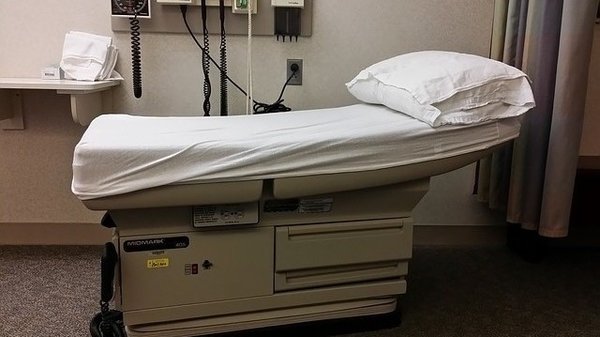
The Louisiana plaintiffs’ bar recently sought to tilt the scales of justice through Senate Bill 185, a bill seeking to complicate a defendant’s efforts to obtain an Independent Medical Examination ("IME"). An IME is an examination of the plaintiff by a physician or medical examiner hired by the defense. IMEs are important in the defense of a case and often act as a catalyst for settlement or to reduce the value of a claim.Bill 185 was introduced by Senator Jay Luneau (D) and passed with a unanimous 35 – 0 vote in the Senate. The bill proposed amendments to Louisiana Code of Civil Procedure Article 1464 to impose the following conditions upon IMEs:

  • All parties would be barred from referring to an IME as “independent” in the presence of a jury.
  • A plaintiff could not be ordered to submit to multiple examinations by multiple physicians within the same field of specialty, regardless of the number of defendants.
  • The party to be examined would have the right to have a person of his or her choosing present during the exam, including the plaintiff’s attorney.
  • The party to be examined would have the right not only to have the entire examination videotaped, but the ability to force the party requesting the examination to pay for all associated costs.

Were these conditions enforced, many physicians might have chosen not to provide IMEs at all when the process would involve: a potentially adversarial plaintiff’s attorney; a patient room packed with video equipment; and, the spectacle of it all captured on tape. Further, the bill would have stifled the ability to defend injury claims.We may never know what effect these changes might have brought. On May 16, 2017, the House Civil Law and Procedure Committee, involuntarily deferred on a 4-4 vote. This action effectively killed the bill and saved the IME as currently understood. By: John Grinton, a Keogh Cox associate whose practice areas include commercial and construction litigation. When he is not practicing law, John spends most of his time with his wife, Kellye, and their two dogs.

Posted by:

Disclaimer

Keogh Cox & Wilson, Ltd. provides this blog as a public service for general information only. The materials contained herein may not reflect the most current legal developments or even express the opinion of all or even most of Keogh Cox attorneys. Such material does not constitute legal advice or form any attorney-client relationship. Keogh Cox and all contributing author(s) expressly disclaim all liability to any person with respect to the contents of this Web site and Blog and expect that no reliance will be made upon the information provided.


Continue Reading

Explore legal perspectives on the issues shaping Louisiana's key industries and courtrooms.

Insight

Limitation of Liability under the LPLA: Can Internet Retailers be Manufacturers?

The Louisiana Products Liability Act (“LPLA”) contains the exclusivetheories of recovery against a manufacturer for damages caused by its product.The term “manufacturer” within the LPLA includes “the seller of a product whoexercises control over or influences a characteristic of the design,construction, or quality of the product that causes damage.” The rapid growthof e-commerce raises a unique question – how do we classify internet retailers?

Internet retailers generally act as a middleman for third partymanufacturers and online consumers. In this respect, they are not technically“sellers” as defined by the LPLA because they typically do not have controlover the design or construction of the products they sell. Nevertheless, theproper categorization of internet retailers may become important when someoneis injured by a product, as was the case in State Farm Fire and CasualtyCompany v. Amazon.com, Inc., 2019 WL 5616708 (Miss. N.D. 10/31/19) ---F.Supp.3d ---.

In State Farm Fire and Casualty Company v. Amazon.com, Inc., two hoverboards purchased through Amazon caught fire inside a Mississippi home and the home was destroyed. In considering Amazon’s possible liability, the Mississippi Court asked whether Amazon was a “service provider” or a “marketplace.” In Mississippi, a finding that Amazon was a “service provider” would insulate it from the claim. However, if Amazon acted as a “marketplace,” it could be exposed by the common law to a negligent failure-to-warn claim. The Mississippi Court held that, because Amazon operated as a marketplace, the claim against it could go forward.

If similar facts arose in Louisiana, could Amazon or similar retailers be exposed under the LPLA? If an internet retailer established policies that forced a “true” manufacturer to negatively alter product quality, would the LPLA provide a remedy? For example, if an internet retailer sets a price ceiling, this artificial figure, especially if unreasonably low, might pressure a manufacturer to lower product safety. Is setting a price range the exercise of enough control or influence over the “design, construction, or quality of a product” to render internet retailers subject to suit under the LPLA? That is a question likely to be answered in cases to come.

Insight

Louisiana Supreme Court Provides Updated Guidance on Execution of UM Waiver Forms

Under Louisiana law, uninsured/underinsured insurance coverage is implied in any automobile policy of insurance, and UM coverage will be read into the policy unless it is validly rejected. This rejection of UM coverage must be “clear and unmistakable.” The Louisiana Supreme Court recently addressed the issue of what qualifies as a valid rejection of UM coverage in Baack v. McIntosh, 2021-01054 (La. 6/30/21), --- So.3d ---.

The Louisiana Commissioner of Insurance provides a form which must be completed to reject UM coverage. This form allows the insured to initial one of four selections regarding UM coverage: (1) UM coverage at lower limits than liability coverage; (2) economic-only coverage with same limits; (3) economic-only UM coverage at lower limits; or (4) no UM coverage. A representative of the insured must initial one of these options for that option to apply to the policy at issue. This list does not include an option to select UM coverage. Therefore, the Baack Court held that “the only way to ‘select’ UM coverage on the form is to not initial any of the provided choices.”

The insured in Baack properly rejected UM coverage through the UM form in 2002. A proper rejection of UM coverage remains valid for the life of the policy, and a new form is not required when a policy is renewed. However, the Court found that, under La. R.S. 22:1295, an insured may change its rejection of UM coverage at any time by submitting a new UM form to the insurer.

In 2011, the insured increased its liability limits under the policy, which required completion of a new form. UM coverage again was properly rejected. Even though not legally required, the insurer sent new UM waiver forms to the insured in 2012, 2013, and 2014 when the policy was renewed. However, the insured completed each of these forms without initialing any of the four selections related to UM coverage. The insurer later issued the insurance policies without objection. The court found that the insured changed its rejection of UM coverage when it submitted the new forms in 2012, 2013, and 2014.

Because the insurer did not initial these forms when they were resubmitted, the insured “selected” UM coverage under Baack’s analysis, and UM coverage was afforded under the policy. Importantly, the Court held that, if the insurer believed the failure to make a selection on the forms was a mistake, it was the insurer’s responsibility to follow-up with the insured to make any necessary corrections. Three justices dissented and argued that the majority opinion negates other law which provides that an insured must make a “written request” to add UM on a policy where UM is rejected. UM cases are often fact-intensive and each case should therefore be assessed under their own specific facts.

Insight

Black Boxes: The Secrets Your Vehicle Keeps

By Brian Butler

Many do not realize modern vehicles are always ready to record critical driving information. As with airplanes, most passenger vehicles are now equipped with Event Data Recorders (EDR), or "Black Boxes." This information may be critical after an accident to show what happened, and who was at fault.

EDRs may record pre-event data for five seconds before and one second after an accident, possibly including vehicle speed, engine speed, percent throttle, change in velocity, and whether the brakes were applied. The make and model of the vehicle will determine what data is available. If you want this data, you must act quickly because it will be “overwritten” at some point if the vehicle continues in use.

It is also important to retain a competent expert to download the data. In Laborde v. Shelter Mutual Insurance Co., 82 So. 3rd 1237 (La. 3/9/2011), the trial court excluded the printout of data downloaded from a Black Box because of the boxes "chain of custody" and the method the information downloaded. It is important that your legal team knows how to obtain and preserve this evidence.

Data from Black Boxes can be useful in many ways. In some cases, it may help to prove that the accident involved a low impact or to show that no brakes were applied. In other cases, it may harm your position, but the data is almost always relevant. There are costs in downloading and interpreting the data. But in the right case, the secrets kept in the Black Box may be the only way to reveal the truth.

Brian has been doing defense work for the last 28 years. He has handled all types of defense matters over his career, but in recent years his practice has been focused in serious injury or damage cases and has worked extensively with experts involving complex cases, fire cases, and forensic work.

No items found.
Evidence
Louisiana
State Courts