Insight

Hurricane Ida: Supreme Court Suspends Certain Deadlines

Published on: September 3, 2021

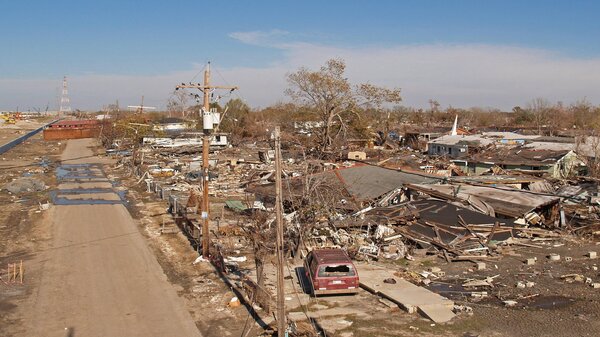
In response to Hurricane Ida, the Louisiana Supreme Court issued three Orders which affect litigation in Louisiana:

Proceeding before the Supreme Court

  • The Supreme Court Clerk of Court’s office will be closed until September 19, 2021. All filings due during this period of closure shall be deemed timely filed if filed on or before Monday, September 20, 2021.
  • Cases scheduled to be heard on the September docket (September 7-9) are postponed to the October docket, the week of October 18, 2021.

Civil Cases Statewide

  • All prescriptive and peremptive periods are hereby suspended statewide for a period of thirty days commencing from August 26, 2021.
  • All periods of abandonment are hereby suspended statewide for thirty days commencing from August 26, 2021.

Criminal Matters

  • The Court also extended time periods in criminal matters but limited the order to parishes most impacted by the storm.

Individual District Courts and Courts of Appeal may take additional actions because of the damage and loss of power experienced in multiple areas of the state.

Posted by:

Disclaimer

Keogh Cox & Wilson, Ltd. provides this blog as a public service for general information only. The materials contained herein may not reflect the most current legal developments or even express the opinion of all or even most of Keogh Cox attorneys. Such material does not constitute legal advice or form any attorney-client relationship. Keogh Cox and all contributing author(s) expressly disclaim all liability to any person with respect to the contents of this Web site and Blog and expect that no reliance will be made upon the information provided.

Continue Reading

Explore legal perspectives on the issues shaping Louisiana's key industries and courtrooms.

Insight

Louisiana Supreme Court Uses Reason to Decide Case Involving Tragic Facts

Sometimes in law, the facts of a case may threaten to eclipse the legal issue. However, Louisiana law instructs the fact finder to see through the facts, and their sometimes tragic nature, and apply the law as written. As Aristotle once wisely said, “The Law is reason free from passion.”

In Kazan, et. al. v. Red Lion Hotels Corporation, et. al., 2021-CC-01820 (La. 6/29/22), the Louisiana Supreme Court recently ruled on a case with tragic facts, and its ruling provides an example of Aristotle’s description of law in action. In Kazan, a female patron was in the parking lot of a motel when a male patron approached her and used Kazan’s vehicle to abduct her from the premises. The car was later found submerged in a lake, and Kazan’s body was recovered from the water. The family filed a tort suit against several parties, including the motel’s owner and its insurer, the Great Lakes Insurance Company SE.

Great Lakes filed a motion for summary judgment and asked to be dismissed on grounds that coverage for the event was excluded from its policy. Specifically, the insurer argued that bodily injury caused by an “assault,” “battery,” or “physical altercation” was excluded under the policy’s terms. Great Lakes further argued that the kidnapping and ultimate death of the patron was excluded under the policy as bodily injury caused by an assault, battery, or physical altercation. The Louisiana Supreme Court agreed and reversed the decision of the trial and appellate courts.

Under Louisiana law, “[a]n insurance policy is a contract between the parties and should be construed using the general rules for the interpretation of contracts.” Id. at p. 3. “When the words of an insurance policy are clear and explicit and do not lead to absurd consequences, courts must enforce the language as written.” Id. at p. 3. “Courts lack authority to alter the terms of an insurance policy under the guise of interpretation and should not create an ambiguity where none exists.” Id. at p. 3.

With these basic rules in mind, the Court carefully reviewed the wording of the exclusion in the Great Lakes policy which stated as follows: “This insurance does not apply to ‘bodily injury,’ ‘property damage,’ or ‘personal advertising injury’ arising out of an ‘assault,’ ‘battery,’ or ‘physical altercation.’” “Physical altercation” was defined in the policy as “a dispute between individual [sic] in which one or more persons sustain bodily injury arising out of the dispute.” Citing Merriam-Webster’s dictionary, the Court defined the term “dispute” as “verbal controversy” or “quarrel.”

Based upon the evidence in the case, the Court found the female patron was involved in a “dispute” with her male attacker, and ultimately sustained bodily injury as a result of the dispute. Therefore, the patron was injured in a physical altercation, as defined under the specific terms of the Policy, and coverage for the event was excluded under the policy’s terms.

The Court noted as follows: “The facts of this case are undoubtedly tragic. Nonetheless, absent a conflict with statutory provisions or public policy, insurers are entitled to limit their liability by imposing reasonable conditions upon the policy obligations they contractually assume. That is what Great Lakes did in the insurance policy at issue here.” Despite the tragic facts presented in the case, in so holding, it appears the court agreed with Aristotle’s belief that the Law is Reason Free from Passion.

Insight

Louisiana Court Finds No Coverage Under Policy Based Upon Insured’s Failure to Cooperate

In South Alexander Development I, LLC v. Markel American Insurance Co., the U.S. District Court for the Middle District of Louisiana granted an insurer’s motion for summary judgment finding that the insured’s failure to cooperate violated the policy’s coverage terms and voided coverage.

The dispute arose from a commercial first-party property loss following Hurricane Ida. The insurer moved quickly to adjust the claim by retaining an independent adjuster and engineers to evaluate the damage to and value of the insured property. It also asked the insured to produce documentation needed to complete the adjustment, including records of installation costs, monthly revenues, and repair estimates. The insured did not respond.

Additionally, the insurer sent numerous emails over the course of the claim requesting information about (1) the costs the insured had incurred; (2) documentation supporting the income loss claim, along with quotes, estimates, and proposals for repairs; and (3) the scope of work for testing and repairs. However, most of these requests went unanswered.

Based on this evidence, the court determined that the insured violated the terms of the policy because it failed to cooperate with the insurer’s investigation. Most notably, the insured obtained repair estimates and proposals from its own contractor and withheld them from the insurer until after suit was filed. The insured also never submitted a completed proof of loss, even though the policy required submission of such a document that included estimates and “other reasonable information” the insurer needed to settle the loss. These acts showed the insured failed to “cooperate with [the insurer] in performing all acts required by this policy.”

The insurer showed that it pursued the information diligently and that the insured’s breach was both material and prejudicial. The court found (1) the insurer had documented repeated, specific requests for nearly a year, (2) the withheld documents went directly to quantifying the loss, and (3) the insured’s noncompliance deprived the insurer of its right to investigate the insured’s claim.

As a result, the court granted summary judgment finding no genuine issue of material fact relating to the insured’s breach of the policy’s cooperation clause. The insured was precluded from bringing a breach of insurance contract claim and therefore, without a valid contractual claim, the insured also could not pursue a bad faith claim against the insurer.

References:

South Alexander Development I, LLC v. Markel American Insurance Co., CV 23-1436-JWD-SDJ, 2026 WL 1819120 (M.D. La. June 24, 2026).

Insight

Fraud Just Got More Expensive - Equity as a Factor in Attorney Fee Awards

The Louisiana Supreme Court recently held that the New Home Warranty Act ("NHWA") is not the exclusive remedy for a purchaser of a new home where the builder fails to disclose known defects in the Residential Property Disclosure Act ("RPDA"). Stutts v. Melton, 2013-0557, -- So.2d. ----. The Court also upheld an award of damages and attorney fees for fraud victims who elect not to seek rescission of a sales contract despite no Civil Code article expressly allowing for attorney fees in such instances.

Builder Chad Melton completed a home in Walker, Louisiana in 2004. He and his wife lived in the home for approximately nine months prior to selling the home to James and Lisa Stutts. The Residential Property Disclosure Act, La. R.S. 9:3196, et seq., requires disclosures of known problems with a home prior to sale. Melton provided the Stutts with a disclosure form, but failed to mention that color had previously been observed bleeding onto the walls of the home from the roof.

In Stutts, it was factually established that Melton was aware of the roof defect because he had entered into a $13,600 settlement with the roof manufacturer to fund the replacement of the roof. Nevertheless, Melton cleaned the walls and installed gutters instead of the more expensive roof replacement.

Melton's gutter solution was ill-advised and unsuccessful. After discovering the problem in the summer of 2006, the Stutts filed suit seeking as damages: the repair costs for the roof; costs for additional repairs; and attorney fees.

The Stutts filed a motion for summary judgment on their fraud claim citing La. C.C. art. 1953. The Meltons opposed the motion, arguing that the NHWA provides the "exclusive remedy" available to the Stutts. The motion was granted and, after a bench trial on damages, the trial judge awarded damages to include attorney fees.

The court of appeal reversed both the summary judgment and the money judgment, holding that the Stutts' claims were untimely under the NHWA.The NHWA provides a one year warranty period for new home construction and an additional thirty day period in which to file suit under the Act. By its terms, the NHWA provides the "exclusive remedies" between a builder and an owner relative to home construction.

The Louisiana Supreme Court reversed and reinstated that lower court's judgment. The Court held that the RPDA applied in this case because the home had been occupied by the Meltons after construction was completed. Even though the NHWA claims were prescribed, the Stutts possessed a timely claim that Melton had provided a fraudulent disclosure in violation of the RPDA.

The Court next addressed the Stutts' claim for attorney fees. The Court observed that no statute specifically authorized attorney fees where the plaintiff does not seek rescission of the sale. However, the Court reasoned, citing principles of equity found in Louisiana Civil Code article 4, that the legislature surely did not intend for victims of fraud to go uncompensated if they elect not to seek full rescission of the sale. Accordingly, attorney fees were held appropriate where fraud is committed but the victim elects not to seek rescission of the contract.

The Court's holding in Stutts may have a limited impact on the NHWA because of the peculiar facts of the case, i.e. the builder of the new construction living in the completed home before selling it to plaintiffs. However, the Court's award of attorney fees is an interesting development in the law. Time will tell whether the Court may be inclined to create further exceptions to the established rule that attorney fees cannot be awarded in the absence of statutory or contractual language awarding attorney fees.

Brian T. Butler

Partner
Flood
Louisiana Supreme Court
Hurricane