Insight

When "Drone" Used to be a Boring Word

Published on: March 13, 2017
Webster's top two definitions of the word "drone" are as follows:

1: A stingless male bee (as of the honeybee) that has the role of mating with the queen and does not gather nectar or pollen.

2: one that lives on the labors of others: parasite

While bees and parasites have their allure, Webster's third definition of the word "drone" is the one with current intrigue.

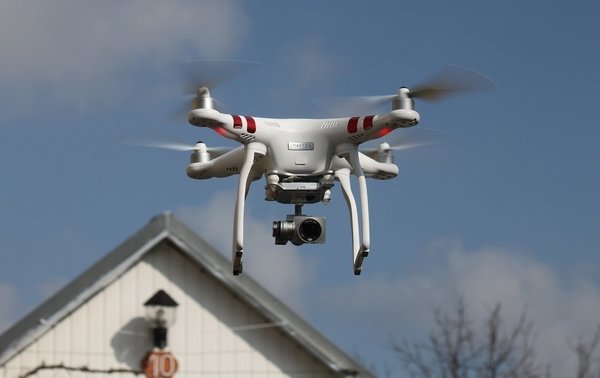
According to Webster's, a drone is also "an unmanned aircraft or ship guided by remote control or onboard computers." Drones began as play things; but are now poised to revolutionize industry, retail, agriculture, journalism, art, and law at an ever-increasing pace.

Currently, drones are regulated by the Federal Aviation Administration which has for decades regulated flight by planes and helicopters; but not everyone can own an airplane or helicopter. Everyone can own a drone and many soon will.

The soon-to-be pervasive use of drones will stretch at the fabric of criminal and civil law and raises intriguing questions with hazy answers. For example,

1: Without probable case, can the government park a drone over a house or building, or even a crime-ridden city block, and monitor for criminal activity with sensors that easily peer through walls?

2: Does one have a reasonable expectation of privacy within a fenced-in back yard?

3: Is following a personal injury plaintiff via drone considered stalking?

4: Can a business fly a drone over a competitor's work yard to observe it processes without recourse?

5: Is it legal to use technology (which is now available) to disrupt or even crash drones flying overhead? Would that be a tort?

In an upcoming Keogh Cox blog, we will advise of pending changes to the law that may begin to answer some of these questions. For now, we will observe that the word "drone" is no longer a boring word.

Posted by:

Disclaimer

Keogh Cox & Wilson, Ltd. provides this blog as a public service for general information only. The materials contained herein may not reflect the most current legal developments or even express the opinion of all or even most of Keogh Cox attorneys. Such material does not constitute legal advice or form any attorney-client relationship. Keogh Cox and all contributing author(s) expressly disclaim all liability to any person with respect to the contents of this Web site and Blog and expect that no reliance will be made upon the information provided.


Continue Reading

Explore legal perspectives on the issues shaping Louisiana's key industries and courtrooms.

Insight

When "Drone" Used to be a Boring Word

Webster's top two definitions of the word "drone" are as follows:

1: A stingless male bee (as of the honeybee) that has the role of mating with the queen and does not gather nectar or pollen.

2: one that lives on the labors of others: parasite

While bees and parasites have their allure, Webster's third definition of the word "drone" is the one with current intrigue.

According to Webster's, a drone is also "an unmanned aircraft or ship guided by remote control or onboard computers." Drones began as play things; but are now poised to revolutionize industry, retail, agriculture, journalism, art, and law at an ever-increasing pace.

Currently, drones are regulated by the Federal Aviation Administration which has for decades regulated flight by planes and helicopters; but not everyone can own an airplane or helicopter. Everyone can own a drone and many soon will.

The soon-to-be pervasive use of drones will stretch at the fabric of criminal and civil law and raises intriguing questions with hazy answers. For example,

1: Without probable case, can the government park a drone over a house or building, or even a crime-ridden city block, and monitor for criminal activity with sensors that easily peer through walls?

2: Does one have a reasonable expectation of privacy within a fenced-in back yard?

3: Is following a personal injury plaintiff via drone considered stalking?

4: Can a business fly a drone over a competitor's work yard to observe it processes without recourse?

5: Is it legal to use technology (which is now available) to disrupt or even crash drones flying overhead? Would that be a tort?

In an upcoming Keogh Cox blog, we will advise of pending changes to the law that may begin to answer some of these questions. For now, we will observe that the word "drone" is no longer a boring word.

Insight

Louisiana Supreme Court Rules on Admissibility of Expert Opinion on “Ultimate Issues”

La Code Evid. Art. 704 addresses the use of expert testimony in Louisiana Courts and provides, “Testimony in the form of an opinion or inference otherwise admissible is not to be excluded solely because it embraces an ultimate issue to be decided by the trier of fact.” Though the text of this article is simple, Louisiana trial courts often face questions about when an expert’s opinion crosses a line and invades the jury’s fact-finding function. These questions often arise in the context of Daubert hearings under La. Code Civ. P. art. 1425.

The Louisiana Supreme Court recently addressed this issue in Hulin v. Snow, where the Court was asked to review the extent to which an expert in a civil case could offer testimony that addressed the ultimate issues of law and fact in the case. The ultimate issue in the Hulin case, which involved parental care, was the alleged negligence of the defendants. The Court examined multiple tendered opinions of the plaintiffs’ expert, including expert testimony about the defendants’ negligence and credibility.

In a Per Curiam opinion, the Court ruled that it was improper for the expert to testify on the ultimate issues of whether the defendants were negligent or credible. It held that “(a)lthough experts may aid the trial court in the determinations of ultimate facts, the final conclusions drawn from those facts belong exclusively to the trier of fact.” The testimony of plaintiffs’ expert stated conclusions about these ultimate issues. Therefore, it was inadmissible.

However, the Court did allow the expert, a board-certified pediatrician, to opine on the parental care of the defendants. “Even though this testimony may embrace some of the ultimate issues to be decided by the trier of fact, it is permissible.” It appears the Court found that this testimony did not state conclusions about ultimate issues, as the Court held that the trier of fact could accept or reject the expert’s opinions on parental care as they relate to ultimate facts.

Reference:

Hulin v. Snow, 2023-00530 (La. 6/26/23), --- So.3d ---, 2023 WL 4199310.

Insight

Sudden Emergency Defense: Now More Dispositive

On August 28, 2015, the Louisiana Supreme Court denied a Writ Application in Leandro Carias v. Vernon A. Loren, et al. This denial signifies that the "sudden emergency" defense may be properly applied at the summary judgment level. The defense in the Carias litigation was handled by Keogh Cox attorneys Gracella Gail Simmons and Collin J. LeBlanc.

In Carias, the defendant operated his 18-wheeler traveling eastbound over the Mississippi River Bridge when, according to his testimony, a "phantom driver" abruptly entered into his lane of travel and forcefully applied their brakes. In the sliver of time allowed, the defendant sought to quickly determine if he could safely move from his lane of travel. Incorrectly, he believed that there was sufficient space in the lane to his right and impacted a truck in that lane. In turn, that vehicle rear-ended the plaintiff.

A Motion for Summary Judgment was filed and won based upon the sudden emergency defense, which provides that one is not negligent when they fail to take reasonable measures to avoid an accident when they were presented with: 1) a sudden emergency; 2) which was not of their making; and, 3) which did not allow sufficient time for deliberation. In opposition to the Motion, the plaintiff cited testimony that the defendant was "following too closely," and contended that the defendant was therefore at fault and unable to seek the protections of the defense. In response, it was argued that whether the defendant driver allowed sufficient space between his vehicle and the vehicle to the front was non-material when it was the actions of the phantom driver which exclusively created the sudden emergency.

Plaintiff appealed the grant of summary judgment to the Louisiana First Circuit. Prior to Carias, the Louisiana First Circuit had questioned whether the sudden emergency defense could ever be used at the dispositive motion stage. On this subject, the Louisiana First Circuit stated as follows in Manno v. Gutierrez, 05-0476 (La. App. 1st Cir. 3/29/06); 934 So. 2d 112, 117-118: "while we cannot say that it would never be possible to apply the doctrine on a motion for summary judgment, our research has disclosed no cases from this court that have so applied it, and by the nature of the sudden emergency doctrine, it would seem rarely appropriate on a motion for summary judgment." Nevertheless, the First Circuit upheld the Carias summary judgment finding that, unlike earlier cases, there was no conflicting testimony regarding the defendant's lack of opportunity to assess the situation or take other evasive actions.

In the Writ Application to the Supreme Court, the plaintiff cited to a "split in the Circuits" concerning whether the sudden emergency defense may be used at the summary judgment stage.  In response, it was argued that the decades of jurisprudence following the Louisiana Supreme Court’s establishment of the sudden emergency defense in Hickman v. Southern Pacific Trans. Co., 262 La. 102, 113-114, 262 So.2d 385, 389 (1972) demonstrate that the lower courts have not struggled with this doctrine and that nothing in Hickman nor the Summary Judgment Article prevent a consideration of the sudden emergency defense through motion practice.

As a practical matter, summary judgment may still be difficult to obtain in the context of the sudden emergency defense because of the highly factual context into which the defense is often sought for application. Nevertheless, after Carias, it appears likely that there is no legal prohibition to the use of the doctrine in support of a dispositive Motion for Summary Judgment

Written by:

Gracella Gail Simmons and Collin J. LeBlanc

Collin J. LeBlanc

Partner
Attorney
Discovery
Property
Torts