Insight

Court Affirms Generalized Knowledge of Risk Should Not Trigger Intentional Act Exception to Workers’ Compensation Law

Published on: June 9, 2026
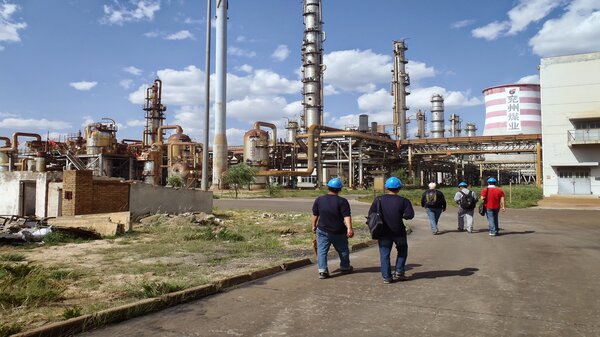
In Saizon v. Dow Chem. Co., the plaintiff was injured while he was working for Turner Industrial Group at the Dow Chemical Plant in Plaquemine, Louisiana. The plaintiff named Dow and three of its employees as defendants. The Dow defendants moved for summary judgment on grounds that the plaintiff was Dow’s statutory employee at the time of the accident and therefore the Louisiana Workers’ Compensation Law (“LWCL”) provided plaintiff with his exclusive remedy for the claims he asserted against Dow and its employees.

The trial court agreed and granted summary judgment in favor of the defendants. The First Circuit affirmed summary judgment on appeal.

The Court found the contract executed between Dow and Turner Industries created a rebuttable presumption under La. R.S. 23:1061(A)(3) that Dow was the plaintiff’s statutory employer at the time of the accident. The plaintiff failed to produce evidence to rebut this presumption. Accordingly, the defendants argued plaintiff’s exclusive remedy was found in workers’ compensation, not in tort.

The LWCL generally holds that an employer is immune from tort actions brought against it by its employee. However, the LWCL includes an “intentional act exception,” where an employee can maintain a tort claim if he can show that his accident and injuries resulted from his employer’s intentional act. A plaintiff can establish the intentional act exception if he can show the employer “knows that the result is substantially certain to follow from his conduct.”

The plaintiff argued that the defendants were aware of the risk that a fire or explosion could occur before the accident. He also argued the defendants failed to follow Dow’s safety policies and OSHA guidelines at the time of the accident. Plaintiff argued this created an issue of fact regarding whether the accident was “substantially certain.”

The First Circuit disagreed, finding this evidence amounted to only “generalized knowledge of risk” that “falls short of the kind of actual intention to injure that robs the injury of accidental character.” In short, the court agreed with the defendants’ position that “an employer’s generalized knowledge of risk does not meet the intentional act test without proof of specific knowledge of risk to this plaintiff and moving ahead with operations anyway.” Plaintiff had no such evidence, and his claims were dismissed.

Reference:

Saizon v. Dow Chem. Co., 2025-1139 (La. App. 1 Cir. 4/24/26), 2026 WL 1122621

Posted by:

Disclaimer

Keogh Cox & Wilson, Ltd. provides this blog as a public service for general information only. The materials contained herein may not reflect the most current legal developments or even express the opinion of all or even most of Keogh Cox attorneys. Such material does not constitute legal advice or form any attorney-client relationship. Keogh Cox and all contributing author(s) expressly disclaim all liability to any person with respect to the contents of this Web site and Blog and expect that no reliance will be made upon the information provided.


Continue Reading

Explore legal perspectives on the issues shaping Louisiana's key industries and courtrooms.

Insight

Supreme Court Rejects Heightened Burden for Majority-Group Discrimination Claims

In Ames v. Ohio Department of Youth Services, the U.S. Supreme Court recently clarified an important issue under Title VII of the Civil Rights Act of 1964. The Court addressed whether employees who belong to “majority groups” must meet a higher burden by proving “background circumstances” when bringing discrimination claims. The Court unanimously held that they do not.

The case involved an employee of the Ohio Department of Youth Services, who alleged she was denied a promotion and was later demoted because of her sexual orientation. The plaintiff is heterosexual, and her supervisor is homosexual. When the plaintiff sought the promotion, the position ultimately was awarded to a homosexual woman. After her demotion, plaintiff’s position also was filled by a homosexual man.

The plaintiff filed suit under Title VII, which prohibits employment discrimination based on protected characteristics, including sex. The district court dismissed her claims. It applied a rule requiring “majority-group” plaintiffs, i.e., plaintiffs who are not part of a minority group, to prove additional “background circumstances” suggesting the defendant is “the unusual employer who discriminates against the majority” employees.

The Supreme Court unanimously vacated the lower court’s ruling. The Court focused on the statutory text of Title VII, which protects “any individual” from discrimination. The statute does not distinguish between majority and minority groups.

The Court held Title VII does not impose a higher evidentiary burden on plaintiffs who are part of a majority group. Therefore, the “background circumstances” rule applied by the lower courts imposed an additional evidentiary burden on majority group plaintiffs that was inconsistent with the statute.

This decision resolved a split among lower courts regarding this issue and confirmed that Title VII discrimination claims should be evaluated equally for all employees.

Reference:

Ames v. Ohio Department of Youth Services, 605 U.S. 303, 145 S. Ct. 1540, 221 L. Ed. 2d 929 (2025).

Insight

Louisiana Appellate Court Examines How Accidents are Defined under Louisiana Workers’ Compensation Law

Generally, Louisiana Workers’ Compensation laws provide coverage for an employee who sustains personal injuries by an accident arising out of and in the course of his or her employment. La. R.S. 23:1021(1) defines “accident” as:

"An unexpected or unforeseen actual, identifiable, precipitous event happening suddenly or violently, with or without human fault, and directly producing at the time objective findings of an injury which is more than simply a gradual deterioration or progressive degeneration."

In Rayborn, Sr. v. Continental Cement Company, LLC et al, the plaintiff-employee filed suit when the worker’s compensation carrier terminated benefits based on its assertion that the plaintiff’s left knee injury was not the result of an “accident” as defined in the statute. The evidence presented at trial established the following:

  • After returning home from work one day, the plaintiff began to feel soreness behind his left knee and believed he “may have pulled a muscle.”
  • The plaintiff sought medical attention at a local clinic 2 days later.
  • The plaintiff told clinic staff that his “leg was hurting,” and that he “was at work climbing up and jumping down off of barges all week.”
  • After returning from a pre-planned family trip one week later, the plaintiff told to his managers at work that he hurt his knee “some kind of way” and that he was “doing too much climbing up and jumping down from barges “and his knee “just started hurting.”
  • The chart from follow-up clinic visits stated, “Patient had [an] injury while at work when he jumped from a height and later that day felt a discomfort in the left lateral knee.”
  • Additional records noted the plaintiff “injured his knee on the job; however it was not readily apparent until [his] knee became stiff later that evening.”
  • The plaintiff later consulted with an orthopedic surgeon whose initial chart entry stated, “Over the course of the week, his knee began bothering him in the patellofemoral area and it started to become tight and swollen.”

At the conclusion of trial, the workers’ compensation court ruled that the plaintiff successfully proved that he sustained a work-related injury of his left knee on a particular date by climbing and jumping while performing his work duties. On appeal, the workers’ compensation carrier argued that plaintiff’s assertion that he was injured “some kind of way” over the course of a week was not sufficient to meet the requirement of a specific, identifiable accident in the course and scope of employment under La. R.S. 23:1021(1).

In affirming the decision of the OWC judge, the appellate court highlighted numerous opinions from the Louisiana Supreme Court and other courts of appeal wherein the statutory definition of “accident” was liberally construed to reject an interpretation that excluded “those workers who are worn down, rather than immediately crippled by, their work.” The opinion notes that it is well-settled in the case law that an “accident” exists when “heavy lifting or other strenuous efforts, although usual and customary, cause or contribute to a physical breakdown or accelerate its occurrence because of a pre-existing condition.”

The opinion added, “It is presumed the legislature is aware of how Louisiana courts have interpreted the statute; yet, it has taken no steps to overrule more than thirty years of Louisiana jurisprudence.” In so holding, it is unclear whether the court considered La. R.S. 23:1020.1(D), in which the Legislature specifically rejected the jurisprudential doctrine requiring a liberal interpretation of Workers Compensation statutes in favor of an employee. Despite this statement from the Legislature on the construction of Workers Compensation statutes, the Rayborn opinion suggests that courts may continue to base their decisions on the liberal interpretation of “accident” that has been developed and adopted by Louisiana courts when analyzing what types of injuries are covered under Louisiana Workers’ Compensation Law.

References:

Rayborn v. Cont'l Cement Co., LLC, 2023-0403 (La. App. 1 Cir. 1/10/24), 2024 WL 132802.

Insight

Louisiana Supreme Court Provides Guidance on “Going and Coming” Rule

In a recent Louisiana Supreme Court decision, Lacy v. Ibarra, et al, the Court provided further instruction and clarification on exceptions to the “going and coming” rule, which provides employers generally are not liable for acts or omissions of their employees as they travel to or from work.

The plaintiff in Lacy alleged that she and her daughter were injured after they were involved in a car accident with the defendant. The defendant was an employee of Exxon who recently relocated to Baton Rouge, Louisiana from Houston, Texas. The employee had not secured a permanent residence in Louisiana. His family remained in Houston. At the time of the accident, the defendant was driving to work in his personal vehicle.

Plaintiff claimed that Exxon should be liable under the “special mission” and/or the “interest in transportation” exceptions to the “going and coming” rule. The Louisiana Supreme Court rejected both exceptions.

The Court noted the “special mission” exception applies in circumstances where the employee’s travel is a special or unusual, employment-related task outside the scope of the defendant’s normal job duties. The Lacy Court found that the defendant “was simply going to work” at the time of the accident. Therefore, the “special mission” exception did not apply. The Court also explained the employee’s recent relocation was not the type of “unusual” circumstance usually needed for the exception to apply.

The Court also found that the “interest in transportation” exception did not apply. This exception applies when an employer specifically pays the employee for the travel that is being done at the time of the accident. This can occur when an employer pays an employee for actual mileage for transportation from one point to another and, from both the employee and employer’s perspective, the purpose of the transportation is primarily for the employee’s benefit. In Lacy, the employer provides its employee with general transportation and relocation expenses. However, those general payments did not transform an ordinary commute into an employment-related activity or establish that the employer became interested in the employee’s transportation to trigger the exception.

The Lacy decision further solidifies Louisiana law that an employee’s travel to or from work, without any special circumstances, is not within the course and scope of an employee’s employment for purposes of vicarious liability.

Reference:

Lacy v. Ibarra, et al, 2025-01599 (La. 4/21/26), --- So.3d ----, 2026 WL 1074083.

Andrew ‘Drew’ Blanchfield

Partner
Employer Liability