Insight

Another Year, Another Natural Disaster: What to do if Your Home is Damaged by a Storm or Flood

Published on: September 11, 2017

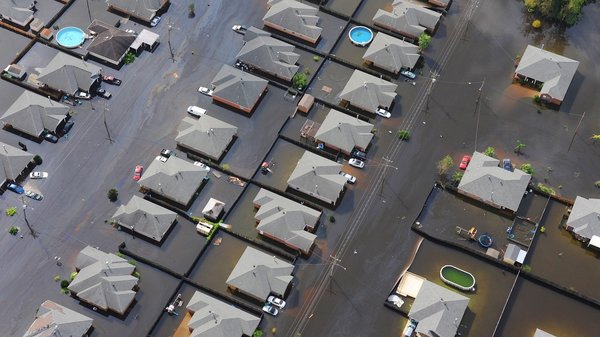
Unfortunately, Louisianans (and their property insurers) have endured many natural disasters in the past several years. From the historic flooding in the greater Baton Rouge area in August 2016 to the devastation caused by Hurricane Harvey in August 2017, Gulf Coast residents are all too familiar with significant storms and flooding events. While the rebuilding process will take months or years, this article is designed to provide some basic information on how to document your property claim and apply for and obtain disaster assistance.

  • DOCUMENT, DOCUMENT, DOCUMENT - Once able, make sure to document the damages to your home and contents. Whether for a homeowners or flood insurance policy or to obtain government assistance, take plenty of photos and even video of the damage. Make a list of the items in your home that were damaged or destroyed. One way to organize this list is to group items from each room together; approximate the item’s age, where it was purchased, and its value when purchased. If you have receipts, try to salvage them. As you rebuild, and materials and items are thrown out, it will become more difficult to document your claim. Proper documentation will lessen the burden upon your insurer’s claims handlers and adjusters and may speed the processing of your claim. A lack of documentation may require the insurer to investigate longer and result in delay.
  • OBTAIN MULTIPLE ESTIMATES - Although the volume of work and distractions which follow a natural disaster make this difficult, try to obtain estimates for the work needed on your home. Pay for the estimate, if necessary. If you have three estimates and the amounts are close, they are more credible. Also, try and get as much detail as possible in each estimate, including specific materials to be used, dimensions, and finishes. Your insurer is looking to determine the true amount of the loss and thorough estimates help to define your claim.
  • APPLY FOR ASSISTANCE - Especially if your property is not insured, make sure to immediately apply for government assistance. You can apply for federal assistance at disasterassistance.gov. Oftentimes, the state government will also administer federal and state disaster assistance funds.

Recovering after a disaster may not be a quick or easy process, but spending more time and effort initially may ultimately save you time and allow you to present a claim your insurer will agree to pay.

Posted by:

Disclaimer

Keogh Cox & Wilson, Ltd. provides this blog as a public service for general information only. The materials contained herein may not reflect the most current legal developments or even express the opinion of all or even most of Keogh Cox attorneys. Such material does not constitute legal advice or form any attorney-client relationship. Keogh Cox and all contributing author(s) expressly disclaim all liability to any person with respect to the contents of this Web site and Blog and expect that no reliance will be made upon the information provided.

Continue Reading

Explore legal perspectives on the issues shaping Louisiana's key industries and courtrooms.

Insight

The “Great Flood of 2016”--Update and Resources

“Disaster Declaration” Expanded. The list of parishes now declared disaster areas by the federal government has increased to include the following parishes: Acadia, Ascension, East Feliciana, Iberia, Lafayette, Pointe Coupee, St. Landry, and Vermilion.

http://gov.louisiana.gov/news/additional-parishes-added-to-federal-disaster-declaration-8-16-16

Potential Tax Implications for Flood Victim. For those insured, it is critical that you document your losses with as much detail as possible; serial numbers, make/model/description—the more detail the better. Keep receipts and credit card statements. Time-dated photos are also important. Even those without flood insurance should do the same as it may assist in obtaining FEMA assistance. However, the same documentation of your losses could also help to reduce your tax exposure. The attached link provides key information and outlines the impact the flooding may have on tax-filing and other deadlines.

https://www.irs.gov/uac/tax-relief-for-victims-of-severe-storms-flooding-in-louisiana

Insight

Louisiana Supreme Court Clarifies “Reasonably Anticipated Use” in Product Liability Claim

Plaintiff Brady Hardisty and a coworker attempted to use chains attached to a tractor to pull a Caterpillar bulldozer from the mud. A chain snapped and struck plaintiff in the head and face. Hardisty sued Caterpillar under allegations that its product was unreasonably dangerous. Caterpillar filed a Motion for Summary Judgment arguing Hardisty was not engaged in a “reasonably anticipated use” of its product. Both the trial court and the appellate court identified “material issues of fact” in denying Caterpillar’s motion. The Supreme Court reversed, and entered summary judgment for Caterpillar.^

Caterpillar cited its Operation Manual that warned against the use of chains and gave a safer alternative. Hardisty asserted that material issues of fact existed as to whether Caterpillar “knew or should have known” that users were not following product warnings. Hardisty offered opinions from its expert witness that: (1) Caterpillar knew of the danger because it warned against the use of chains and (2) experience showed that the use of chains was a common practice in the industry.

The Hardisty court reasoned that the expert’s own “experience” was insufficient to refute Caterpillar’s evidence that it received no report of prior similar accidents. However, the Court cited to earlier case law for the proposition that even actual knowledge would not defeat the motion, stating:

The jurisprudence has recognized that knowledge of the potential and actual intentional abuse of a product does not create a question of fact on the question of reasonably anticipated use when the manufacturer expressly warned against the danger of such misuse.

In a recent case handled by Keogh Cox, the federal Fifth Circuit affirmed summary judgment for defendants, citing Hardisty for the proposition that a manufacturer may reasonably expect that its users will follow “clear and direct” product warnings. See Friels v. Louisiana State Administrative Office of Rick Management, et al.

References:

^Hardisty v. Walker, 25-00239 (La. 6/3/25), 410 So,3d 774.

Louisiana State Administrative Office of Rick Management, et al., No. 24-30688, 8/15/25. Opinion not designated for publication. 5th Cir. R. 47.5.

Insight

Supreme Court Settles Circuit Split on Right to Appeal Summary Judgment

The Louisiana Supreme Court recently ruled that a co-defendant who pleads comparative fault as an affirmative defense may appeal a summary judgment that dismisses a co-defendant, even when the plaintiff did not file an appeal. The Court’s decision in Amedee v. Aimbridge Hospitality resolved a circuit split among the Louisiana Courts of Appeal regarding this issue.

The Amedee plaintiff filed a personal injury suit against multiple defendants including the City of New Orleans and Premium Parking of South Texas, LLC. After discovery, the City of New Orleans filed a Motion for Summary Judgment seeking dismissal from the suit. The plaintiff did not oppose the city’s motion. Premium Parking was the only party to file an opposition. The trial court granted the city’s motion and dismissed it from the suit. Premium Parking appealed the court’s judgment.

The Fourth Circuit did not address the merits of Premium Parking’s appeal. Instead, the court dismissed the appeal because it found Premium Parking did not have a legal right to appeal the city’s dismissal when the plaintiff did not appeal the judgment.

The Supreme Court disagreed and reversed the appellate court’s ruling. The Court noted that “to prohibit appellate review of a summary judgment by a co-defendant, even where a plaintiff did not appeal, diminishes the search for truth—the object of a lawsuit—and denies a defendant the ability to fully defend itself.” To reach this conclusion, the Court first asked, who may appeal a judgment?

To answer this question, the Court looked to La. C.C.P. art. 2082 and observed the article makes no restriction regarding what party may appeal a final judgment. Further, the Court noted that the right to an appeal is even extended third parties, not involved in the suit, when that third party is allegedly aggrieved by the judgment. See La. C.C.P. art. 2086.

The Court also considered a defendant’s right to appeal in the context of Louisiana’s pure comparative fault system and summary judgments. Under La. C.C. art. 2323, Louisiana’s comparative fault statute, the fault of all parties is to be quantified. La. C.C.P. art. 966(G), provides that when summary judgment is granted in favor of a party or non-party to a suit, the fault of the dismissed party may not be considered in any subsequent allocation of fault in the matter.

The Court noted that while art. 966(G) precludes an allocation of the fault of a party dismissed under the statute, it does not limit the right of a defendant to appeal the dismissal of a co-defendant. No statute limited a defendant’s right to appeal a summary judgment only to those situations where a plaintiff also filed an appeal. Therefore, a defendant who hopes to keep a co-defendant in the case so that fault still may be allocated to the dismissed party at trial now may appeal the co-defendant’s dismissal, even when the plaintiff fails to do so.

Case Reference: Amedee v. Aimbridge Hosp. LLC, 2021-01906 (La. 10/1/22), --- So.3d ---, 2022 WL 12338929.

Christopher K. Jones

Partner
Flood
Louisiana